

eastern crested guineafowl vs western crested guineafowl
Guttera pucherani versus Guttera verreauxi
Jogue um quiz com eastern crested guineafowl e western crested guineafowl
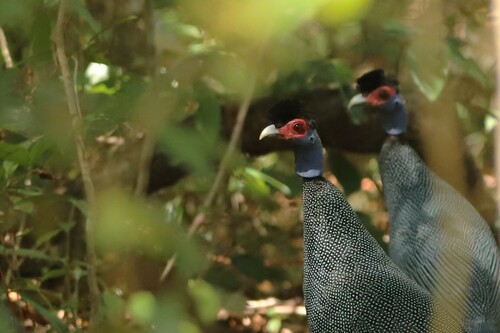 eastern crested guineafowl
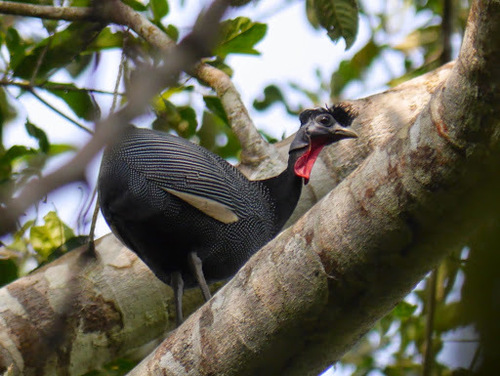 western crested guineafowl
Em resumo
O galo-da-índia crestado oriental e o galo-da-índia crestado ocidental são extremamente semelhantes em campo, ambos apresentando plumagem negra densamente salpicada de branco e uma crista negra proeminente. A maneira mais confiável de separá-los é pela distribuição: o galo-da-índia crestado oriental é encontrado da Somália à Tanzânia e ilhas próximas, enquanto o galo-da-índia crestado ocidental ocorre da África Ocidental através da África Central, estendendo-se até o oeste do Quênia, Zâmbia e Angola. Em campo, suas cristas diferem sutilmente em forma e textura, mas isso é frequentemente difícil de julgar à distância ou em pouca luz. As plumagens juvenil e adulta não são separáveis de forma confiável apenas pelo padrão das asas ou do corpo. As preferências de habitat se sobrepõem, então o contexto só é útil quando combinado com a distribuição.
Dicas de identificação
- A distribuição é o separador mais confiável: Se você está na África Oriental (Somália até a Tanzânia, Zanzibar, Tumbatu), você está quase certamente vendo o galo-da-índia crestado oriental. Se você está na África Ocidental ou Central (Guiné-Bissau até Camarões, oeste do Quênia, Zâmbia, Angola), você provavelmente está vendo o galo-da-índia crestado ocidental. A sobreposição é possível no oeste do Quênia.
- Forma e textura da crista: Ambas as espécies têm uma crista negra, mas a forma exata (cacheada vs. felpuda) pode diferir sutilmente. No entanto, isso não é bem descrito nas notas e é pouco confiável à distância ou em pouca luz.
- O padrão da plumagem não é diagnóstico: Ambas apresentam manchas brancas densas na plumagem negra em todas as idades. Não confie no tamanho, densidade ou arranjo das manchas para separá-las.
- Sem marcas de asas ou de voo específicas por idade: Não há diferenças descritas no padrão das asas superiores de juvenis, imaturos ou adultos, seja em voo ou empoleirados.
- Tamanho e estrutura são idênticos: Ambas as espécies têm o mesmo comprimento e massa, e compartilham proporções semelhantes. O formato do bico, cauda e asas não ajudam.
- Sobreposição de habitat: Ambas as espécies utilizam florestas abertas, matas e mosaicos de floresta-savana. Não use o habitat sozinho para separá-las.
- Comportamento não é útil: Ambas são terrestres, sociais e se comportam de maneira semelhante quando assustadas ou forrageando.
- Vocalizações não descritas: Nenhuma diferença nas chamadas ou canções é notada nas fontes disponíveis.
- Sexos e idades parecem semelhantes: Nenhum dimorfismo sexual ou diferenças baseadas na idade são relatadas que ajudariam em campo.
- Cuidado com a confusão 'plumada': Os nomes 'crestado' e 'plumado' são frequentemente aplicados incorretamente. Apenas o galo-da-índia plumado (não coberto aqui) é realmente separável pelo tipo de crista.
- Armadilhas de quiz: A maioria das confusões em quizzes decorre da ignorância da distribuição ou da superinterpretação de sutis diferenças na crista. Se você não tiver certeza, opte pela distribuição, a menos que tenha fotografias de nível especialista da crista.
- Quando em dúvida: Se você está em uma zona de sobreposição potencial (por exemplo, oeste do Quênia), considere ambas as possibilidades e consulte listas de verificação locais ou especialistas para registros recentes.
Tamanho
Ambas as espécies são virtualmente idênticas em tamanho, com um comprimento total em torno de 50 cm (20 in) e peso variando de 721–1,543 g (1.59–3.40 lb) [wikipedia]. Não há diferenças estruturais ou proporcionais notadas entre elas, então o tamanho não é uma marca útil em campo para separação.
Plumagem
A plumagem é extremamente semelhante em ambas as espécies em todas as idades: ambas apresentam penas negras densamente cobertas com pequenas manchas brancas, e ambas têm uma crista negra distinta no topo da cabeça. A forma da crista—variando de pequenas penas cacheadas a tufos mais felpudos—varia entre as espécies, mas as notas não especificam exatamente como essas diferem entre o galo-da-índia crestado oriental e o galo-da-índia crestado ocidental. Não há diferenças descritas no padrão das asas ou do corpo de juvenis, imaturos ou adultos, e nenhuma menção a marcas de voo específicas por idade que permitiriam a separação. A única diferença consistente pode ser uma variação sutil na forma ou textura da crista, mas isso não é detalhado nas fontes disponíveis e provavelmente é pouco confiável para a maioria dos observadores.
Comportamento
Ambas as espécies compartilham comportamentos semelhantes, frequentando florestas abertas, matas e mosaicos de floresta-savana. Elas são terrestres, frequentemente vistas em pequenos grupos, e seus movimentos e hábitos de forrageio não são descritos como diferentes entre as duas. O comportamento em voo e empoleirado não é relatado como diferindo de maneira diagnóstica.
Habitat
As preferências de habitat são quase idênticas: ambas as espécies habitam florestas abertas, matas e mosaicos de floresta-savana. A única diferença significativa é geográfica: o galo-da-índia crestado oriental é restrito à África Oriental (Somália até a Tanzânia, Zanzibar e Ilha Tumbatu), enquanto o galo-da-índia crestado ocidental se estende da Guiné-Bissau até Camarões, Quênia, Zâmbia e Angola. A sobreposição pode ocorrer no oeste do Quênia, então o conhecimento local dos limites de distribuição é crítico.
eastern crested guineafowl · western crested guineafowl · Minhas aves difíceis