

Motmot

Eastern Crested Guineafowl 対 Western Crested Guineafowl

Guttera pucherani 対 Guttera verreauxi

Eastern Crested GuineafowlとWestern Crested Guineafowlのクイズ
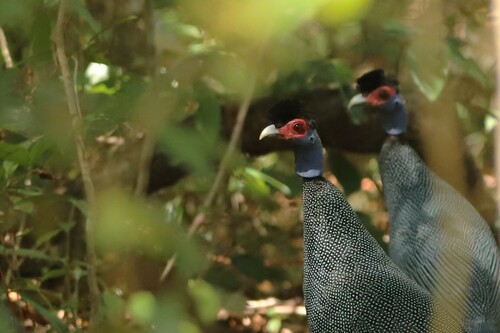
Eastern Crested Guineafowl (Guttera pucherani) Eastern Crested Guineafowl
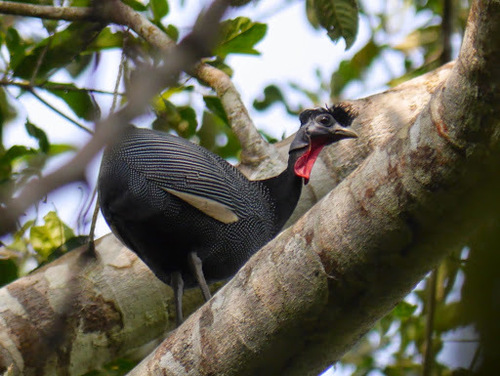
Western Crested Guineafowl (Guttera verreauxi) Western Crested Guineafowl

メディア

読み込み中…

要点

イースタン・クリステッド・ギニーファウルとウェスタン・クリステッド・ギニーファウルは、どちらも白い斑点のある黒っぽい羽毛と目立つ黒い冠を持ち、フィールドでは非常に似ています。彼らを分ける最も信頼できる方法は分布によるものです:イースタン・クリステッド・ギニーファウルはソマリアからタンザニアおよび近隣の島々に生息し、ウェスタン・クリステッド・ギニーファウルは西アフリカから中央アフリカを経て、ケニア西部、ザンビア、アンゴラに広がっています。フィールドでは、彼らの冠は形や質感が微妙に異なりますが、これは距離がある場合や光が悪い場合には判断が難しいことが多いです。幼鳥と成鳥の羽毛は、翼や体の模様だけでは信頼できる区別ができません。生息地の好みは重なり合うため、文脈は分布と組み合わせたときにのみ有用です。

識別のコツ

  1. Range is the most reliable separator: If you are in East Africa (Somalia to Tanzania, Zanzibar, Tumbatu), you are almost certainly seeing Eastern Crested Guineafowl. If you are in West or Central Africa (Guinea-Bissau to Cameroon, western Kenya, Zambia, Angola), you are likely seeing Western Crested Guineafowl. Overlap is possible in western Kenya.
  2. Crest shape and texture: Both species have a black crest, but the exact form (curly vs. downy) may differ subtly. However, this is not well described in the notes and is unreliable at a distance or in poor light.
  3. Plumage pattern is not diagnostic: Both show dense white spots on blackish plumage at all ages. Do not rely on spot size, density, or arrangement to separate them.
  4. No age-specific wing or flight marks: There are no described differences in juvenile, immature, or adult upperwing pattern, either in flight or perched.
  5. Size and structure are identical: Both species are the same length and mass, and share similar proportions. Bill, tail, and wing shape do not help.
  6. Habitat overlap: Both species use open forest, woodland, and forest-savanna mosaics. Do not use habitat alone to separate them.
  7. Behavior is not helpful: Both are ground-dwelling, social, and behave similarly when flushed or foraging.
  8. Vocalizations not described: No differences in calls or song are noted in the available sources.
  9. Sexes and ages look alike: No sexual dimorphism or age-based differences are reported that would help in the field.
  10. Beware the 'plumed' confusion: The names 'crested' and 'plumed' are often misapplied. Only the コカンムリホロホロチョウ (not covered here) is truly separable by crest type.
  11. Quiz pitfalls: Most quiz mix-ups stem from ignoring range or over-interpreting subtle crest differences. If you are unsure, default to range unless you have expert-level photographs of the crest.
  12. When in doubt: If you are in a potential overlap zone (e.g., western Kenya), consider both possibilities and consult local checklists or experts for recent records.

大きさ

両種はサイズがほぼ同じで、全長は約50 cm(20 in)、体重は721〜1,543 g(1.59〜3.40 lb)です [wikipedia]。彼らの間には構造的または比率的な違いは記載されていないため、サイズは分離のための有用なフィールドマークではありません。

羽色

羽毛は両種で非常に似ており、すべての年齢で全体的に黒っぽい羽毛に小さな白い斑点が密に覆われており、両方とも頭頂に特徴的な黒い冠を持っています。冠の形は、小さな巻き毛からより柔らかい房まで種によって異なりますが、イースタン・クリステッド・ギニーファウルとウェスタン・クリステッド・ギニーファウルの間でこれらがどのように異なるかは正確には指定されていません。幼鳥、未熟鳥、成鳥の翼や体の模様に関する違いは記載されておらず、分離を可能にする年齢特有の飛行マークについても言及されていません。唯一の一貫した違いは、冠の形や質感の微妙な変化かもしれませんが、これは利用可能な情報源では詳細に説明されておらず、ほとんどの観察者にとって信頼できない可能性があります。

行動

両種は似たような行動を共有し、開けた森林、森林地帯、森林-サバンナのモザイクに生息しています。彼らは地面に住み、小さな群れで見られることが多く、彼らの動きや採餌習慣は二者間で異なるとは記載されていません。飛行中や止まっているときの姿勢は、診断的な方法で異なるとは報告されていません。

生息環境

生息地の好みはほぼ同じです:両種は開けた森林、森林地帯、森林-サバンナのモザイクに生息しています。唯一の意味のある違いは地理的なもので、イースタン・クリステッド・ギニーファウルは東アフリカ(ソマリアからタンザニア、ザンジバル、タンバトゥ島)に制限されているのに対し、ウェスタン・クリステッド・ギニーファウルはギニアビサウからカメルーン、ケニア、ザンビア、アンゴラに広がっています。西ケニアでは重複が発生する可能性があるため、分布境界に関する地域の知識が重要です。

より良い説明を送る

比較と同じ項目を使ってください。文章はすぐに公開されます。

Eastern and Western Crested Guineafowl are extremely similar in the field, with both showing blackish plumage densely spotted white and a prominent black crest. The most reliable way to separate them is by range: Eastern Crested Guineafowl is found from Somalia to Tanzania and nearby islands, while Western Crested Guineafowl occurs from West Africa through Central Africa, extending into western Kenya, Zambia, and Angola. In the field, their crests differ subtly in shape and texture, but this is often hard to judge at a distance or in poor light. Juvenile and adult plumages are not reliably separable by wing or body pattern alone. Habitat preferences overlap, so context is only useful when combined with range.

  1. Range is the most reliable separator: If you are in East Africa (Somalia to Tanzania, Zanzibar, Tumbatu), you are almost certainly seeing Eastern Crested Guineafowl. If you are in West or Central Africa (Guinea-Bissau to Cameroon, western Kenya, Zambia, Angola), you are likely seeing Western Crested Guineafowl. Overlap is possible in western Kenya.
  2. Crest shape and texture: Both species have a black crest, but the exact form (curly vs. downy) may differ subtly. However, this is not well described in the notes and is unreliable at a distance or in poor light.
  3. Plumage pattern is not diagnostic: Both show dense white spots on blackish plumage at all ages. Do not rely on spot size, density, or arrangement to separate them.
  4. No age-specific wing or flight marks: There are no described differences in juvenile, immature, or adult upperwing pattern, either in flight or perched.
  5. Size and structure are identical: Both species are the same length and mass, and share similar proportions. Bill, tail, and wing shape do not help.
  6. Habitat overlap: Both species use open forest, woodland, and forest-savanna mosaics. Do not use habitat alone to separate them.
  7. Behavior is not helpful: Both are ground-dwelling, social, and behave similarly when flushed or foraging.
  8. Vocalizations not described: No differences in calls or song are noted in the available sources.
  9. Sexes and ages look alike: No sexual dimorphism or age-based differences are reported that would help in the field.
  10. Beware the 'plumed' confusion: The names 'crested' and 'plumed' are often misapplied. Only the Plumed Guineafowl (not covered here) is truly separable by crest type.
  11. Quiz pitfalls: Most quiz mix-ups stem from ignoring range or over-interpreting subtle crest differences. If you are unsure, default to range unless you have expert-level photographs of the crest.
  12. When in doubt: If you are in a potential overlap zone (e.g., western Kenya), consider both possibilities and consult local checklists or experts for recent records.

Both species are virtually identical in size, with a total length around 50 cm (20 in) and weight ranging from 721–1,543 g (1.59–3.40 lb) [wikipedia]. There are no structural or proportional differences noted between them, so size is not a useful field mark for separation.

Plumage is extremely similar in both species at all ages: both show overall blackish feathers densely covered with small white spots, and both have a distinctive black crest on the crown. The form of the crest—ranging from small curly feathers to more downy tufts—varies between species, but the notes do not specify exactly how these differ between Eastern and Western Crested Guineafowl. There are no described differences in juvenile, immature, or adult wing or body pattern, and no mention of age-specific flight marks that would allow separation. The only consistent difference may be subtle variation in crest shape or texture, but this is not detailed in the available sources and is likely unreliable for most observers.

Both species share similar behaviors, frequenting open forests, woodlands, and forest-savanna mosaics. They are ground-dwelling, often seen in small groups, and their movements and foraging habits are not described as differing between the two. Flight and perched jizz are not reported to differ in any diagnostic way.

Habitat preferences are nearly identical: both species inhabit open forest, woodland, and forest-savanna mosaics. The only meaningful difference is geographic: Eastern Crested Guineafowl is restricted to East Africa (Somalia to Tanzania, Zanzibar, and Tumbatu Island), while Western Crested Guineafowl ranges from Guinea-Bissau to Cameroon, Kenya, Zambia, and Angola. Overlap may occur in western Kenya, so local knowledge of range boundaries is critical.

変更を破棄しますか?

保存していない編集があります。今離れると失われます。

Eastern Crested Guineafowl · Western Crested Guineafowl · 苦手な鳥