

Eastern Crested Guineafowl vs Western Crested Guineafowl
Guttera pucherani contro Guttera verreauxi
Fai un quiz con Eastern Crested Guineafowl e Western Crested Guineafowl
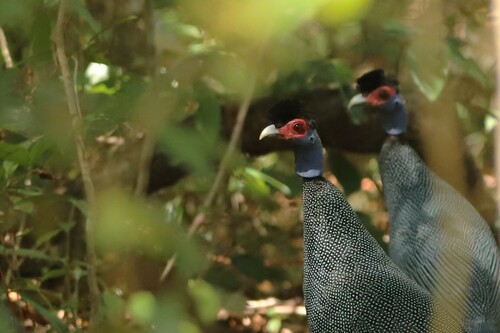 Eastern Crested Guineafowl
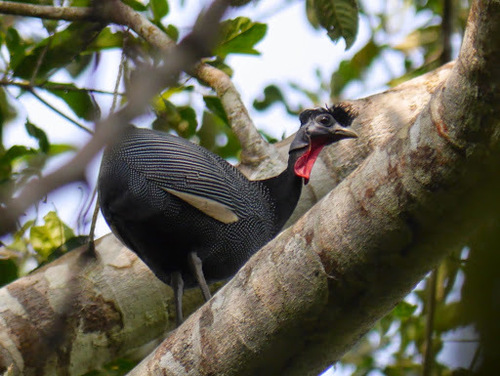 Western Crested Guineafowl
In breve
Il Gallo cedrone orientale e il Gallo cedrone occidentale sono estremamente simili sul campo, entrambi mostrano un piumaggio nerastro densamente punteggiato di bianco e una prominente cresta nera. Il modo più affidabile per separarli è per area: il Gallo cedrone orientale si trova dalla Somalia alla Tanzania e nelle isole vicine, mentre il Gallo cedrone occidentale si verifica dall'Africa occidentale attraverso l'Africa centrale, estendendosi nel Kenya occidentale, in Zambia e in Angola. Sul campo, le loro creste differiscono sottilmente nella forma e nella consistenza, ma questo è spesso difficile da giudicare a distanza o in scarsa luce. I piumaggi giovanili e adulti non sono separabili in modo affidabile solo in base al motivo delle ali o del corpo. Le preferenze di habitat si sovrappongono, quindi il contesto è utile solo se combinato con l'area.
Consigli di identificazione
- L'area è il separatore più affidabile: Se ti trovi in Africa orientale (Somalia, Tanzania, Zanzibar, Tumbatu), stai quasi sicuramente vedendo il Gallo cedrone orientale. Se ti trovi in Africa occidentale o centrale (Guinea-Bissau, Camerun, Kenya occidentale, Zambia, Angola), è probabile che tu stia vedendo il Gallo cedrone occidentale. È possibile una sovrapposizione nel Kenya occidentale.
- Forma e consistenza della cresta: Entrambe le specie hanno una cresta nera, ma la forma esatta (riccia vs. lanosa) può differire sottilmente. Tuttavia, questo non è ben descritto nelle note ed è inaffidabile a distanza o in scarsa luce.
- Il motivo del piumaggio non è diagnostico: Entrambi mostrano dense macchie bianche su piumaggio nerastro a tutte le età. Non fare affidamento sulla dimensione, densità o disposizione delle macchie per separarli.
- Nessun segno di ali o volo specifico per età: Non ci sono differenze descritte nel motivo delle ali superiori giovanili, immaturi o adulti, né in volo né in perching.
- Dimensioni e struttura sono identiche: Entrambe le specie hanno la stessa lunghezza e massa e condividono proporzioni simili. Il becco, la coda e la forma delle ali non aiutano.
- Sovrapposizione dell'habitat: Entrambe le specie utilizzano foreste aperte, boschi e mosaici di foresta-savana. Non utilizzare l'habitat da solo per separarli.
- Il comportamento non è utile: Entrambi sono terricoli, sociali e si comportano in modo simile quando vengono disturbati o cercano cibo.
- Vocalizzazioni non descritte: Non sono state notate differenze nei richiami o nel canto nelle fonti disponibili.
- Sessi ed età si somigliano: Non sono stati riportati dimorfismi sessuali o differenze basate sull'età che possano aiutare sul campo.
- Attenzione alla confusione 'plumata': I nomi 'cresta' e 'plumata' sono spesso applicati in modo errato. Solo il Gallo cedrone piumato (non trattato qui) è realmente separabile per tipo di cresta.
- Trappole nei quiz: La maggior parte degli errori nei quiz deriva dall'ignorare l'area o dall'interpretare eccessivamente le sottili differenze di cresta. Se non sei sicuro, fai riferimento all'area a meno che tu non abbia fotografie di livello esperto della cresta.
- Quando hai dubbi: Se ti trovi in una zona di sovrapposizione potenziale (ad es., Kenya occidentale), considera entrambe le possibilità e consulta elenchi di controllo locali o esperti per registrazioni recenti.
Taglia
Entrambe le specie sono praticamente identiche in dimensioni, con una lunghezza totale di circa 50 cm (20 in) e un peso che varia da 721 a 1.543 g (1,59–3,40 lb) [wikipedia]. Non sono state notate differenze strutturali o proporzionali tra di loro, quindi la dimensione non è un segno utile per la separazione.
Piumaggio
Il piumaggio è estremamente simile in entrambe le specie a tutte le età: entrambe mostrano piume nerastre complessivamente densamente coperte di piccole macchie bianche e entrambe hanno una distintiva cresta nera sulla corona. La forma della cresta—che varia da piccole piume ricce a ciuffi più lanosi—varia tra le specie, ma le note non specificano esattamente come queste differiscano tra il Gallo cedrone orientale e il Gallo cedrone occidentale. Non ci sono differenze descritte nel motivo delle ali o del corpo giovanili, immaturi o adulti, e non si fa menzione di segni di volo specifici per età che consentirebbero la separazione. L'unica differenza consistente potrebbe essere una variazione sottile nella forma o nella consistenza della cresta, ma questo non è dettagliato nelle fonti disponibili ed è probabilmente inaffidabile per la maggior parte degli osservatori.
Comportamento
Entrambe le specie condividono comportamenti simili, frequentando foreste aperte, boschi e mosaici di foresta-savana. Sono terricoli, spesso visti in piccoli gruppi, e i loro movimenti e abitudini di foraggiamento non sono descritti come differenti tra i due. Il volo e il comportamento in perching non sono riportati come differenti in alcun modo diagnostico.
Habitat
Le preferenze di habitat sono praticamente identiche: entrambe le specie abitano foreste aperte, boschi e mosaici di foresta-savana. L'unica differenza significativa è geografica: il Gallo cedrone orientale è ristretto all'Africa orientale (Somalia, Tanzania, Zanzibar e Isola di Tumbatu), mentre il Gallo cedrone occidentale si estende dalla Guinea-Bissau al Camerun, Kenya, Zambia e Angola. È possibile una sovrapposizione nel Kenya occidentale, quindi la conoscenza locale dei confini dell'area è fondamentale.
Eastern Crested Guineafowl · Western Crested Guineafowl · I miei uccelli difficili