

Pintada Moñuda Oriental (pucherani) vs Pintada Moñuda Oriental (verreauxi/sclateri)
Guttera pucherani frente a Guttera verreauxi
Juega un quiz con Pintada Moñuda Oriental (pucherani) y Pintada Moñuda Oriental (verreauxi/sclateri)
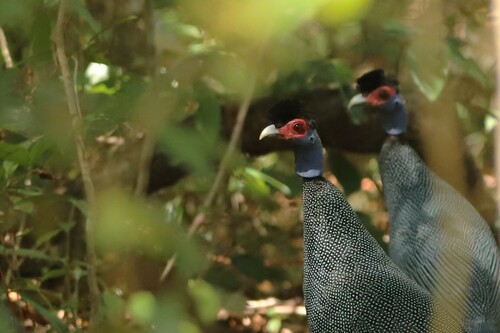 Pintada Moñuda Oriental (pucherani)
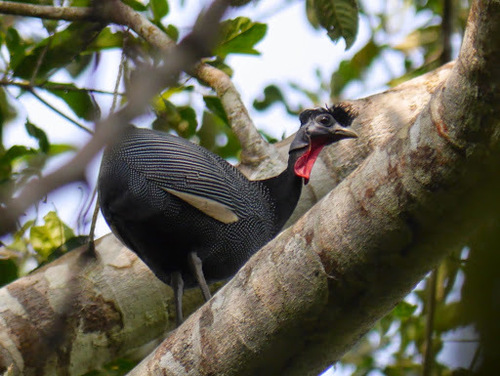 Pintada Moñuda Oriental (verreauxi/sclateri)
En breve
La Pintada Moñuda Oriental y la Pintada Moñuda Occidental son extremadamente similares en el campo, mostrando ambas plumaje negruzco densamente salpicado de blanco y una prominente cresta negra. La forma más confiable de separarlas es por su rango: la Pintada Moñuda Oriental se encuentra desde Somalia hasta Tanzania y las islas cercanas, mientras que la Pintada Moñuda Occidental ocurre desde África Occidental a través de África Central, extendiéndose hacia el oeste de Kenia, Zambia y Angola. En el campo, sus crestas difieren sutilmente en forma y textura, pero esto a menudo es difícil de juzgar a distancia o con poca luz. Los plumajes juveniles y adultos no son separables de manera confiable solo por el patrón de alas o cuerpo. Las preferencias de hábitat se superponen, por lo que el contexto solo es útil cuando se combina con el rango.
Consejos de identificación
- El rango es el separador más confiable: Si estás en África Oriental (Somalia a Tanzania, Zanzíbar, Tumbatu), casi con certeza estás viendo la Pintada Moñuda Oriental. Si estás en África Occidental o Central (Guinea-Bisáu a Camerún, oeste de Kenia, Zambia, Angola), es probable que estés viendo la Pintada Moñuda Occidental. Es posible que haya superposición en el oeste de Kenia.
- Forma y textura de la cresta: Ambas especies tienen una cresta negra, pero la forma exacta (rizada vs. lanosa) puede diferir sutilmente. Sin embargo, esto no está bien descrito en las notas y es poco confiable a distancia o con poca luz.
- El patrón del plumaje no es diagnóstico: Ambas muestran manchas blancas densas en plumaje negruzco a todas las edades. No te fíes del tamaño, densidad o disposición de las manchas para separarlas.
- No hay marcas de alas o vuelo específicas por edad: No se han descrito diferencias en el patrón de alas de juveniles, inmaduros o adultos, ya sea en vuelo o posados.
- Tamaño y estructura son idénticos: Ambas especies tienen la misma longitud y masa, y comparten proporciones similares. La forma del pico, la cola y las alas no ayudan.
- Superposición de hábitat: Ambas especies utilizan bosques abiertos, bosques y mosaicos de bosque-sabana. No utilices el hábitat solo para separarlas.
- El comportamiento no es útil: Ambas son terrestres, sociales y se comportan de manera similar cuando son sorprendidas o buscan alimento.
- Vocalizaciones no descritas: No se han notado diferencias en llamadas o canciones en las fuentes disponibles.
- Los sexos y las edades se parecen: No se han reportado diferencias de dimorfismo sexual o basadas en la edad que ayuden en el campo.
- Cuidado con la confusión 'plumífera': Los nombres 'moñuda' y 'plumífera' a menudo se aplican incorrectamente. Solo la Pintada Plumífera (no cubierta aquí) es verdaderamente separable por tipo de cresta.
- Trampas en los cuestionarios: La mayoría de las confusiones en los cuestionarios provienen de ignorar el rango o sobreinterpretar diferencias sutiles en la cresta. Si no estás seguro, predetermina el rango a menos que tengas fotografías de nivel experto de la cresta.
- Cuando dudes: Si estás en una zona de posible superposición (por ejemplo, el oeste de Kenia), considera ambas posibilidades y consulta listas de verificación locales o expertos para registros recientes.
Tamaño
Ambas especies son prácticamente idénticas en tamaño, con una longitud total de alrededor de 50 cm (20 in) y un peso que varía de 721 a 1,543 g (1.59 a 3.40 lb) [wikipedia]. No se han notado diferencias estructurales o proporcionales entre ellas, por lo que el tamaño no es una marca útil en el campo para la separación.
Plumaje
El plumaje es extremadamente similar en ambas especies a todas las edades: ambas muestran plumas negruzcas en general densamente cubiertas de pequeñas manchas blancas, y ambas tienen una distintiva cresta negra en la corona. La forma de la cresta—que varía desde pequeñas plumas rizadas hasta mechones más lanosos—varía entre especies, pero las notas no especifican exactamente cómo difieren entre la Pintada Moñuda Oriental y la Pintada Moñuda Occidental. No se han descrito diferencias en el patrón de alas o cuerpo de juveniles, inmaduros o adultos, y no se menciona marcas de vuelo específicas por edad que permitan la separación. La única diferencia consistente puede ser una variación sutil en la forma o textura de la cresta, pero esto no está detallado en las fuentes disponibles y es poco confiable para la mayoría de los observadores.
Comportamiento
Ambas especies comparten comportamientos similares, frecuentando bosques abiertos, bosques y mosaicos de bosque-sabana. Son terrestres, a menudo se ven en pequeños grupos, y sus movimientos y hábitos de forrajeo no se describen como diferentes entre las dos. El comportamiento de vuelo y posado no se informa que difiera de ninguna manera diagnóstica.
Hábitat
Las preferencias de hábitat son casi idénticas: ambas especies habitan bosques abiertos, bosques y mosaicos de bosque-sabana. La única diferencia significativa es geográfica: la Pintada Moñuda Oriental está restringida a África Oriental (Somalia a Tanzania, Zanzíbar y la isla Tumbatu), mientras que la Pintada Moñuda Occidental se extiende desde Guinea-Bisáu hasta Camerún, Kenia, Zambia y Angola. Puede haber superposición en el oeste de Kenia, por lo que el conocimiento local de los límites de rango es crítico.
Pintada Moñuda Oriental (pucherani) · Pintada Moñuda Oriental (verreauxi/sclateri) · Mis aves difíciles