

crowned woodnymph vs white-tailed emerald
Thalurania colombica versus Microchera chionura
Jogue um quiz com crowned woodnymph e white-tailed emerald
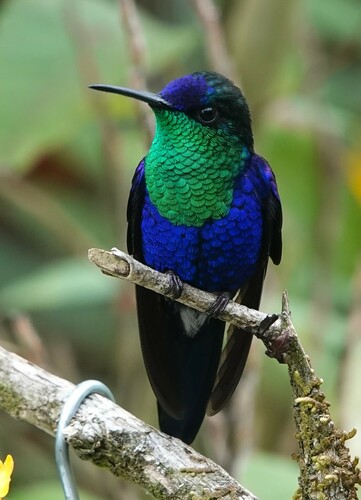 crowned woodnymph
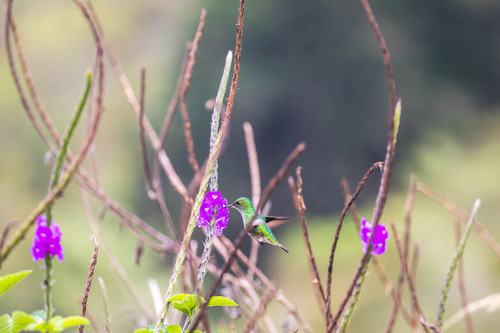 white-tailed emerald
Em resumo
A marca de campo mais confiável para separar crowned woodnymph e white-tailed emerald é o padrão da cauda: white-tailed emerald de todas as idades e sexos apresenta penas de cauda externas brancas óbvias com pontas pretas, enquanto crowned woodnymph tem uma cauda azul-preta (machos) ou azul-preta com apenas pequenas pontas brancas nas penas externas (fêmeas). As aves imaturas são melhor separadas pela cor da cauda e das partes inferiores: as imaturas de white-tailed emerald têm barrigas brancas ou brancas opacas, enquanto as imaturas de crowned woodnymph são acinzentadas embaixo (fêmeas) ou escuras com iridescência limitada (machos). Os machos adultos de crowned woodnymph são maiores, com uma coroa distintamente violeta ou verde brilhante e uma cauda muito mais profundamente bifurcada. A estrutura e a forma do bico são semelhantes, mas o emerald é visivelmente menor e com cauda mais curta. O habitat e a elevação podem ajudar: white-tailed emerald é um especialista em áreas montanhosas, enquanto crowned woodnymph é mais amplamente distribuído e encontrado em altitudes mais baixas.
Dicas de identificação
- O padrão da cauda é a marca de campo mais confiável: white-tailed emerald (todas as idades, ambos os sexos) apresenta três pares externos de penas de cauda que são brancas com pontas ou faixas pretas, muito óbvias em voo ou quando abertas. Machos de crowned woodnymph têm uma cauda uniformemente azul-preta; fêmeas têm caudas azul-preta com apenas pequenas pontas brancas nos três pares externos.
- Cor das partes inferiores em imaturas: Imaturas de white-tailed emerald têm barrigas brancas ou brancas opacas (com bordas cinza-buff nos machos, mais cinzas nas fêmeas), enquanto imaturas de crowned woodnymph são acinzentadas (fêmeas) ou escuras (machos) embaixo, nunca verdadeiramente brancas.
- Coroa e partes superiores do macho adulto: Machos de crowned woodnymph têm uma coroa violeta ou verde brilhante e parte superior das costas (dependendo da subespécie), uma característica que nunca é mostrada por white-tailed emerald, que é verde bronze acima.
- Partes inferiores do macho adulto: Machos de crowned woodnymph têm uma barriga violeta e garganta/peito verde brilhante; machos de white-tailed emerald têm uma barriga branca e ventrículo contrastando com uma garganta/peito verde.
- Partes inferiores da fêmea adulta: Fêmeas de crowned woodnymph são de cinza claro a mais escuro embaixo, nunca brancas; fêmeas de white-tailed emerald são brancas opacas embaixo com flancos verde bronze.
- Forma da cauda: Machos de crowned woodnymph têm uma cauda profundamente bifurcada; a cauda de white-tailed emerald é menos profundamente bifurcada e parece mais curta e compacta.
- Tamanho: crowned woodnymph é visivelmente maior e mais pesado que white-tailed emerald, mas isso é mais aparente com experiência ou comparação lado a lado.
- Bico: Ambos têm bicos retos e pretos, mas a base do mandíbulas do emerald é rosada (pode ser difícil de ver em campo).
- Habitat e elevação: white-tailed emerald é restrito a florestas montanhosas (750–2.000 m, principalmente 1.000–1.700 m na Costa Rica); crowned woodnymph é encontrado em altitudes mais baixas e em uma faixa muito mais ampla.
- Voz: Se ouvido, o canto arranhado e zumbido de white-tailed emerald é distinto; a ausência desse canto não confirma woodnymph.
- Variação de subespécies: Algumas subespécies de crowned woodnymph têm uma coroa verde (não violeta), mas todas carecem do padrão de cauda branca do emerald.
- Padrão da cauda da fêmea: Ambas mostram algum branco nas penas externas da cauda, mas no emerald o branco é amplo e óbvio, com uma faixa ou ponta preta; nas fêmeas de woodnymph, o branco é limitado a pequenas pontas.
- Comportamento: Ambas as espécies são ativas e se alimentam em várias alturas, mas machos de emerald podem ser vistos em leks ou na copa das árvores com mais frequência.
- Distribuição: Fora das terras altas Talamancanas, white-tailed emerald não ocorre; qualquer beija-flor semelhante em outro lugar é provavelmente um crowned woodnymph.
- Confusão de imaturas: Quando em dúvida com um beija-flor pequeno e opaco com penas externas da cauda brancas, opte por white-tailed emerald; se a cauda for escura com apenas pequenas pontas brancas (fêmeas), considere woodnymph, especialmente se as partes inferiores forem acinzentadas.
Tamanho
Crowned woodnymph é distintamente maior: machos adultos medem 9,5–11,5 cm de comprimento e pesam 4–5,5 g, fêmeas 8,5–9,2 cm e 3,5–4,2 g [wikipedia]. White-tailed emerald é menor e mais leve: ambos os sexos medem apenas 7,5–8 cm de comprimento, com machos pesando cerca de 3,3 g e fêmeas 3,1 g [wikipedia]. Essa diferença de tamanho é perceptível em comparação direta ou com experiência, mas pode ser sutil em campo, a menos que ambas as espécies estejam juntas. O woodnymph também tem uma cauda mais longa e mais profundamente bifurcada, especialmente nos machos.
Plumagem
- Imaturas:
- Machos imaturos de crowned woodnymph são escuros na coroa, garganta e partes inferiores, com iridescência roxa muito limitada; fêmeas imaturas são verdes opacas acima e completamente cinza claro embaixo. Suas caudas não apresentam branco óbvio, exceto por pequenas pontas nas fêmeas.
- Machos imaturos de white-tailed emerald se assemelham a adultos, mas têm partes inferiores mais opacas com bordas de penas cinza-buff; fêmeas imaturas têm partes inferiores mais cinzentas do que os adultos. Todas as imaturas mostram as distintas penas de cauda externas brancas com pontas ou faixas pretas, uma separação chave de woodnymph em qualquer idade.
- Machos adultos:
- Machos de crowned woodnymph (nominais) têm uma testa violeta, coroa, parte superior das costas e barriga, com uma garganta e peito verde brilhante, nuca verde bronze escura e uma cauda azul-preta profundamente bifurcada. As subespécies variam na cor da coroa (algumas verdes, algumas violetas), mas todas carecem de branco na cauda.
- Machos de white-tailed emerald são verde bronze acima, com uma garganta e peito verde brilhante, mas uma barriga, ventrículo e coberturas da cauda brancas. Sua cauda é cobre-bronze centralmente, com três pares externos brancos com pontas pretas - uma marca de campo impressionante.
- Fêmeas adultas:
- Fêmeas de crowned woodnymph são verde brilhante acima, com garganta e peito cinza claro, barriga cinza mais escura e uma cauda azul-preta com pontas brancas nos três pares externos de penas. As partes inferiores são sempre acinzentadas, nunca brancas puras.
- Fêmeas de white-tailed emerald são verde bronze acima, brancas opacas embaixo com flancos verde bronze, e a cauda é bronze centralmente com três pares externos brancos com uma faixa preta perto da ponta. O branco na cauda é muito mais extenso e óbvio do que nas fêmeas de woodnymph.
- O padrão da cauda é diagnóstico em todas as idades: white-tailed emerald sempre mostra branco proeminente nas penas externas da cauda, enquanto crowned woodnymph nunca mostra mais do que pequenas pontas brancas (apenas fêmeas).
Comportamento
Ambas as espécies são beija-flores ativos e de movimentos rápidos. Machos de white-tailed emerald frequentemente se exibem em leks em pequenos grupos e podem ser vistos na copa das árvores, enquanto as fêmeas tendem a permanecer no sub-bosque. Crowned woodnymph também é ágil e se alimenta em várias alturas. Em voo, o emerald pode parecer ainda menor e mais compacto do que o woodnymph, mas ambos têm comportamentos de alimentação e empoleiramento semelhantes. Nenhuma diferença comportamental significativa é diagnóstica em campo.
Habitat
O habitat e a elevação são pistas contextuais úteis. White-tailed emerald é uma espécie de montanha, encontrada principalmente entre 750–2.000 m (especialmente 1.000–1.700 m na Costa Rica), em florestas montanhosas úmidas a húmidas, bordas de florestas e jardins [wikipedia]. Crowned woodnymph é mais amplamente distribuído, encontrado do Belize e Guatemala até o norte do Peru, e ocorre em altitudes mais baixas, bem como em encostas. Se visto em floresta de planície ou fora das terras altas Talamancanas, quase certamente não é white-tailed emerald. Nas terras altas, ambas podem se sobrepor, então a plumagem e o padrão da cauda permanecem essenciais.
Voz
White-tailed emerald tem uma canção distinta: um twittering arranhado e fino prolongado, misturado com notas zumbidoras ou gorgolejantes, e emite notas de arranhado suaves ao forragear e notas zumbidoras agudas ao perseguir [wikipedia]. Nenhuma informação vocal é fornecida para crowned woodnymph nas fontes, então a voz não é uma separação confiável, a menos que o twittering único do emerald seja ouvido.
crowned woodnymph · white-tailed emerald · Minhas aves difíceis