
bacurau-norte-americano vs noitibó-cinzento
Chordeiles minor versus Caprimulgus europaeus
Jogue um quiz com bacurau-norte-americano e noitibó-cinzento
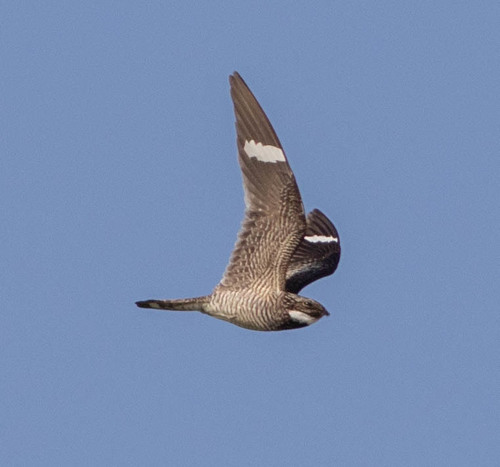 bacurau-norte-americano
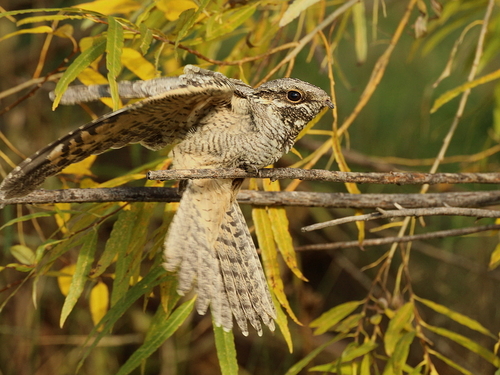 noitibó-cinzento
Em resumo
A marca de campo mais confiável entre o bacurau-norte-americano e o noitibó-cinzento é a presença e o padrão de manchas brancas nas asas e na cauda, especialmente em voo e para machos adultos. O bacurau-norte-americano de todas as idades apresenta uma ousada mancha branca na asa (menor em juvenis), enquanto o macho adulto do noitibó-cinzento tem uma mancha branca na asa e cantos brancos na cauda, mas fêmeas e juvenis não possuem essas áreas brancas. A estrutura também ajuda: o bacurau-norte-americano é mais esguio, com asas mais longas e pontiagudas e uma cauda recortada, e muitas vezes parece mais errático em voo. Ambas as espécies são crípticas quando empoleiradas, mas o noitibó-cinzento é mais robusto e não possui o distinto flash branco da asa do bacurau (exceto em machos adultos). As vocalizações são bastante diferentes, com o bacurau emitindo um agudo 'peent' e o noitibó um longo trinado mecânico.
Dicas de identificação
- Mancha branca na asa em voo: O bacurau-norte-americano de todas as idades e sexos apresenta uma ousada mancha branca nas primárias, visível como um grande flash em voo. Os machos do noitibó-cinzento têm uma mancha branca menor (em três primárias), mas fêmeas e juvenis não possuem branco nas asas. Se você ver um grande e óbvio flash branco na asa, especialmente em um pássaro esguio e de voo errático, é um bacurau.
- Padrão da cauda: O macho do noitibó-cinzento tem pontas brancas nas duas penas externas da cauda, visíveis em voo; fêmeas e juvenis não possuem isso. O bacurau-norte-americano tem uma cauda recortada, mas sem cantos brancos na cauda.
- Confusão juvenil: Os juvenis de bacurau são mais claros e têm uma mancha branca na asa menor, mas ainda mostram algum branco. O juvenil do noitibó-cinzento não possui branco nas asas/cauda e se assemelha à fêmea adulta do noitibó—uniformemente críptico, cinza-acastanhado.
- Estrutura em voo: O bacurau-norte-americano é mais esguio, com asas longas e pontiagudas e uma cauda recortada, dando uma silhueta mais angular, semelhante a um falcão. O noitibó-cinzento é mais robusto, com asas mais largas e corpo mais arredondado.
- Estilo de voo: O voo do bacurau é flutuante, errático e muitas vezes alto no céu. O voo do noitibó-cinzento é mais suave, mais flutuante e silencioso, muitas vezes mais baixo em relação ao solo.
- Postura empoleirada: Ambos empoleiram-se horizontalmente, mas as asas do bacurau se estendem além da cauda e ele frequentemente escolhe poleiros abertos e expostos (por exemplo, telhados, postes). O noitibó-cinzento é mais propenso a ser encontrado no chão ou em ramos baixos em cobertura densa.
- Características faciais: O noitibó-cinzento tem um colar pálido de pescoço e uma linha bigode branca, mas essas são sutis e nem sempre visíveis. O bacurau tem uma cabeça grande e achatada com olhos grandes e não possui penas rictais.
- Detalhes da plumagem: Ambos têm padrões intrincados, mas apenas o bacurau possui uma mancha branca consistente na asa. O noitibó é mais uniformemente cinza-acastanhado com listras claras e marrons abaixo.
- Vocalização: Ouça o agudo chamado 'peent' do bacurau, especialmente ao anoitecer. A canção do macho do noitibó-cinzento é um longo trinado mecânico, frequentemente de um poleiro.
- Diferenças sexuais: Apenas o macho do noitibó-cinzento apresenta branco nas asas e na cauda; fêmeas e juvenis não possuem essas marcas. Ambos os sexos do bacurau têm a mancha branca na asa.
- Muda sazonal: Ambas as espécies completam sua muda principal em áreas de invernada, mas isso não é uma marca de campo.
- Contexto de habitat: Se estiver nas Américas, apenas o bacurau-norte-americano é possível; na Europa/Palearctic, o noitibó-cinzento é o padrão. No entanto, sempre verifique as marcas de campo em caso de vagância.
- Comportamento em repouso: O bacurau é mais propenso a ser visto empoleirado em locais abertos, enquanto o noitibó é mais secreto e camuflado.
- Impressão de tamanho: Ambos são semelhantes em tamanho, mas o bacurau parece mais esguio e angular, enquanto o noitibó é mais robusto e arredondado.
- Armadilhas: Fêmeas e juvenis do noitibó-cinzento podem ser confundidos com o bacurau se a mancha branca na asa não for verificada; juvenis de bacurau têm uma mancha branca reduzida, mas ainda visível.
Tamanho
Ambas as espécies são semelhantes em massa, com o bacurau-norte-americano pesando em média cerca de 79 g [wikidata], e os machos do noitibó-cinzento variando de 51 a 101 g e fêmeas de 67 a 95 g [wikipedia]. O noitibó-cinzento é ligeiramente mais longo (24,5–28 cm) do que o bacurau-norte-americano (22–25 cm), mas suas envergaduras se sobrepõem (bacurau: 51–61 cm, noitibó: 52–59 cm). No campo, o bacurau pode parecer mais esguio e angular devido às suas asas longas e pontiagudas e cauda recortada, enquanto o noitibó é mais robusto e arredondado.
Plumagem
- Pássaros juvenis/imaturos: O juvenil do bacurau-norte-americano é mais claro no geral e apresenta uma mancha branca na asa menor do que os adultos, mas ainda tem algum branco visível em voo. O juvenil do noitibó-cinzento se assemelha às fêmeas adultas, não possuindo branco nas asas ou cauda, tornando-se mais uniformemente críptico e cinza-acastanhado acima, com listras claras e marrons abaixo.
- Machos adultos: Ambos os machos adultos das espécies mostram branco nas asas, mas o padrão difere. O bacurau-norte-americano (todas as idades/sexos) tem uma ousada mancha branca nas primárias, visível como um grande flash em voo. O macho do noitibó-cinzento tem uma mancha branca menor (em três primárias) e pontas brancas nas penas externas da cauda, mas a mancha da asa é menos extensa e o branco da cauda é diagnóstico apenas para machos.
- Fêmeas adultas: A fêmea do noitibó-cinzento não possui branco nas asas ou cauda, enquanto a fêmea do bacurau-norte-americano ainda mostra a mancha branca na asa. Ambas as espécies têm padrões intrincados com listras crípticas e manchas, mas apenas o bacurau possui um flash branco consistente na asa em todas as idades e sexos.
- Pássaros empoleirados: Ambos são muito crípticos, mas as asas do bacurau se estendem além de sua cauda recortada, e ele frequentemente se empoleira horizontalmente em superfícies abertas. O noitibó-cinzento é mais robusto e apresenta um colar pálido de pescoço e uma linha bigode branca, mas essas são sutis no campo.
Comportamento
O bacurau-norte-americano é mais conspícuo em voo flutuante e errático, muitas vezes alto no céu, e é menos frequentemente visto no chão. Ele se empoleira horizontalmente em ramos, postes ou superfícies planas, às vezes em telhados. O noitibó-cinzento também é crepuscular/nocturno, mas tende a voar mais baixo, com um voo mais suave, flutuante e silencioso. Os noitibós são mais difíceis de assustar e observar, dependendo fortemente da camuflagem quando empoleirados. Ambos são difíceis de avistar durante o dia, mas o bacurau é mais propenso a ser visto voando ao anoitecer ou ao amanhecer.
Habitat
O bacurau-norte-americano é encontrado em toda a América, frequentemente em habitats abertos, cidades e telhados. O noitibó-cinzento se reproduz na Europa e na Palearctic, preferindo florestas abertas, charnecas e arbustos. Embora ambos prefiram habitats abertos ou semi-abertos para forragear, suas distribuições não se sobrepõem, e o noitibó-cinzento nunca é encontrado nas Américas. O habitat sozinho não é diagnóstico se o observador estiver em uma região onde apenas uma espécie ocorre.
Voz
O bacurau-norte-americano emite um chamado distinto e agudo 'peent', frequentemente ouvido ao anoitecer ou durante mergulhos de exibição. O macho do noitibó-cinzento produz um longo trinado contínuo de churring de um poleiro, às vezes por até 10 minutos, com trinos borbulhantes ocasionais e palmas de asas. A canção do noitibó é ventriloquial e pode ser confundida com grilos de toupeira, enquanto o chamado do bacurau é curto e facilmente distinguível. Ambas as espécies têm chamados de alarme e ameaça, mas estes são menos propensos a serem diagnósticos no campo.
bacurau-norte-americano · noitibó-cinzento · Minhas aves difíceis