
Amerikaanse nachtzwaluw vs Nachtzwaluw
Chordeiles minor versus Caprimulgus europaeus
Speel een quiz met Amerikaanse nachtzwaluw en Nachtzwaluw
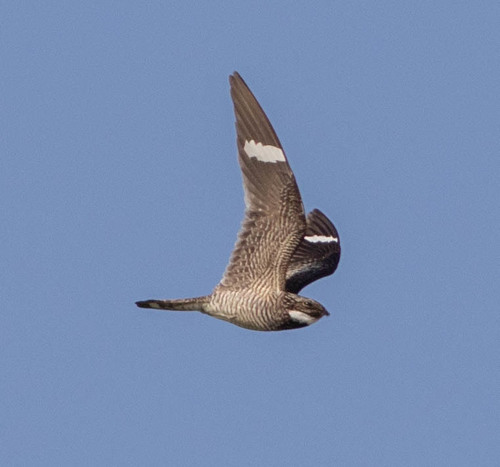 Amerikaanse nachtzwaluw
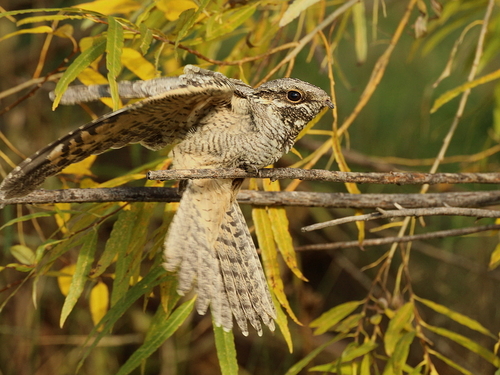 Nachtzwaluw
Kort gezegd
Het meest betrouwbare veldkenmerk tussen Amerikaanse nachtzwaluw en Nachtzwaluw is de aanwezigheid en het patroon van witte vlekken op de vleugels en staart, vooral in de vlucht en voor volwassen mannetjes. Amerikaanse nachtzwaluw van alle leeftijden toont een gedurfde witte vleugelvlek (kleiner bij juvenielen), terwijl het volwassen mannelijke Nachtzwaluw een witte vleugelvlek en witte staarthoeken heeft, maar vrouwtjes en juvenielen missen deze witte gebieden. De structuur helpt ook: Amerikaanse nachtzwaluw is slanker, met langere, meer puntige vleugels en een ingesneden staart, en lijkt vaak onvoorspelbaarder in de vlucht. Beide soorten zijn cryptisch wanneer ze zitten, maar Nachtzwaluw is robuuster en mist de kenmerkende witte vleugelflits van de nachtzwaluw (behalve bij volwassen mannetjes). Vocalisaties zijn behoorlijk verschillend, waarbij de nachtzwaluw een scherpe peent geeft en de nachtzwaluw een lange, grommende triller.
Herkenningstips
- Witte vleugelvlek in vlucht: Amerikaanse nachtzwaluw van alle leeftijden en geslachten toont een gedurfde witte vlek over de primair, zichtbaar als een grote flits in de vlucht. Mannelijke Nachtzwaluw heeft een kleinere witte vlek (over drie primair), maar vrouwtjes en juvenielen missen enige wit in de vleugels. Als je een grote, duidelijke witte vleugelflits ziet, vooral op een slanke, onvoorspelbaar vliegende vogel, is het een nachtzwaluw.
- Staartpatroon: Mannelijke Nachtzwaluw heeft witte tips op de twee buitenste staartveren, zichtbaar in de vlucht; vrouwtjes en juvenielen missen dit. Amerikaanse nachtzwaluw heeft een ingesneden staart maar geen witte staarthoeken.
- Verwarring bij juvenielen: Juveniele nachtzwaluwen zijn bleker en hebben een kleinere witte vleugelvlek, maar tonen nog steeds wat wit. Juveniele Nachtzwaluw mist wit in vleugels/staart en lijkt op het volwassen vrouwtje van de nachtzwaluw—uniform cryptisch, bruin-grijs.
- Structuur in vlucht: Amerikaanse nachtzwaluw is slanker, met lange, puntige vleugels en een ingesneden staart, wat een meer hoekige, valkachtige silhouet geeft. Nachtzwaluw is robuuster, met bredere vleugels en een rondere romp.
- Vluchtstijl: De vlucht van de nachtzwaluw is luchtig, onvoorspelbaar en vaak hoog boven het hoofd. De vlucht van de Nachtzwaluw is zachter, luchtiger en stil, vaak lager bij de grond.
- Zittende houding: Beide zitten horizontaal, maar de vleugels van de nachtzwaluw steken voorbij de staart en hij kiest vaak open, blootgestelde zitplaatsen (bijv. daken, palen). Nachtzwaluw wordt vaker op de grond of op lage takken in dichte dekking aangetroffen.
- Gezichtskenmerken: Nachtzwaluw heeft een bleke buffkleurige kraag op de achterhals en een witte snorlijn, maar deze zijn subtiel en niet altijd zichtbaar. Nachtzwaluw heeft een groot, afgeplat hoofd met grote ogen en mist rictale borstelharen.
- Vederdetails: Beide zijn ingewikkeld gepattern, maar alleen de nachtzwaluw heeft een consistente witte vleugelvlek. Nachtzwaluw is meer uniform grijs-bruin met buff- en bruine strepen onderaan.
- Vocalisatie: Luister naar de scherpe 'peent' roep van de nachtzwaluw, vooral bij schemering. Het mannelijke lied van de Nachtzwaluw is een lange, mechanische grommende triller, vaak vanuit een zitplaats.
- Geslachtsverschillen: Alleen het mannelijke Nachtzwaluw toont wit in de vleugels en staart; vrouwtjes en juvenielen missen deze markeringen. Beide geslachten van de nachtzwaluw hebben de witte vleugelvlek.
- Seizoensgebonden vervelling: Beide soorten voltooien hun belangrijkste vervelling op overwinteringsgebieden, maar dit is geen veldkenmerk.
- Habitatcontext: Als je in de Amerika's bent, is alleen Amerikaanse nachtzwaluw mogelijk; in Europa/Palearctisch is Nachtzwaluw de standaard. Controleer echter altijd de veldkenmerken in geval van zeldzaamheid.
- Gedrag in rust: Nachtzwaluw is waarschijnlijker te zien rusten in het open, terwijl de nachtzwaluw meer geheimzinnig en gecamoufleerd is.
- Grootte-indruk: Beide zijn vergelijkbaar in grootte, maar de nachtzwaluw lijkt slanker en hoekiger, de nachtzwaluw robuuster en ronder.
- Valstrikken: Vrouwelijke en juveniele Nachtzwaluw kunnen worden verward met de nachtzwaluw als de witte vleugelvlek niet wordt gecontroleerd; juveniele nachtzwaluwen hebben een verminderde maar nog steeds zichtbare witte vlek.
Grootte
Beide soorten zijn vergelijkbaar in massa, met Amerikaanse nachtzwaluw die gemiddeld ongeveer 79 g weegt [wikidata], en mannelijke Nachtzwaluw die varieert van 51–101 g en vrouwelijke van 67–95 g [wikipedia]. Nachtzwaluw is iets langer (24,5–28 cm) dan Amerikaanse nachtzwaluw (22–25 cm), maar hun vleugelspanwijdtes overlappen (nachtzwaluw: 51–61 cm, nachtzwaluw: 52–59 cm). In het veld kan de nachtzwaluw slanker en hoekiger lijken door zijn lange, puntige vleugels en ingesneden staart, terwijl de nachtzwaluw robuuster en ronder is.
Verenkleed
- Juveniele/onvolwassen vogels: Juveniele Amerikaanse nachtzwaluw is over het algemeen bleker en toont een kleinere witte vleugelvlek dan volwassenen, maar heeft nog steeds wat wit zichtbaar in de vlucht. Juveniele Nachtzwaluw lijkt op volwassen vrouwtjes, mist enige wit in de vleugels of staart, waardoor ze uniform cryptisch en bruin-grijs bovenaan zijn met buff- en bruine strepen onderaan.
- Volwassen mannetjes: Beide soorten volwassen mannetjes tonen wit in de vleugels, maar het patroon verschilt. Amerikaanse nachtzwaluw (alle leeftijden/geslachten) heeft een gedurfde witte vlek over de primair, zichtbaar als een grote flits in de vlucht. Mannelijke Nachtzwaluw heeft een kleinere witte vlek (over drie primair) en witte tips op de buitenste staartveren, maar de vleugelvlek is minder uitgebreid en het witte van de staart is diagnostisch voor mannelijke alleen.
- Volwassen vrouwtjes: Vrouwelijke Nachtzwaluw mist enige wit in de vleugels of staart, terwijl vrouwelijke Amerikaanse nachtzwaluw nog steeds de witte vleugelvlek toont. Beide soorten zijn ingewikkeld gepattern met cryptische strepen en vlekken, maar alleen de nachtzwaluw heeft een consistente witte vleugelflits over alle leeftijden en geslachten.
- Zittende vogels: Beide zijn zeer cryptisch, maar de vleugels van de nachtzwaluw steken voorbij zijn ingesneden staart, en hij zit vaak horizontaal op open oppervlakken. Nachtzwaluw is robuuster en toont een bleke buffkleurige kraag op de achterhals en een witte snorlijn, maar deze zijn subtiel in het veld.
Gedrag
Amerikaanse nachtzwaluw is het meest opvallend in luchtige, onvoorspelbare vlucht, vaak hoog boven het hoofd, en wordt minder vaak op de grond gezien. Hij zit horizontaal op takken, palen of vlakke oppervlakken, soms op daken. Nachtzwaluw is ook schemerig/nachtelijk maar neigt ernaar lager te vliegen, met een zachtere, luchtigere en stille vlucht. Nachtzwaluwen zijn moeilijker te verjagen en te observeren, en vertrouwen sterk op camouflage wanneer ze zitten. Beide zijn moeilijk te spotten tijdens de dag, maar de nachtzwaluw is waarschijnlijker te zien vliegen bij schemering of zonsopgang.
Habitat
Amerikaanse nachtzwaluw wordt overal in de Amerika's aangetroffen, vaak in open habitats, steden en op daken. Nachtzwaluw broedt in heel Europa en het Palearctisch gebied, met een voorkeur voor open bossen, heide en struikgewas. Hoewel beide de voorkeur geven aan open of semi-open habitats voor voedsel, overlappen hun gebieden niet, en Nachtzwaluw wordt nooit in de Amerika's aangetroffen. Alleen het habitat is niet diagnostisch als de waarnemer zich in een gebied bevindt waar slechts één soort voorkomt.
Geluid
Amerikaanse nachtzwaluw geeft een kenmerkende, scherpe 'peent' roep, vaak gehoord bij schemering of tijdens vertoningsduiken. Het mannelijke lied van de Nachtzwaluw produceert een lange, continue grommende triller vanuit een zitplaats, soms tot 10 minuten, met af en toe borrelende trillers en vleugelklappen. Het lied van de nachtzwaluw is ventriloquistisch en kan worden verward met molkrekels, terwijl de roep van de nachtzwaluw kort en gemakkelijk te onderscheiden is. Beide soorten hebben alarm- en dreigroepen, maar deze zijn minder waarschijnlijk diagnostisch in het veld.