

airo vs rusty blackbird
Uria aalge versus Euphagus carolinus
Jogue um quiz com airo e rusty blackbird
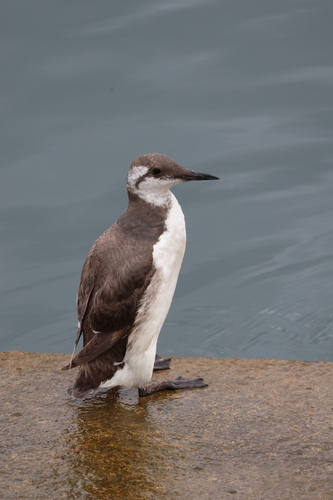 airo
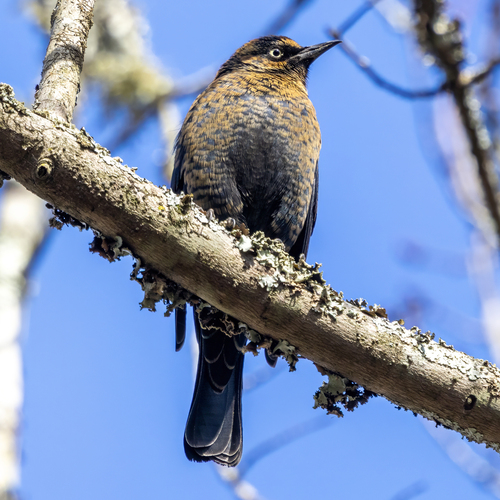 rusty blackbird
Em resumo
A maneira mais confiável de separar airo de rusty blackbird é pela estrutura geral e habitat: airo é uma ave marinha de corpo robusto com um bico afiado e em forma de adaga e cauda curta, geralmente vista em penhascos ou no mar, enquanto rusty blackbird é um pássaro cantor esbelto, terrestre, com um bico pontudo, mas mais fino, e um olho amarelo pálido, frequentemente encontrado em florestas úmidas ou perto de água no interior. Em voo, airo mostra asas estreitas e pontudas e uma barriga branca, enquanto rusty blackbird tem asas mais largas e uma aparência escura mais uniforme com um olho mais claro. Mudanças sazonais na plumagem podem ser confusas para ambas as espécies, mas o airo nunca mostra os tons enferrujados ou o olho pálido do blackbird. Se você ver um pássaro com um corpo inferior branco e partes superiores escuras na água ou em penhascos, é um airo; se estiver forrageando em uma floresta úmida ou em bandos com outros blackbirds, é um rusty blackbird.
Dicas de identificação
- O habitat é frequentemente decisivo: airo é marinho/costeiro, rusty blackbird é terrestre em florestas úmidas ou campos. Se você ver um pássaro longe do mar, quase certamente não é um airo.
- Tamanho e forma do corpo: airo é muito maior e mais pesado, com um corpo robusto e cauda curta; rusty blackbird é esbelto e muito menor.
- Estrutura do bico: airo tem um bico longo, fino e em forma de adaga; o bico do rusty blackbird é pontudo, mas mais curto, mais fino e mais típico de um pássaro cantor.
- Cor das pernas: as pernas do airo são cinza escuro a pretas; a cor das pernas do rusty blackbird não é diagnóstica, mas nunca tão pesadas ou posicionadas tão para trás quanto as do airo.
- Cor dos olhos: rusty blackbird sempre tem um olho amarelo pálido (adulto), que se destaca à distância; o olho do airo é escuro, nunca pálido.
- Contraste da plumagem: airo mostra partes superiores pretas (ou marrons) nítidas e partes inferiores brancas, especialmente na época de reprodução; rusty blackbird é todo escuro ou com bordas enferrujadas, nunca bicolor nitidamente.
- Plumagem de inverno: o rosto do airo fica branco com um esporão escuro, mas o corpo permanece preto acima e branco abaixo; rusty blackbird desenvolve bordas de penas enferrujadas extensas e sempre mantém o olho pálido.
- Confusão com airo de crina: alguns airos mostram um anel e linha brancos ao redor dos olhos, mas a íris ainda é escura, e o pássaro é sempre muito mais robusto do que qualquer blackbird.
- Estilo de voo: airo voa com batidas rápidas e zumbidoras das asas e parece pesado, frequentemente voando baixo sobre a água; rusty blackbird tem um voo mais típico de blackbird, com explosões de batidas e deslizamentos, e é mais leve nas asas.
- Postura empoleirada: airo fica ereto, semelhante a um pinguim, especialmente em penhascos; rusty blackbird empoleira-se horizontalmente em galhos ou fios.
- Bando: airo é colonial apenas em locais de reprodução, caso contrário, é solitário ou em pequenos grupos no mar; rusty blackbird frequentemente se junta a outros blackbirds e estorninhos, especialmente no inverno.
- Vocalizações: o chamado do airo é um rugido profundo, rusty blackbird emite gritos agudos e gorgolejos; se você ouvir uma canção musical ou estridente, não é um airo.
- Confusão juvenil: jovens airos se assemelham a adultos no inverno, com rostos brancos e esporões escuros, mas nunca mostram os tons enferrujados ou o olho pálido de jovens ou adultos rusty blackbird.
- Comportamento alimentar: airo mergulha debaixo d'água em busca de peixes, frequentemente visto emergindo no mar; rusty blackbird investiga lama ou água rasa em busca de invertebrados, nunca mergulha.
- Dicas de contexto: se você está observando um penhasco marinho ou oceano, espere ver um airo; se você está em um pântano, floresta úmida ou campo com blackbirds, espere ver um rusty blackbird.
Tamanho
Airo é muito maior e mais pesado do que rusty blackbird. Airo mede 38–46 cm de comprimento e pesa 775–1.250 g ([wikipedia]), tornando-se uma ave marinha robusta. Rusty blackbird é um pássaro cantor de tamanho médio, pesando apenas cerca de 60 g ([wikidata]), e é muito mais esbelto e leve. Mesmo à distância, o tamanho e a construção robusta do airo são aparentes em comparação com o rusty blackbird, muito menor e mais delicado.
Plumagem
-
Juvenil/Primeiro inverno/Imaturo: Nenhum padrão distinto de asa superior é descrito para ambas as espécies nessas idades; ambas têm cor semelhante na asa superior em relação aos adultos, mas os juvenis de airo e os pássaros do primeiro inverno se assemelham à plumagem de inverno dos adultos, com rostos brancos e esporões escuros atrás dos olhos. Os juvenis de rusty blackbird não são descritos em detalhes, mas os adultos no inverno mostram bordas enferrujadas fortes nas penas, especialmente nas costas e flancos, e sempre têm um olho amarelo pálido.
-
Adulto em Reprodução: Airo é preto (ou marrom escuro em populações do sul) acima e branco abaixo, com um contraste nítido entre os dois; o rosto é totalmente escuro. Machos de rusty blackbird são pretos brilhantes com brilho verde e roxo, fêmeas são mais cinzentas, e ambos têm um olho amarelo pálido. O blackbird nunca mostra o contraste nítido preto e branco ou as partes inferiores brancas do airo.
-
Adulto Não-reprodutor/Inverno: O rosto do airo fica branco com um esporão escuro atrás do olho, mas o resto das partes superiores permanece escuro e as partes inferiores brancas. Alguns airos mostram um anel e linha brancos ao redor dos olhos ('morfologia de crina'), mas nunca uma íris pálida. Rusty blackbird no inverno é escuro com bordas de penas enferrujadas extensas e sempre um olho amarelo pálido. Os tons enferrujados e o olho pálido nunca são vistos no airo.
Comportamento
Airo passa quase toda a sua vida no mar, vindo à terra apenas para reproduzir em penhascos ou ilhas rochosas, onde nidifica em colônias densas. Ele mergulha em busca de peixes e raramente é visto no interior ou longe da água. Rusty blackbird é um forrageador terrestre, frequentemente visto andando em solo úmido ou em água rasa, alimentando-se de insetos e sementes, e geralmente encontrado em pequenos bandos, às vezes com outros blackbirds. O comportamento do airo é mais semelhante ao de um pinguim, com postura ereta e caminhada desajeitada em terra, enquanto rusty blackbird se move mais como um blackbird típico, empoleirando-se em árvores e forrageando no chão.
Habitat
Airo é estritamente marinho, reproduzindo-se em penhascos marinhos e passando o resto do ano longe no mar. Nunca é encontrado no interior, longe de grandes corpos d'água. Rusty blackbird reproduz-se em florestas boreais e turfeiras, inverna em florestas úmidas, pântanos e campos alagados, e é encontrado longe do oceano. Se você ver um pássaro em uma floresta, pântano ou campo, é um rusty blackbird; se estiver em um penhasco marinho ou flutuando no oceano, é um airo.
Voz
O chamado principal do airo é um profundo e grave "murrrr," especialmente alto em colônias, e os filhotes emitem um assobio agudo. Rusty blackbird é mais silencioso no inverno, mas canta uma mistura de gorgolejos e gritos agudos na primavera. Os dois sons são completamente diferentes: airo é baixo e áspero, rusty blackbird é mais agudo e musical.