

Uria vs Rusty Blackbird
Uria aalge contro Euphagus carolinus
Fai un quiz con Uria e Rusty Blackbird
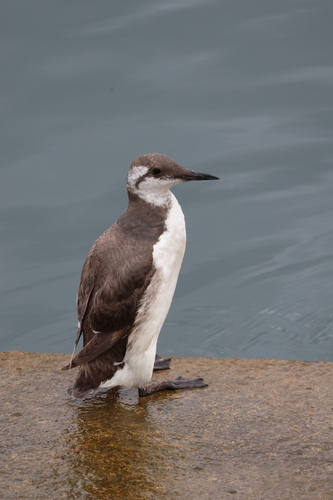 Uria
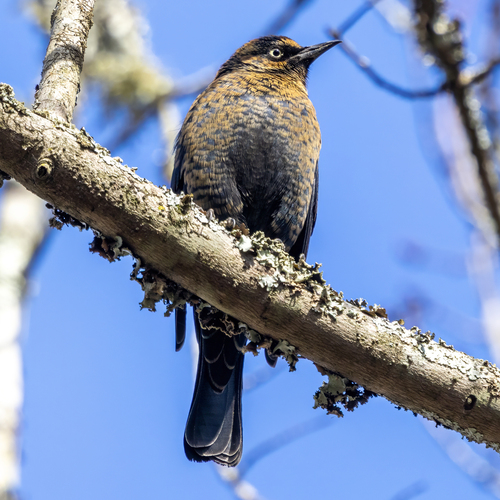 Rusty Blackbird
In breve
Il modo più affidabile per separare Uria da Rusty Blackbird è attraverso la struttura generale e l'habitat: Uria è un uccello marino di corpo pesante con un becco affilato a forma di pugnale e una coda corta, di solito visto su scogliere o in mare, mentre Rusty Blackbird è un uccello canoro terrestre snello con un becco appuntito ma più sottile e un occhio giallo pallido, spesso trovato in boschi umidi o vicino all'acqua nell'entroterra. In volo, Uria mostra ali strette e appuntite e un ventre bianco, mentre Rusty Blackbird ha ali più ampie e un aspetto scuro più uniforme con un occhio più chiaro. I cambiamenti di piumaggio stagionali possono essere confusi per entrambe le specie, ma Uria non mostra mai le tonalità rugginose o l'occhio pallido del blackbird. Se vedi un uccello con un corpo inferiore bianco e parti superiori scure sull'acqua o sulle scogliere, è un Uria; se sta cercando cibo in un bosco umido o si unisce ad altri blackbird, è un Rusty Blackbird.
Consigli di identificazione
- L'habitat è spesso decisivo: Uria è marino/costiero, Rusty Blackbird è nell'entroterra in boschi umidi o campi. Se vedi un uccello lontano dal mare, quasi certamente non è un Uria.
- Dimensione e forma del corpo: Uria è molto più grande e pesante, con un corpo robusto e una coda corta; Rusty Blackbird è snello e molto più piccolo.
- Struttura del becco: Uria ha un becco lungo, sottile e a forma di pugnale; il becco di Rusty Blackbird è appuntito ma più corto, più sottile e più tipico di un uccello canoro.
- Colore delle gambe: Le gambe di Uria sono grigio scuro o nere; il colore delle gambe di Rusty Blackbird non è diagnostico, ma mai così pesante o posizionato così indietro come quelle di Uria.
- Colore degli occhi: Rusty Blackbird ha sempre un occhio giallo pallido (adulto), che si distingue a distanza; l'occhio di Uria è scuro, mai pallido.
- Contrasto del piumaggio: Uria mostra parti superiori nere (o marroni) nette e parti inferiori bianche, specialmente in stagione di riproduzione; Rusty Blackbird è tutto scuro o con bordi rugginosi, mai nettamente bicolore.
- Piumaggio invernale: Il volto di Uria diventa bianco con uno sperone scuro, ma il corpo rimane nero sopra e bianco sotto; Rusty Blackbird sviluppa ampi bordi rugginosi sulle piume e mantiene sempre l'occhio pallido.
- Confusione con Uria bridled: Alcuni Uria mostrano un anello e una linea bianca attorno all'occhio, ma l'iride è ancora scura, e l'uccello è sempre molto più robusto di qualsiasi blackbird.
- Stile di volo: Uria vola con battiti d'ala rapidi e fruscianti e appare pesante, spesso basso sopra l'acqua; Rusty Blackbird ha un volo più tipico del blackbird, con esplosioni di battiti e planate, ed è più leggero in volo.
- Postura in perching: Uria sta eretta, simile a un pinguino, specialmente su scogliere; Rusty Blackbird si appollaia orizzontalmente su rami o fili.
- Flocking: Uria è coloniale solo nei siti di riproduzione, altrimenti solitaria o in piccoli gruppi in mare; Rusty Blackbird spesso si unisce ad altri blackbird e storni, specialmente in inverno.
- Vocalizzazioni: Il richiamo di Uria è un profondo ringhio, Rusty Blackbird emette fischi e gorgheggi alti; se senti una canzone musicale o squillante, non è un Uria.
- Confusione giovanile: I giovani Uria somigliano agli adulti in inverno, con volti bianchi e speroni scuri, ma non mostrano mai le tonalità rugginose o l'occhio pallido dei giovani o adulti Rusty Blackbird.
- Comportamento alimentare: Uria tuffa sott'acqua per pesci, spesso vista riemergere in mare; Rusty Blackbird esplora fango o acqua bassa per invertebrati, non tuffa mai.
- Indizi contestuali: Se stai osservando una scogliera marina o l'oceano, aspettati Uria; se sei in una palude, in un bosco umido o in un campo con blackbird, aspettati Rusty Blackbird.
Taglia
Uria è molto più grande e pesante di Rusty Blackbird. Uria misura 38–46 cm di lunghezza e pesa 775–1.250 g ([wikipedia]), rendendolo un uccello marino robusto. Rusty Blackbird è un uccello canoro di dimensioni medie, pesando solo circa 60 g ([wikidata]), ed è molto più snello e leggero. Anche a distanza, la dimensione e la corporatura robusta di Uria sono evidenti rispetto al Rusty Blackbird, molto più piccolo e delicato.
Piumaggio
-
Giovanile/Primo inverno/Immaturi: Non è descritto alcun modello distintivo della parte superiore dell'ala per entrambe le specie a queste età; entrambe hanno un colore della parte superiore dell'ala simile agli adulti, ma i giovani Uria e gli uccelli del primo inverno somigliano al piumaggio invernale degli adulti, con volti bianchi e speroni scuri dietro l'occhio. I giovani Rusty Blackbird non sono descritti in dettaglio, ma gli adulti in inverno mostrano forti bordi rugginosi sulle piume, specialmente sulla schiena e sui fianchi, e hanno sempre un occhio giallo pallido.
-
Riproduzione adulta: Uria è nera (o marrone scuro nelle popolazioni meridionali) sopra e bianca sotto, con un netto contrasto tra i due; il volto è completamente scuro. I maschi di Rusty Blackbird sono neri lucidi con riflessi verdi e viola, le femmine sono più grigie, e entrambi hanno un occhio giallo pallido. Il blackbird non mostra mai il netto contrasto bianco e nero o le parti inferiori bianche di Uria.
-
Non riproduzione/adulti/inverno: Il volto di Uria diventa bianco con uno sperone scuro dietro l'occhio, ma il resto delle parti superiori rimane scuro e le parti inferiori bianche. Alcuni Uria mostrano un anello e una linea bianca attorno all'occhio ('morfologia bridled'), ma mai un'iride pallida. Rusty Blackbird in inverno è scuro con ampi bordi rugginosi sulle piume e ha sempre un occhio giallo pallido. Le tonalità rugginose e l'occhio pallido non si vedono mai in Uria.
Comportamento
Uria trascorre quasi tutta la sua vita in mare, venendo a terra solo per riprodursi su scogliere rocciose o isole, dove nidifica in colonie dense. Tuffa per pesci ed è raramente vista nell'entroterra o lontano dall'acqua. Rusty Blackbird è un foraggiatore terrestre, spesso visto camminare su terreno umido o in acqua bassa, nutrendosi di insetti e semi, ed è solitamente trovato in piccoli gruppi, a volte con altri blackbird. Il comportamento di Uria è più simile a quello di un pinguino, con postura eretta e camminata goffa sulla terra, mentre Rusty Blackbird si muove più come un tipico blackbird, appollaiandosi sugli alberi e foraggiando a terra.
Habitat
Uria è strettamente marino, nidificando su scogliere marine e trascorrendo il resto dell'anno lontano in mare. Non si trova mai nell'entroterra lontano da grandi corpi d'acqua. Rusty Blackbird nidifica in foreste boreali e paludi, sverna in boschi umidi, paludi e campi allagati, e si trova lontano dall'oceano. Se vedi un uccello in una foresta, in una palude o in un campo, è un Rusty Blackbird; se è su una scogliera marina o galleggia sull'oceano, è un Uria.
Voce
Il richiamo principale di Uria è un profondo, ringhiante "murrrr," particolarmente forte nelle colonie, e i pulcini emettono un fischio acuto. Rusty Blackbird è più silenzioso in inverno ma canta un mix di gorgheggi e fischi acuti in primavera. I due suoni non sono affatto simili: Uria è basso e aspro, Rusty Blackbird è più acuto e musicale.