

Arao Común vs Zanate Canadiense
Uria aalge frente a Euphagus carolinus
Juega un quiz con Arao Común y Zanate Canadiense
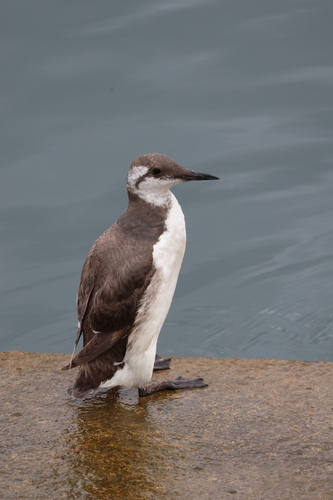 Arao Común
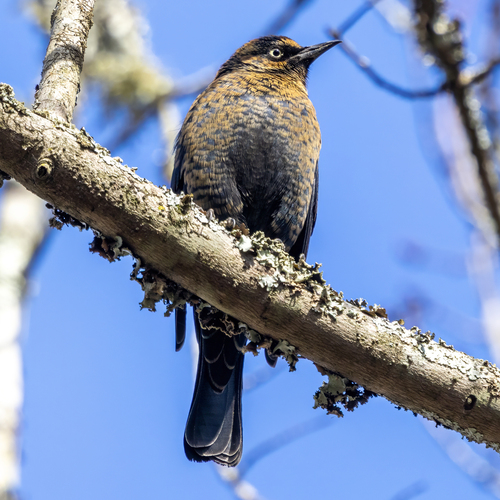 Zanate Canadiense
En breve
La forma más confiable de separar el Arao Común del Zanate Canadiense es por su estructura general y hábitat: el Arao es un ave marina de cuerpo robusto con un pico afilado, en forma de daga, y una cola corta, que generalmente se ve en acantilados o en el mar, mientras que el Zanate Canadiense es un ave cantora terrestre esbelta con un pico puntiagudo pero más delgado y un ojo amarillo pálido, que a menudo se encuentra en bosques húmedos o cerca de agua en el interior. En vuelo, el Arao muestra alas estrechas y puntiagudas y un vientre blanco, mientras que el Zanate Canadiense tiene alas más anchas y una apariencia oscura más uniforme con un ojo más claro. Los cambios estacionales en el plumaje pueden ser confusos para ambas especies, pero el Arao nunca muestra los tonos oxidados o el ojo pálido del zanate. Si ves un ave con un cuerpo inferior blanco y partes superiores oscuras en el agua o en acantilados, es un Arao; si está forrajeando en un bosque húmedo o en bandadas con otros zanates, es un Zanate Canadiense.
Consejos de identificación
- El hábitat suele ser decisivo: El Arao es marino/costero, el Zanate Canadiense es terrestre en bosques húmedos o campos. Si ves un ave lejos del mar, casi con certeza no es un Arao.
- Tamaño y forma del cuerpo: El Arao es mucho más grande y pesado, con un cuerpo robusto y una cola corta; el Zanate Canadiense es delgado y mucho más pequeño.
- Estructura del pico: El Arao tiene un pico largo, delgado y en forma de daga; el pico del Zanate Canadiense es puntiagudo pero más corto, más delgado y más típico de un ave cantora.
- Color de las patas: Las patas del Arao son de color gris oscuro a negro; el color de las patas del Zanate Canadiense no es diagnóstico, pero nunca es tan pesado ni está tan atrás como las del Arao.
- Color de los ojos: El Zanate Canadiense siempre tiene un ojo amarillo pálido (adulto), que destaca a distancia; el ojo del Arao es oscuro, nunca pálido.
- Contraste del plumaje: El Arao muestra partes superiores negras (o marrones) nítidas y partes inferiores blancas, especialmente en la temporada de cría; el Zanate Canadiense es todo oscuro o con bordes oxidados, nunca bicolorado de manera nítida.
- Plumaje invernal: La cara del Arao se vuelve blanca con un espolón oscuro, pero el cuerpo permanece negro por encima y blanco por debajo; el Zanate Canadiense desarrolla bordes de plumas oxidadas extensos y siempre mantiene el ojo pálido.
- Confusión con el Arao con brida: Algunos Araos muestran un anillo ocular y una línea blanca, pero el iris sigue siendo oscuro, y el ave siempre es mucho más robusta que cualquier zanate.
- Estilo de vuelo: El Arao vuela con aleteos rápidos y zumbantes y parece pesado, a menudo bajo sobre el agua; el Zanate Canadiense tiene un vuelo más típico de zanate, con ráfagas de aleteo y planeo, y es más ligero en el ala.
- Postura posada: El Arao se mantiene erguido, como un pingüino, especialmente en acantilados; el Zanate Canadiense se posa horizontalmente en ramas o cables.
- Bandadas: El Arao es colonial solo en sitios de cría, de lo contrario es solitario o en pequeños grupos en el mar; el Zanate Canadiense a menudo se agrupa con otros zanates y estorninos, especialmente en invierno.
- Vocalizaciones: El llamado del Arao es un profundo gruñido, el Zanate Canadiense emite chirridos agudos y gorgoteos; si escuchas una canción musical o chirriante, no es un Arao.
- Confusión juvenil: Los jóvenes Araos se asemejan a los adultos en invierno, con caras blancas y espolones oscuros, pero nunca muestran los tonos oxidados o el ojo pálido de los jóvenes o adultos Zanate Canadiense.
- Comportamiento alimenticio: El Arao se sumerge bajo el agua en busca de peces, a menudo se ve saliendo a la superficie en el mar; el Zanate Canadiense sondea barro o agua poco profunda en busca de invertebrados, nunca se sumerge.
- Pistas contextuales: Si estás escaneando un acantilado marino o el océano, espera un Arao; si estás en un pantano, bosque húmedo o campo con zanates, espera un Zanate Canadiense.
Tamaño
El Arao Común es mucho más grande y pesado que el Zanate Canadiense. El Arao mide entre 38 y 46 cm de longitud y pesa entre 775 y 1,250 g ([wikipedia]), lo que lo convierte en un ave marina robusta. El Zanate Canadiense es un ave cantora de tamaño mediano, que pesa solo alrededor de 60 g ([wikidata]), y es mucho más delgado y ligero. Incluso a distancia, el tamaño y la constitución robusta del Arao son evidentes en comparación con el Zanate Canadiense, que es mucho más pequeño y delicado.
Plumaje
-
Juvenil/Primer invierno/Inmaduro: No se describe un patrón distintivo en la parte superior del ala para ninguna de las especies en estas edades; ambas tienen un color similar en la parte superior del ala que los adultos, pero los juveniles de Arao y los de primer invierno se asemejan al plumaje invernal de los adultos, con caras blancas y espolones oscuros detrás del ojo. Los juveniles de Zanate Canadiense no se describen en detalle, pero los adultos en invierno muestran bordes oxidados fuertes en las plumas, especialmente en la espalda y los flancos, y siempre tienen un ojo amarillo pálido.
-
Adulto en cría: El Arao es negro (o marrón oscuro en poblaciones del sur) por encima y blanco por debajo, con un contraste nítido entre ambos; la cara es completamente oscura. Los machos de Zanate Canadiense son de un negro brillante con un brillo verde y púrpura, las hembras son más grisáceas, y ambos tienen un ojo amarillo pálido. El zanate nunca muestra el contraste nítido en blanco y negro o las partes inferiores blancas del Arao.
-
Adulto no en cría/invernal: La cara del Arao se vuelve blanca con un espolón oscuro detrás del ojo, pero el resto de las partes superiores permanece oscuro y las partes inferiores blancas. Algunos Araos muestran un anillo ocular y una línea blanca ('morfología con brida'), pero nunca un iris pálido. El Zanate Canadiense en invierno es oscuro con bordes de plumas oxidadas extensos y siempre un ojo amarillo pálido. Los tonos oxidados y el ojo pálido nunca se ven en el Arao.
Comportamiento
El Arao Común pasa casi toda su vida en el mar, llegando a tierra solo para criar en acantilados o islas rocosas, donde anida en colonias densas. Se sumerge en busca de peces y rara vez se ve en el interior o lejos del agua. El Zanate Canadiense es un forrajero terrestre, a menudo visto caminando sobre suelo húmedo o en agua poco profunda, alimentándose de insectos y semillas, y generalmente se encuentra en pequeños grupos, a veces con otros zanates. El comportamiento del Arao es más parecido al de un pingüino, con una postura erguida y una caminata torpe en tierra, mientras que el Zanate Canadiense se mueve más como un zanate típico, posándose en árboles y forrajeando en el suelo.
Hábitat
El Arao es estrictamente marino, criando en acantilados marinos y pasando el resto del año lejos en el mar. Nunca se encuentra en el interior, lejos de grandes cuerpos de agua. El Zanate Canadiense cría en bosques boreales y pantanos, inverna en bosques húmedos, pantanos y campos inundados, y se encuentra lejos del océano. Si ves un ave en un bosque, pantano o campo, es un Zanate Canadiense; si está en un acantilado marino o flotando en el océano, es un Arao.
Voz
El llamado principal del Arao es un profundo y gruñido "murrrr," especialmente fuerte en las colonias, y los polluelos emiten un silbido agudo. El Zanate Canadiense es más silencioso en invierno, pero canta una mezcla de gorgoteos y chirridos agudos en primavera. Los dos no suenan nada parecido: el Arao es bajo y áspero, el Zanate Canadiense es más agudo y musical.