

japu-de-capacete vs yellow-tailed oriole
Cacicus oseryi versus Icterus mesomelas
Jogue um quiz com japu-de-capacete e yellow-tailed oriole
 japu-de-capacete
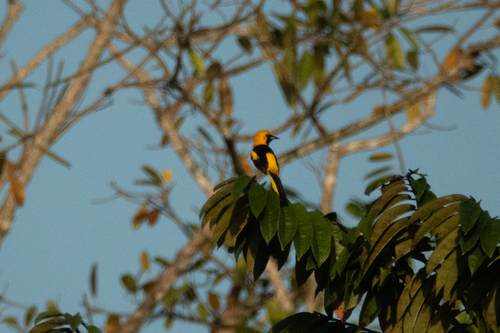 yellow-tailed oriole
Em resumo
A marca de campo mais confiável é a cor geral do corpo: o japu-de-capacete adulto é castanho profundo com destaques amarelos, enquanto o yellow-tailed oriole é principalmente amarelo brilhante com costas e face pretas. Em voo ou empoleirado, o grande tamanho do cacique, o casque proeminente e o corpo castanho rico o diferenciam da aparência menor, mais esbelta e vividamente amarela do oriole. As plumagens juvenis são menos distintas, mas o cacique permanece mais escuro e volumoso, enquanto os jovens orioles têm costas oliva e amarelo embaixo. Ambas as espécies têm amarelo na cauda, mas o padrão e o contexto diferem. Se você ver um grande pássaro castanho com um casque e bordas amarelas na cauda, é um cacique; um pássaro menor, principalmente amarelo, com costas e face pretas é o oriole.
Dicas de identificação
- Cor geral: O japu-de-capacete adulto é castanho profundo com destaques amarelos; o yellow-tailed oriole é amarelo brilhante com costas e face pretas. Esta é a separação de campo mais rápida em boa luz.
- Tamanho e forma: O cacique é muito maior e mais volumoso que o oriole—quase o dobro do comprimento e várias vezes mais pesado. Se o pássaro parece do tamanho de um corvo, é um cacique; se estiver mais próximo de um grande sanhaço ou pequeno oriole, é o oriole.
- Casque: Apenas o japu-de-capacete tem um casque proeminente no bico (maior nos machos, menor nas fêmeas), colorido de cinza amarelado a cinza escuro. O bico do yellow-tailed oriole é esbelto e não tem casque. Isso é diagnóstico a curta distância.
- Padrão da cauda: Ambos têm amarelo na cauda, mas no cacique, a cauda é oliva escura com apenas as penas externas amarelas brilhantes; no oriole, a cauda é preta por cima com margens amarelas e parece quase totalmente amarela por baixo. Em voo, procure o padrão: o cacique mostra amarelo apenas na cauda externa, o oriole mostra mais amarelo extenso.
- Padrão das asas: O japu-de-capacete tem bordas amarelas nas penas de voo; o yellow-tailed oriole tem asas pretas com epauletes amarelos. Os orioles juvenis não têm o preto, mostrando oliva em vez disso, mas ainda assim não se aproximam dos tons castanhos do cacique.
- Partes inferiores: O japu-de-capacete é castanho por inteiro, com uma garganta oliva acinzentada e oliva amarelada nas laterais do peito superior e do pescoço. O yellow-tailed oriole é amarelo embaixo, com preto apenas no peito superior.
- Cor dos olhos: O cacique adulto tem íris azul pálido; os juvenis têm olhos escuros. A cor dos olhos do oriole não é especificada, mas não é notada como azul pálido.
- Cor do bico: O bico do japu-de-capacete é variável, mas geralmente é cinza escuro por cima e amarelo-esverdeado por baixo com uma ponta escura. O bico do oriole não é descrito como bicolor.
- Sexos: Ambas as espécies são sexualmente monomórficas em plumagem, mas os machos de cacique têm um casque maior e são muito maiores que as fêmeas. Os orioles mostram pouco dimorfismo sexual no campo.
- Confusão juvenil: O cacique juvenil é semelhante ao adulto, mas com olhos escuros; o oriole juvenil é de costas oliva e amarelo embaixo, sem o preto dos adultos. Nenhum juvenil se parece com a outra espécie.
- Comportamento: O cacique é frequentemente visto em colônias, especialmente em árvores de Cecropia ao longo dos rios; o oriole é mais solitário ou em pequenos grupos em matas densas.
- Habitat: Se o pássaro estiver alto em uma árvore de Cecropia ao longo de um rio, é mais provável que seja um cacique; se estiver em crescimento denso e arbustivo ou em matas pantanosas, é mais provável que seja o oriole.
- Canto: Se você ouvir duetos ricos e assobiados, é o oriole. As vocalizações do cacique não são descritas aqui.
- Estrutura do bico: O bico do cacique é mais pesado e robusto, com um casque; o do oriole é esbelto e pontudo, típico dos orioles.
- Erros comuns: Ambos têm amarelo na cauda, mas o cacique nunca é principalmente amarelo ou com costas pretas, e o oriole nunca é de corpo castanho ou portador de casque. Em luz fraca, o tamanho e o casque são as melhores pistas.
Tamanho
O japu-de-capacete é muito maior e mais volumoso: os machos medem em média 37 cm e as fêmeas 29 cm, com pesos de 188 g e 101 g, respectivamente. Em contraste, o yellow-tailed oriole é muito menor, com 22–23 cm e cerca de 40 g (até 70 g em algumas fontes). O cacique é robusto, com um bico pesado e um casque proeminente, enquanto o oriole é esbelto, com um contorno mais típico de oriole e sem casque.
Plumagem
-
Juvenis: O japu-de-capacete juvenil se assemelha ao adulto, mas com olhos escuros; no geral, é castanho rico com bordas amarelas na cauda e penas de voo com bordas amarelas. O yellow-tailed oriole juvenil é principalmente amarelo embaixo, com oliva substituindo o preto do adulto nas costas e na cauda, e carece dos tons castanhos profundos do cacique.
-
Adultos: O japu-de-capacete adulto é principalmente castanho rico com uma cauda oliva escura e penas de cauda externas amarelas brilhantes, penas de voo com bordas amarelas e um casque proeminente (cinza amarelado a cinza escuro). A garganta e o peito superior são oliva acinzentado a oliva amarelada. O yellow-tailed oriole adulto é principalmente amarelo brilhante, com costas pretas, face inferior e peito superior pretos, asas pretas com epauletes amarelos, e uma cauda que é preta por cima com margens amarelas (por baixo, quase totalmente amarela). O bico do oriole é esbelto e carece de qualquer casque.
Comportamento
O japu-de-capacete é frequentemente encontrado em colônias, especialmente durante a reprodução, e é poligâmico. Machos podem ser vistos guardando colônias. Eles são tipicamente vistos no dossel, frequentemente em árvores de Cecropia. O yellow-tailed oriole tende a forragear em pares ou pequenos grupos, geralmente em matas densas ou emaranhados de vinhas, e é menos colonial. Os orioles são mais propensos a serem vistos mais baixos na vegetação, frequentemente perto da água ou em áreas pantanosas.
Habitat
Ambas as espécies se sobrepõem em partes da Amazônia ocidental e vales fluviais, mas seus habitats preferidos diferem. O japu-de-capacete é mais frequentemente encontrado em árvores isoladas de Cecropia ao longo de pequenos rios, especialmente no Peru, e está associado ao dossel ou borda da floresta. O yellow-tailed oriole prefere matas densas, frequentemente com vinhas e Heliconias, em baixadas pantanosas ou corredores fluviais, e é mais provável de ser visto em crescimento arbustivo ou secundário do que em dosséis florestais altos.
Voz
O yellow-tailed oriole é conhecido por seus assobios melódicos e ricos e duetos, com frases como 'chuck, chuck-yeeaow.' A voz do japu-de-capacete não é descrita nas notas fornecidas, então as vocalizações são úteis apenas para identificar o oriole, que também é valorizado por seu canto no comércio de aves de gaiola.
japu-de-capacete · yellow-tailed oriole · Minhas aves difíceis