

Casqued Cacique vs Yellow-tailed Oriole
Cacicus oseryi contro Icterus mesomelas
Fai un quiz con Casqued Cacique e Yellow-tailed Oriole
 Casqued Cacique
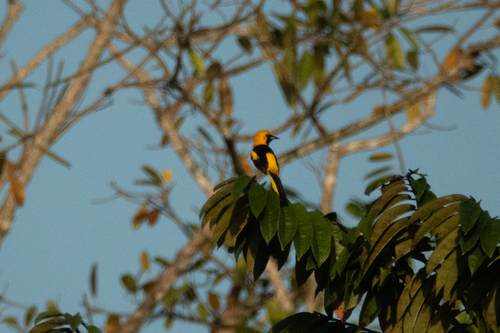 Yellow-tailed Oriole
In breve
Il segno distintivo più affidabile è il colore generale del corpo: il Casqued Cacique adulto è di un castano profondo con riflessi gialli, mentre il Yellow-tailed Oriole è principalmente di un giallo brillante con un dorso e un volto neri. In volo o posato, le dimensioni grandi del cacique, il suo prominente casco e il corpo castano ricco lo distinguono dall'aspetto più piccolo, snello e vividamente giallo dell'oriele. Le piume giovanili sono meno distintive, ma il cacique rimane più scuro e massiccio, mentre i giovani oriole hanno il dorso oliva e il ventre giallo. Entrambe le specie hanno del giallo nella coda, ma il motivo e il contesto differiscono. Se vedi un grande uccello castano con un casco e bordi gialli sulla coda, è un cacique; un uccello più piccolo, per lo più giallo con un dorso e un volto neri è l'oriele.
Consigli di identificazione
- Overall color: Il Casqued Cacique adulto è di un castano profondo con riflessi gialli; il Yellow-tailed Oriole è di un giallo brillante con un dorso e un volto neri. Questa è la separazione più rapida sul campo in buona luce.
- Size and shape: Il cacique è molto più grande e massiccio dell'oriele—quasi il doppio della lunghezza e diverse volte più pesante. Se l'uccello sembra delle dimensioni di un corvo, è un cacique; se è più vicino a un grande tangara o a un piccolo oriele, è l'oriele.
- Casque: Solo il Casqued Cacique ha un prominente casco sul becco (più grande nei maschi, più piccolo nelle femmine), di colore grigio giallastro a grigio scuro. Il becco del Yellow-tailed Oriole è snello e privo di qualsiasi casco. Questo è diagnostico a distanza ravvicinata.
- Tail pattern: Entrambi hanno del giallo nella coda, ma nel cacique, la coda è di un oliva scuro con solo le piume esterne di un giallo brillante; nell'oriele, la coda è nera sopra con margini gialli e appare quasi interamente gialla dal basso. In volo, cerca il motivo: il cacique mostra giallo solo sulla coda esterna, l'oriele mostra un giallo più esteso.
- Wing pattern: Il Casqued Cacique ha bordi gialli sulle piume di volo; il Yellow-tailed Oriole ha ali nere con epaulette gialle. Gli oriole giovanili non hanno il nero, mostrando invece l'oliva, ma non si avvicinano comunque ai toni castani del cacique.
- Underparts: Il Casqued Cacique è castano in tutto, con una gola oliva grigia e un oliva giallastro sulla parte superiore del petto e ai lati del collo. Il Yellow-tailed Oriole è giallo sotto, con il nero solo sulla parte superiore del petto.
- Eye color: Il cacique adulto ha un'iride blu pallido; i giovanili hanno occhi scuri. Il colore degli occhi dell'oriele non è specificato ma non è notato come blu pallido.
- Bill color: Il becco del Casqued Cacique è variabile ma di solito è grigio scuro sopra e giallo-verde sotto con una punta scura. Il becco dell'oriele non è descritto come bicolore.
- Sexes: Entrambe le specie sono sessualmente monomorfiche nel piumaggio, ma i maschi dei cacique hanno un casco più grande e sono molto più grandi delle femmine. Gli oriole mostrano poco dimorfismo sessuale sul campo.
- Juvenile confusion: Il giovanile cacique è simile all'adulto ma con occhi scuri; il giovanile oriele ha il dorso oliva e il ventre giallo, privo del nero degli adulti. Nessun giovanile assomiglia all'altra specie.
- Behavior: Il cacique è spesso visto in colonie, specialmente negli alberi di Cecropia lungo i fiumi; l'oriele è più solitario o in piccoli gruppi in dense macchie.
- Habitat: Se l'uccello è in alto in un albero di Cecropia lungo un fiume, è più probabile che sia un cacique; se è in una crescita cespugliosa densa o in cespugli paludosi, è più probabile che sia l'oriele.
- Song: Se senti duetti ricchi e fischiati, è l'oriele. Le vocalizzazioni del cacique non sono descritte qui.
- Bill structure: Il becco del cacique è più pesante e robusto, con un casco; quello dell'oriele è snello e appuntito, tipico degli oriole.
- Common pitfalls: Entrambi hanno del giallo nella coda, ma il cacique non è mai per lo più giallo o con il dorso nero, e l'oriele non è mai di un corpo castano o con un casco. In scarsa luce, dimensioni e casco sono i migliori indizi.
Taglia
Il Casqued Cacique è molto più grande e massiccio: i maschi misurano in media 37 cm e le femmine 29 cm, con pesi rispettivi di 188 g e 101 g. Al contrario, il Yellow-tailed Oriole è molto più piccolo, con una lunghezza di 22–23 cm e circa 40 g (fino a 70 g in alcune fonti). Il cacique è robusto con un becco pesante e un prominente casco, mentre l'oriele è snello, con un profilo più tipico degli oriole e senza casco.
Piumaggio
-
Juveniles: Il giovanile Casqued Cacique assomiglia all'adulto ma con occhi scuri; nel complesso, è di un castano ricco con bordi gialli sulla coda e piume di volo bordate di giallo. Il giovanile Yellow-tailed Oriole è per lo più giallo sotto, con l'oliva che sostituisce il nero dell'adulto sul dorso e sulla coda, e privo dei toni castani profondi del cacique.
-
Adults: L'adulto Casqued Cacique è per lo più di un castano ricco con una coda di un oliva scuro e piume esterne della coda di un giallo brillante, piume di volo bordate di giallo e un prominente casco (grigio giallastro a grigio scuro). La gola e la parte superiore del petto sono di un oliva grigiastro a giallastro. L'adulto Yellow-tailed Oriole è principalmente di un giallo brillante, con un dorso nero, volto inferiore e parte superiore del petto neri, ali nere con epaulette gialle, e una coda che è nera sopra con margini gialli (dal basso, quasi interamente gialla). Il becco dell'oriele è snello e privo di qualsiasi casco.
Comportamento
Il Casqued Cacique è spesso trovato in colonie, specialmente durante la riproduzione, ed è poliginico. I maschi possono essere visti a guardia delle colonie. Sono tipicamente osservati nella chioma, spesso negli alberi di Cecropia. Il Yellow-tailed Oriole tende a cercare cibo in coppie o piccoli gruppi, di solito in cespugli densi o grovigli di viti, ed è meno coloniale. Gli oriole sono più propensi a essere visti più in basso nella vegetazione, spesso vicino all'acqua o in aree paludose.
Habitat
Entrambe le specie si sovrappongono in alcune parti dell'Amazzonia occidentale e nelle valli fluviali, ma i loro habitat preferiti differiscono. Il Casqued Cacique è più spesso trovato in alberi di Cecropia isolati lungo piccoli fiumi, specialmente in Perù, ed è associato alla chioma o al bordo della foresta. Il Yellow-tailed Oriole preferisce cespugli densi, spesso con viti e Heliconie, in pianure paludose o corridoi fluviali, ed è più probabile che venga visto in crescita cespugliosa o secondaria piuttosto che nella chioma alta della foresta.
Voce
Il Yellow-tailed Oriole è noto per i suoi fischi melodici e ricchi e duetti, con frasi come 'chuck, chuck-yeeaow.' La voce del Casqued Cacique non è descritta nelle note fornite, quindi le vocalizzazioni sono utili solo per identificare l'oriele, che è anche apprezzato per il suo canto nel commercio degli uccelli da gabbia.
Casqued Cacique · Yellow-tailed Oriole · I miei uccelli difficili