

Motmot

カブトオオツリスドリ 対 キガタムクドリモドキ

Cacicus oseryi 対 Icterus mesomelas

カブトオオツリスドリとキガタムクドリモドキのクイズ

カブトオオツリスドリ (Cacicus oseryi) カブトオオツリスドリ
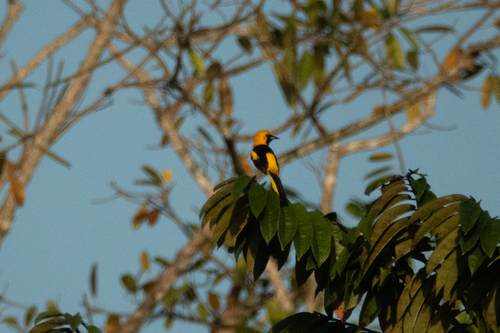
キガタムクドリモドキ (Icterus mesomelas) キガタムクドリモドキ

メディア

読み込み中…

要点

最も信頼できるフィールドマークは全体の体色です:成鳥のカブトオオツリスドリは深い栗色に黄色のハイライトがあり、キガタムクドリモドキは主に明るい黄色で黒い背中と顔を持っています。飛んでいる時や止まっている時、カブトオオツリスドリの大きなサイズ、目立つカスク、そして豊かな栗色の体がキガタムクドリモドキの小さく、より細身で鮮やかな黄色の外観と区別されます。幼鳥の羽毛はあまり特徴的ではありませんが、カブトオオツリスドリは暗くてがっしりしており、若いキガタムクドリモドキはオリーブ色の背中と黄色の腹部を持っています。両種とも尾に黄色がありますが、パターンと文脈は異なります。大きな栗色の鳥がカスクと黄色の尾の縁を持っているのを見たら、それはカブトオオツリスドリです;小さくて主に黄色の鳥で黒い背中と顔を持っているのはキガタムクドリモドキです。

識別のコツ

  1. 全体の色: 成鳥のカブトオオツリスドリは深い栗色に黄色のハイライトがあり、キガタムクドリモドキは明るい黄色で黒い背中と顔を持っています。これは良い光の中での最も迅速なフィールドの区別です。
  2. サイズと形: カブトオオツリスドリはキガタムクドリモドキよりもはるかに大きく、がっしりしています—ほぼ2倍の長さで、数倍の重さです。もしその鳥がカラスのサイズに見えるなら、それはカブトオオツリスドリです;もし大きなタンガーや小さなキガタムクドリモドキに近いなら、それはキガタムクドリモドキです。
  3. カスク: カブトオオツリスドリだけがくちばしに目立つカスクを持っています(オスは大きく、メスは小さい)、色は黄灰色から暗灰色です。キガタムクドリモドキのくちばしは細く、カスクはありません。これは近距離での診断に役立ちます。
  4. 尾のパターン: 両方とも尾に黄色がありますが、カブトオオツリスドリでは尾は暗いオリーブ色で、外側の羽だけが明るい黄色です;キガタムクドリモドリでは尾は上が黒で黄色の縁があり、下から見るとほぼ完全に黄色に見えます。飛んでいる時、パターンを探してください:カブトオオツリスドリは外側の尾にのみ黄色を示し、キガタムクドリモドキはより広範な黄色を示します。
  5. 翼のパターン: カブトオオツリスドリは飛行羽に黄色の縁があります;キガタムクドリモドリは黒い翼に黄色のエポレットがあります。幼鳥のキガタムクドリモドリは黒がなく、代わりにオリーブ色を示しますが、それでもカブトオオツリスドリの栗色のトーンには近づきません。
  6. 腹部: カブトオオツリスドリは全体が栗色で、喉は灰色がかったオリーブ色、上胸と首の側面は黄色がかったオリーブ色です。キガタムクドリモドキは下が黄色で、上胸には黒があります。
  7. 目の色: 成鳥のカブトオオツリスドリは淡い青の虹彩を持っています;幼鳥は暗い目を持っています。キガタムクドリモドリの目の色は指定されていませんが、淡い青とは記載されていません。
  8. くちばしの色: カブトオオツリスドリのくちばしは変動がありますが、通常は上が暗灰色で下が黄緑色で、先端は暗いです。キガタムクドリモドリのくちばしは二色には記載されていません。
  9. 性別: 両種は羽毛において性別が同形ですが、オスのカブトオオツリスドリはカスクが大きく、メスよりもはるかに大きいです。キガタムクドリモドリはフィールドでの性差が少ないです。
  10. 幼鳥の混同: 幼鳥のカブトオオツリスドリは成鳥に似ていますが、暗い目を持っています;幼鳥のキガタムクドリモドリはオリーブ色の背中と黄色の腹部を持ち、成鳥の黒がありません。どちらの幼鳥も他の種には似ていません。
  11. 行動: カブトオオツリスドリはしばしばコロニーで見られ、特にキャクロピアの木の沿いの川で見られます;キガタムクドリモドリはより孤立しているか、密な茂みの中で小さな群れで見られます。
  12. 生息地: 鳥が川沿いのキャクロピアの木の高いところにいる場合、カブトオオツリスドリの可能性が高いです;密な低木や湿地の茂みの中にいる場合、キガタムクドリモドリの可能性が高いです。
  13. 歌: 豊かで口笛のようなデュエットが聞こえたら、それはキガタムクドリモドリです。カブトオオツリスドリの声はここでは記載されていません。
  14. くちばしの構造: カブトオオツリスドリのくちばしは重くて頑丈で、カスクがあります;キガタムクドリモドリのくちばしは細くて尖っており、オリーブに典型的です。
  15. 一般的な落とし穴: 両方とも尾に黄色がありますが、カブトオオツリスドリは決して主に黄色や黒い背中ではなく、キガタムクドリモドリは決して栗色の体やカスクを持っていません。暗い光の中では、サイズとカスクが最良の手がかりです。

大きさ

カブトオオツリスドリははるかに大きく、がっしりしています:オスは平均37 cm、メスは29 cmで、重さはそれぞれ188 gと101 gです。対照的に、キガタムクドリモドキははるかに小さく、22〜23 cmで約40 g(いくつかの情報源では最大70 g)です。カブトオオツリスドリは頑丈で重いくちばしと目立つカスクを持ち、キガタムクドリモドキは細く、より典型的なキガタムクドリモドキのシルエットでカスクはありません。

羽色

行動

カブトオオツリスドリはしばしばコロニーで見られ、特に繁殖期には多妻制です。オスはコロニーを守っているのが見られることがあります。彼らは通常、キャクロピアの木の上で見られます。キガタムクドリモドキはペアまたは小さな群れで採餌する傾向があり、通常は密な茂みやつるの絡まりの中で、コロニーは少ないです。キガタムクドリモドキはより低い植生の中で見られる可能性が高く、水の近くや湿地帯で見られることが多いです。

生息環境

両種は西アマゾニアや川の谷の一部で重なりますが、好む生息地は異なります。カブトオオツリスドリは小さな川沿いの孤立したキャクロピアの木で最もよく見られ、特にペルーでは森林の樹冠やエッジに関連しています。キガタムクドリモドキは密な茂みを好み、しばしばつるやヘリコニアと共に湿地の低地や川の回廊にあり、高い森林の樹冠よりも低木や二次成長の中で見られる可能性が高いです。

声

キガタムクドリモドキはメロディックで豊かな口笛やデュエットで知られ、'チャック、チャック-イェアウ'のようなフレーズがあります。カブトオオツリスドリの声は提供されたメモには記載されていないため、声はキガタムクドリモドキの同定にのみ役立ちます。キガタムクドリモドキはまた、飼い鳥取引においてその歌が評価されています。

より良い説明を送る

比較と同じ項目を使ってください。文章はすぐに公開されます。

The most reliable field mark is overall body color: adult Casqued Cacique is deep chestnut with yellow highlights, while Yellow-tailed Oriole is mainly bright yellow with a black back and face. In flight or perched, the cacique’s large size, prominent casque, and rich chestnut body set it apart from the oriole’s smaller, more slender, and vividly yellow appearance. Juvenile plumages are less distinctive, but the cacique remains darker and bulkier, while young orioles are olive-backed and yellow below. Both species have yellow in the tail, but the pattern and context differ. If you see a large, chestnut bird with a casque and yellow tail edges, it’s a cacique; a smaller, mostly yellow bird with a black back and face is the oriole.

  1. Overall color: Adult Casqued Cacique is deep chestnut with yellow highlights; Yellow-tailed Oriole is bright yellow with a black back and face. This is the fastest field separation in good light.
  2. Size and shape: The cacique is much larger and bulkier than the oriole—nearly twice as long and several times heavier. If the bird looks crow-sized, it’s a cacique; if it’s closer to a large tanager or small oriole, it’s the oriole.
  3. Casque: Only Casqued Cacique has a prominent casque on the bill (larger in males, smaller in females), colored yellowish gray to dark gray. Yellow-tailed Oriole’s bill is slender and lacks any casque. This is diagnostic at close range.
  4. Tail pattern: Both have yellow in the tail, but in cacique, the tail is dusky olive with only the outer feathers bright yellow; in oriole, the tail is black above with yellow margins and appears almost entirely yellow from below. In flight, look for the pattern: cacique shows yellow only on the outer tail, oriole shows more extensive yellow.
  5. Wing pattern: Casqued Cacique has yellow edges to the flight feathers; Yellow-tailed Oriole has black wings with yellow epaulets. Juvenile orioles lack the black, showing olive instead, but still do not approach the cacique’s chestnut tones.
  6. Underparts: Casqued Cacique is chestnut throughout, with a grayish olive throat and yellowish olive on the upper breast and neck sides. Yellow-tailed Oriole is yellow below, with black only on the upper breast.
  7. Eye color: Adult cacique has a pale blue iris; juveniles have dark eyes. Oriole’s eye color is not specified but is not noted as pale blue.
  8. Bill color: Casqued Cacique’s bill is variable but usually dark gray above and yellow-green below with a dark tip. Oriole’s bill is not described as bicolored.
  9. Sexes: Both species are sexually monomorphic in plumage, but male caciques have a larger casque and are much larger than females. Orioles show little sexual dimorphism in the field.
  10. Juvenile confusion: Juvenile cacique is like adult but with dark eyes; juvenile oriole is olive-backed and yellow below, lacking the black of adults. Neither juvenile looks like the other species.
  11. Behavior: Cacique is often seen in colonies, especially in Cecropia trees along rivers; oriole is more solitary or in small groups in dense thickets.
  12. Habitat: If the bird is high in a Cecropia tree along a river, cacique is more likely; if in dense, shrubby growth or swampy thickets, oriole is more probable.
  13. Song: If you hear rich, whistled duets, it’s the oriole. Cacique’s vocalizations are not described here.
  14. Bill structure: Cacique’s bill is heavier and more robust, with a casque; oriole’s is slender and pointed, typical of orioles.
  15. Common pitfalls: Both have yellow in the tail, but the cacique is never mostly yellow or black-backed, and the oriole is never chestnut-bodied or casque-bearing. In poor light, size and casque are the best clues.

Casqued Cacique is much larger and bulkier: males average 37 cm and females 29 cm, with weights of 188 g and 101 g respectively. In contrast, Yellow-tailed Oriole is much smaller, at 22–23 cm and about 40 g (up to 70 g in some sources). The cacique is robust with a heavy bill and a prominent casque, while the oriole is slender, with a more typical oriole silhouette and no casque.

  • Juveniles: Juvenile Casqued Cacique resembles the adult but with dark eyes; overall, it is rich chestnut with yellow tail edges and yellow-edged flight feathers. Juvenile Yellow-tailed Oriole is mostly yellow below, with olive replacing the adult’s black on the back and tail, and lacks the deep chestnut tones of the cacique.

  • Adults: Adult Casqued Cacique is mostly rich chestnut with a dusky olive tail and bright yellow outer tail feathers, yellow-edged flight feathers, and a prominent casque (yellowish gray to dark gray). The throat and upper breast are grayish to yellowish olive. Adult Yellow-tailed Oriole is mainly bright yellow, with a black back, lower face, and upper breast, black wings with yellow epaulets, and a tail that is black above with yellow margins (from below, almost entirely yellow). The oriole’s bill is slender and lacks any casque.

Casqued Cacique is often found in colonies, especially during breeding, and is polygynous. Males may be seen guarding colonies. They are typically seen in the canopy, often in Cecropia trees. Yellow-tailed Oriole tends to forage in pairs or small groups, usually in dense thickets or vine tangles, and is less colonial. Orioles are more likely to be seen lower in the vegetation, often near water or in swampy areas.

Both species overlap in parts of western Amazonia and river valleys, but their preferred habitats differ. Casqued Cacique is most often found in isolated Cecropia trees along small rivers, especially in Peru, and is associated with forest canopy or edge. Yellow-tailed Oriole prefers dense thickets, often with vines and Heliconias, in swampy lowlands or river corridors, and is more likely to be seen in shrubby or secondary growth than in tall forest canopy.

Yellow-tailed Oriole is noted for its melodic, rich whistles and duets, with phrases like 'chuck, chuck-yeeaow.' Casqued Cacique’s voice is not described in the provided notes, so vocalizations are only useful for identifying the oriole, which is also valued for its song in the cage-bird trade.

変更を破棄しますか?

保存していない編集があります。今離れると失われます。

カブトオオツリスドリ · キガタムクドリモドキ · 苦手な鳥