

Helmoropendola vs Geelstaarttroepiaal
Cacicus oseryi versus Icterus mesomelas
Speel een quiz met Helmoropendola en Geelstaarttroepiaal
 Helmoropendola
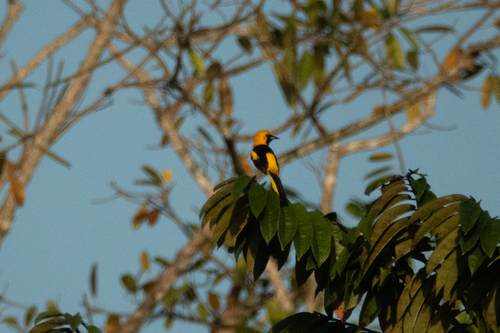 Geelstaarttroepiaal
Kort gezegd
Het meest betrouwbare veldkenmerk is de algehele lichaamskleur: volwassen Helmoropendola is diep kastanjebruin met gele accenten, terwijl Geelstaarttroepiaal voornamelijk helder geel is met een zwarte rug en gezicht. In de vlucht of zittend, onderscheidt de grote omvang, prominente casque en rijke kastanjebruine lichaam van de cacique zich van het kleinere, slanker en levendig gele uiterlijk van de troepiaal. Juveniele verenkleed is minder onderscheidend, maar de cacique blijft donkerder en robuuster, terwijl jonge troepialen olijfachtig van kleur zijn met een gele onderzijde. Beide soorten hebben geel in de staart, maar het patroon en de context verschillen. Als je een grote, kastanjebruine vogel met een casque en gele staartranden ziet, is het een cacique; een kleinere, voornamelijk gele vogel met een zwarte rug en gezicht is de troepiaal.
Herkenningstips
- Algehele kleur: Volwassen Helmoropendola is diep kastanjebruin met gele accenten; Geelstaarttroepiaal is helder geel met een zwarte rug en gezicht. Dit is de snelste veldscheiding in goed licht.
- Grootte en vorm: De cacique is veel groter en robuuster dan de troepiaal—bijna twee keer zo lang en meerdere keren zwaarder. Als de vogel de grootte van een kraai heeft, is het een cacique; als het dichter bij een grote tanager of kleine troepiaal is, is het de troepiaal.
- Casque: Alleen Helmoropendola heeft een prominente casque op de snavel (groter bij mannetjes, kleiner bij vrouwtjes), gekleurd geelachtig grijs tot donkergrijs. De snavel van Geelstaarttroepiaal is slank en mist enige casque. Dit is diagnostisch op korte afstand.
- Staartpatroon: Beide hebben geel in de staart, maar bij de cacique is de staart dof olijfkleurig met alleen de buitenste veren helder geel; bij de troepiaal is de staart zwart boven met gele randen en lijkt bijna volledig geel van onderaf. In de vlucht, let op het patroon: cacique toont geel alleen op de buitenste staart, troepiaal toont meer uitgebreide geel.
- Vleugelpatroon: Helmoropendola heeft gele randen aan de vluchtveren; Geelstaarttroepiaal heeft zwarte vleugels met gele epauletten. Juveniele troepialen missen het zwart, tonen in plaats daarvan olijf, maar benaderen nog steeds niet de kastanjebruine tinten van de cacique.
- Onderzijde: Helmoropendola is overal kastanjebruin, met een grijsachtige olijfkleurige keel en geelachtig olijf op de bovenborst en zijkanten van de nek. Geelstaarttroepiaal is geel aan de onderzijde, met zwart alleen op de bovenborst.
- Oogkleur: Volwassen cacique heeft een lichtblauwe iris; juvenielen hebben donkere ogen. De oogkleur van de troepiaal is niet gespecificeerd maar wordt niet opgemerkt als lichtblauw.
- Snavelkleur: De snavel van Helmoropendola is variabel maar meestal donkergrijs boven en geel-groen onder met een donkere punt. De snavel van de troepiaal wordt niet beschreven als bicolor.
- Geslachten: Beide soorten zijn seksueel monomorf in verenkleed, maar mannelijke caciques hebben een grotere casque en zijn veel groter dan vrouwtjes. Troepialen tonen weinig seksuele dimorfie in het veld.
- Juveniele verwarring: Juveniele cacique lijkt op de volwassen maar met donkere ogen; juveniele troepiaal is olijfachtig van kleur met een gele onderzijde, zonder het zwart van volwassenen. Geen van beide juvenielen lijkt op de andere soort.
- Gedrag: Cacique wordt vaak gezien in kolonies, vooral in Cecropia-bomen langs rivieren; troepiaal is meer solitair of in kleine groepen in dichte struiken.
- Habitat: Als de vogel hoog in een Cecropia-boom langs een rivier zit, is de cacique waarschijnlijker; als het in dichte, struikachtige groei of moerassige struiken is, is de troepiaal waarschijnlijker.
- Zang: Als je rijke, gefloten duetten hoort, is het de troepiaal. Cacique’s vocalisaties zijn niet beschreven hier.
- Snavelstructuur: Cacique’s snavel is zwaarder en robuuster, met een casque; troepiaal’s is slank en puntig, typisch voor troepialen.
- Veelvoorkomende valkuilen: Beide hebben geel in de staart, maar de cacique is nooit voornamelijk geel of zwartrug, en de troepiaal is nooit kastanjebruin of met casque. In slecht licht zijn grootte en casque de beste aanwijzingen.
Grootte
Helmoropendola is veel groter en robuuster: mannetjes gemiddeld 37 cm en vrouwtjes 29 cm, met gewichten van respectievelijk 188 g en 101 g. In tegenstelling tot dat is Geelstaarttroepiaal veel kleiner, met 22–23 cm en ongeveer 40 g (tot 70 g in sommige bronnen). De cacique is robuust met een zware snavel en een prominente casque, terwijl de troepiaal slank is, met een meer typische troepiaal-silhouet en geen casque.
Verenkleed
-
Juvenielen: Juveniele Helmoropendola lijkt op de volwassen maar met donkere ogen; over het algemeen is het rijk kastanjebruin met gele staartranden en gele randen aan de vluchtveren. Juveniele Geelstaarttroepiaal is voornamelijk geel aan de onderzijde, met olijf dat het zwart van de volwassen op de rug en staart vervangt, en mist de diepe kastanjebruine tinten van de cacique.
-
Volwassenen: Volwassen Helmoropendola is voornamelijk rijk kastanjebruin met een dof olijfkleurige staart en heldergele buitenste staartveren, gele randen aan de vluchtveren, en een prominente casque (geelachtig grijs tot donkergrijs). De keel en bovenborst zijn grijsachtig tot geelachtig olijf. Volwassen Geelstaarttroepiaal is voornamelijk helder geel, met een zwarte rug, lagere gezicht en bovenborst, zwarte vleugels met gele epauletten, en een staart die zwart is boven met gele randen (van onderaf, bijna volledig geel). De snavel van de troepiaal is slank en mist enige casque.
Gedrag
Helmoropendola wordt vaak gevonden in kolonies, vooral tijdens het broeden, en is polygyn. Mannetjes kunnen worden gezien die kolonies bewaken. Ze worden meestal in de boomtoppen gezien, vaak in Cecropia-bomen. Geelstaarttroepiaal neigt ernaar in paren of kleine groepen te foerageren, meestal in dichte struiken of wijnstokken, en is minder koloniaal. Troepialen worden waarschijnlijker lager in de vegetatie gezien, vaak nabij water of in moerassige gebieden.
Habitat
Beide soorten overlappen in delen van westelijk Amazonia en rivierdal, maar hun voorkeurshabitats verschillen. Helmoropendola wordt het vaakst gevonden in geïsoleerde Cecropia-bomen langs kleine rivieren, vooral in Peru, en is geassocieerd met het bosdak of de rand. Geelstaarttroepiaal geeft de voorkeur aan dichte struiken, vaak met wijnstokken en Heliconia's, in moerassige laaglanden of riviercorridors, en is waarschijnlijker te zien in struikachtige of secundaire groei dan in het hoge bosdak.
Geluid
Geelstaarttroepiaal staat bekend om zijn melodieuze, rijke fluiten en duetten, met zinnen als 'chuck, chuck-yeeaow.' De stem van Helmoropendola wordt niet beschreven in de verstrekte notities, dus vocalisaties zijn alleen nuttig voor het identificeren van de troepiaal, die ook gewaardeerd wordt om zijn zang in de kooivogelhandel.