

maria-cavaleira-de-rabo-enferrujado vs prairie warbler
Myiarchus tyrannulus versus Setophaga discolor
Jogue um quiz com maria-cavaleira-de-rabo-enferrujado e prairie warbler
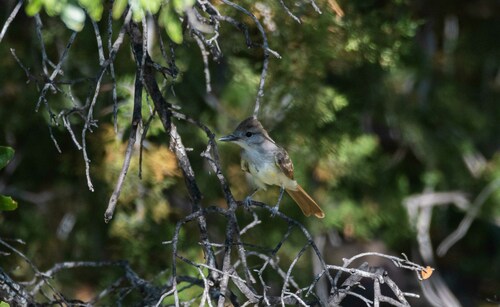 maria-cavaleira-de-rabo-enferrujado
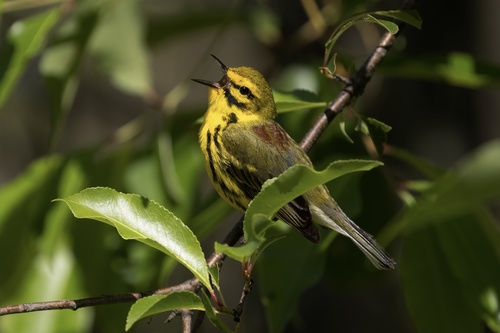 prairie warbler
Em resumo
A marca de campo mais confiável para separar a maria-cavaleira-de-rabo-enferrujado do prairie warbler é a estrutura geral: a maria-cavaleira é muito maior, com bico grosso e corpo robusto, enquanto o prairie warbler é minúsculo, esbelto e com bico fino. Em todas as plumagens, a maria-cavaleira apresenta um forte tom ruivo na cauda e nas asas, uma crista espessa e partes inferiores amarelas ousadas com uma faixa peitoral cinza, mas não possui as listras faciais pretas e as estrias laterais do prairie warbler. O prairie warbler é muito menor, com um bico fino, rosto e partes inferiores amarelas brilhantes, listras pretas ao redor dos olhos e malar, e um hábito de balançar sua longa cauda. Mesmo os prairie warblers imaturos, embora mais apagados, mantêm a aparência esbelta e ativa do warbler e o padrão facial. Se vistos em voo, os flashes ruivos da cauda da maria-cavaleira são diagnósticos, enquanto o warbler mostra branco na cauda. Tamanho e estrutura são decisivos a qualquer distância.
Dicas de identificação
- Tamanho e Estrutura: A maria-cavaleira-de-rabo-enferrujado é muito maior e mais robusta do que o prairie warbler. Se o pássaro parecer do tamanho de um pardal ou menor, não é uma maria-cavaleira.
- Formato do Bico: A maria-cavaleira tem um bico grosso e de base larga; o bico do prairie warbler é fino, pontudo e delicado. O formato do bico é visível mesmo a uma distância moderada.
- Padrão da Cauda em Voo: A maria-cavaleira mostra flashes ruivos na cauda (exceto o par mais interno), visíveis em todas as idades e especialmente óbvios em voo ou quando aberta. O prairie warbler mostra grandes manchas brancas na cauda, especialmente quando a cauda está aberta ou balançada.
- Padrão Facial: O prairie warbler tem uma ousada faixa preta ao redor dos olhos e uma faixa malar preta curva, formando uma aparência de 'cansado' ou com óculos. A maria-cavaleira não possui marcas faciais pretas, mostrando um rosto cinza liso em vez disso.
- Crista: A maria-cavaleira frequentemente levanta uma crista espessa, especialmente quando alerta. A coroa do prairie warbler é lisa e plana.
- Partes Inferiores: Ambas as espécies têm partes inferiores amarelas, mas o amarelo da maria-cavaleira é mais brilhante na barriga e no peito inferior, com uma garganta e peito superiores cinza pálido formando uma faixa sutil. O prairie warbler é amarelo da garganta à barriga, com estrias escuras nas laterais (especialmente em machos e adultos).
- Faixas Alares: Ambas têm duas faixas alares, mas as da maria-cavaleira são mais largas e mais claras (acinzentadas ou esbranquiçadas), enquanto as do warbler são fracas e estreitas.
- Partes Superiores: As costas da maria-cavaleira são acinzentadas a marrom-oliva, às vezes com um tom ruivo. O prairie warbler é verde-oliva por cima, frequentemente com estrias castanhas ou ruivas em machos.
- Cor das Pernas: Ambas têm pernas escuras; não é um separador útil.
- Comportamento: O prairie warbler frequentemente balança ou agita sua cauda, um comportamento não observado na maria-cavaleira. A maria-cavaleira empoleira-se ereta e caça insetos em voo.
- Habitat: Em florestas abertas com grandes árvores ou cactos, suspeite da maria-cavaleira; em campos arbustivos ou florestas jovens de pinheiros, suspeite do warbler.
- Sexo e Idade: As fêmeas e os prairie warblers imaturos são mais apagados, com estrias mais fracas, mas ainda mostram o padrão facial e a construção esbelta. Os sexos e idades da maria-cavaleira são semelhantes em plumagem, com apenas variação subspecífica menor.
- Voz: Não é diagnóstica a partir dessas notas.
- Jizz: A impressão geral é decisiva: a maria-cavaleira é um pássaro grande, ereto e de cabeça pesada; o warbler é minúsculo, esbelto e ativo.
- Armadilhas: Não confie apenas nas partes inferiores amarelas—ambas as espécies as têm, mas a combinação de tamanho, estrutura, padrão da cauda e rosto é sempre diagnóstica.
Tamanho
A maria-cavaleira-de-rabo-enferrujado é dramaticamente maior e mais pesada do que o prairie warbler. A maria-cavaleira varia de 18 a 23 cm de comprimento e pesa de 21 a 54 g, dependendo da subespécie, tornando-se quase três vezes o comprimento e muitas vezes a massa do prairie warbler, que mede apenas 11 a 13 cm de comprimento e pesa cerca de 7,5 g. A maria-cavaleira tem um bico grosso e largo e um corpo robusto, enquanto o warbler é minúsculo, esbelto e tem um bico fino e pontudo. Mesmo à distância ou em pouca luz, essa diferença de tamanho é inconfundível.
Plumagem
Não importa a idade, a maria-cavaleira-de-rabo-enferrujado apresenta uma combinação de partes superiores marrom-acinzentadas, uma crista espessa e fortes tons ruivos na cauda e nas bordas das asas. Suas partes inferiores são amarelas brilhantes abaixo de um peito e garganta cinza pálido, com duas faixas alares pálidas em asas escuras. A cauda é escura com teias internas ruivas, exceto o par mais interno. As plumagens juvenil e adulta são semelhantes, com apenas diferenças sutis de tom entre as subespécies. O prairie warbler, por outro lado, é amarelo brilhante por baixo com estrias escuras nas laterais (especialmente em machos e adultos), partes superiores verde-oliva com estrias castanhas ou ruivas, e duas faixas alares fracas. O rosto é marcado por uma faixa preta ao redor dos olhos e uma faixa malar preta curva, dando uma aparência distinta de 'cansado'. Fêmeas e imaturos são mais apagados, com estrias mais fracas, mas o padrão facial e o tom amarelo geral permanecem. Em voo, o prairie warbler mostra grandes manchas brancas na cauda, enquanto a maria-cavaleira mostra flashes ruivos. Esses padrões de cauda são visíveis em todas as classes de idade.
Comportamento
O prairie warbler é altamente ativo, frequentemente visto balançando ou agitando sua cauda e se movendo rapidamente através de arbustos baixos ou florestas abertas. A maria-cavaleira-de-rabo-enferrujado é mais deliberada, normalmente empoleirando-se ereta em galhos expostos, saindo para capturar insetos e mostrando uma crista espessa. A maria-cavaleira não balança sua cauda. Essas diferenças comportamentais são aparentes mesmo em breves visões.
Habitat
A maria-cavaleira-de-rabo-enferrujado prefere florestas abertas, bordas e áreas com grandes árvores ou cactos adequados para cavidades de nidificação, frequentemente em regiões mais secas ou semiáridas. O prairie warbler prefere campos arbustivos, jovens segundas matas ou florestas abertas de pinheiros, geralmente em áreas com vegetação baixa densa. Embora alguma sobreposição possa ocorrer em paradas de migração, seus habitats preferidos geralmente são bastante diferentes.
maria-cavaleira-de-rabo-enferrujado · prairie warbler · Minhas aves difíceis