

blue-headed coucal vs babbling starling
Centropus monachus versus Neocichla gutturalis
Jogue um quiz com blue-headed coucal e babbling starling
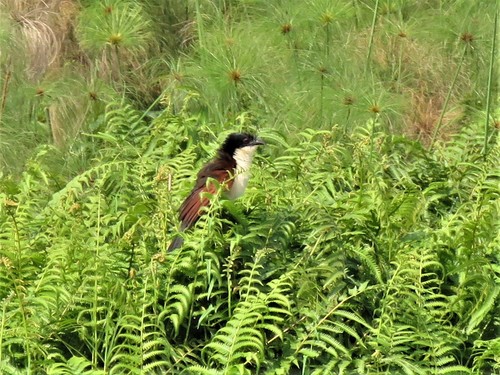 blue-headed coucal
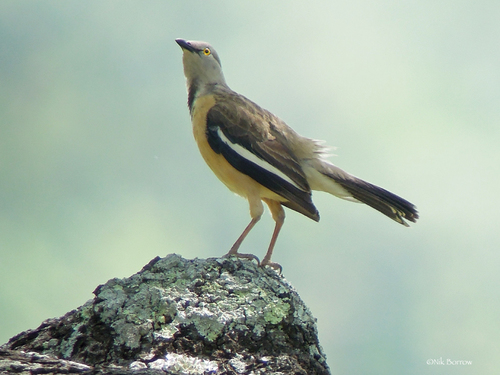 babbling starling
Em resumo
A marca de campo mais confiável para separar o blue-headed coucal do babbling starling é o tamanho e a estrutura geral: o coucal é muito maior e mais robusto, com uma cauda longa e um bico pesado, enquanto o starling é um pequeno pássaro cantor compacto. Os juvenis de blue-headed coucal apresentam listras e manchas pesadas nas asas e na cabeça, bem diferentes da asa limpa e bandeada e do peito amarelo do starling. Os coucals adultos têm um contraste impressionante entre a cabeça e as costas azul-escuras brilhantes, asas castanhas e partes inferiores pálidas, enquanto os babbling starlings têm cabeça pálida com peito amarelo e uma distinta cunha preta no peito. Se você ver um pássaro com um olho amarelo brilhante e uma faixa branca na asa, é o starling; um olho vermelho escuro e sem faixa na asa aponta para o coucal.
Dicas de identificação
- Tamanho e estrutura: O blue-headed coucal tem mais de duas vezes o comprimento do babbling starling e é muito mais robusto, com uma cauda longa e um bico pesado. Se o pássaro parecer do tamanho de um corvo, é um coucal; se for do tamanho de um tordo ou menor, é um starling.
- Formato do bico: O coucal tem um bico grosso, forte e ligeiramente curvado, enquanto o bico do starling é mais fino e reto, típico dos starlings.
- Cauda: A cauda do coucal é longa e larga, frequentemente mantida para baixo ou aberta; a cauda do starling é mais curta e mais quadrada.
- Cabeça e costas de adultos: Os adultos de coucal têm cabeça e costas azul-preto brilhantes; o starling tem cabeça pálida, quase branca, e partes superiores marrom claro.
- Asas (empoleiradas): As asas do coucal são de um castanho profundo sem faixa branca; as asas do starling são de um cinza-marrom escuro com uma clara faixa branca visível na asa dobrada.
- Padrão das asas juvenis: Os juvenis de coucal apresentam listras pesadas nas asas e nas costas, e manchas ruivas na cabeça; os juvenis de starling não têm essas listras e têm uma cabeça e faixa de asa limpas e pálidas.
- Partes inferiores: O coucal tem partes inferiores brancas ou de um buff pálido; o starling tem um peito amarelo com uma distinta cunha preta no centro.
- Cor dos olhos: O coucal tem olhos vermelhos escuros; o starling tem olhos amarelos brilhantes, que são impressionantes de perto.
- Cor das pernas: As pernas e pés do coucal são cinza-escuros; a cor das pernas do starling não é descrita, mas não é uma marca de campo primária.
- Vocalizações: O starling emite chamados arrastados, chiados e ásperos; os chamados do coucal são mais profundos e borbulhantes (não descritos aqui, mas geralmente verdadeiros para os coucals).
- Comportamento: O coucal é furtivo, de movimento lento e frequentemente escondido em vegetação úmida; o starling é ativo, social e empoleira-se abertamente.
- Habitat: O coucal é encontrado em pântanos, margens de rios e áreas úmidas; o starling está em florestas secas e savanas.
- Sexos: Ambas as espécies são sexualmente monomórficas (os sexos se parecem), então não use o sexo para identificação.
- Voo: O coucal raramente voa longe e parece pesado em voo; o starling tem um voo mais leve e direto.
- Armadilhas: Os coucals imaturos podem parecer opacos e listrados, mas o tamanho, a estrutura e as listras permanecem distintas. A faixa branca na asa e o peito amarelo do starling são únicos neste par.
Tamanho
O blue-headed coucal é um pássaro muito maior, medindo 45–52 cm de comprimento, em comparação com os 17 cm do babbling starling. O coucal também é mais pesado e robusto, com uma cauda longa e um bico grosso e forte, enquanto o starling é leve (64–72 g), compacto e tem uma forma típica de starling com uma cauda mais curta e um bico mais fino. Essa diferença de tamanho é óbvia mesmo à distância e é um ponto chave de separação em campo.
Plumagem
- Pássaros juvenis/imaturos: Os juvenis de blue-headed coucal têm áreas pretas mais opacas (não brilhantes), a cabeça é manchada de ruivo-buff, e as asas são de um castanho escuro fortemente listradas com marrom escuro; as costas e a cauda são listradas com buff, e a garganta e o peito são manchados de preto. Em contraste, os juvenis de babbling starling (não especificamente descritos, mas provavelmente semelhantes aos adultos) mostrariam a mesma cabeça pálida, peito amarelo, cunha preta no peito e faixa branca na asa como os adultos, sem listras ou manchas pesadas.
- Adultos: Os adultos de blue-headed coucal têm uma cabeça, pescoço e costas azul-preto brilhantes, asas de um castanho profundo, cauda preta com brilho verde/bronze, e partes inferiores brancas ou de um buff pálido. Os babbling starlings têm uma cabeça quase branca, peito amarelo com uma cunha preta, partes superiores marrom claro que desvanecem para asas marrom cinza-escuras (com uma faixa branca na asa), e uma cauda marrom escura. A cor dos olhos também é distinta: vermelho escuro no coucal, amarelo brilhante no starling.
Comportamento
O blue-headed coucal é tipicamente lento, movendo-se através de vegetação densa e úmida ou empoleirando-se baixo, frequentemente permanecendo escondido ou furtivo. Ele raramente voa longe e frequentemente se arrasta através de juncos ou arbustos. O babbling starling é mais ativo e conspícuo, frequentemente visto em pequenos grupos, empoleirando-se abertamente e se movendo em árvores ou no chão. Seu voo é mais direto e semelhante ao de um starling, com curtas explosões entre os poleiros.
Habitat
O blue-headed coucal é encontrado em habitats úmidos: pântanos, margens de rios, bordas de florestas e áreas geralmente úmidas na África central tropical. O babbling starling prefere habitats mais secos e abertos na África central-sul (Angola, Malawi, Tanzânia, Zâmbia), frequentemente em florestas ou savanas, e não está associado a pântanos ou áreas úmidas densas. Assim, o contexto do habitat pode ajudar, mas há alguma sobreposição nas bordas das florestas.
Voz
O babbling starling é conhecido por seus chamados arrastados, chiados ou ásperos, que são típicos dos starlings e bastante vocais. O blue-headed coucal não é descrito aqui quanto à voz, mas os coucals geralmente têm chamados profundos, borbulhantes ou estrondosos, bem diferentes dos sons ásperos do starling. Se você ouvir um chamado áspero e chiado, pense em starling.
blue-headed coucal · babbling starling · Minhas aves difíceis