

Blue-headed Coucal vs Babbling Starling
Centropus monachus contro Neocichla gutturalis
Fai un quiz con Blue-headed Coucal e Babbling Starling
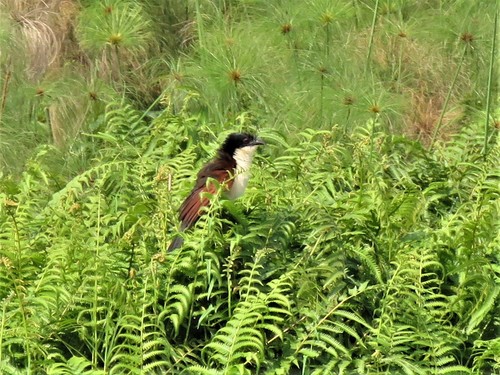 Blue-headed Coucal
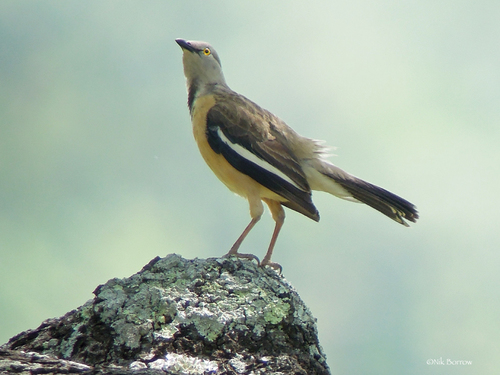 Babbling Starling
In breve
Il segno distintivo più affidabile per separare il Blue-headed Coucal dal Babbling Starling è la dimensione e la struttura complessive: il coucal è molto più grande e massiccio, con una lunga coda e un becco pesante, mentre il starling è un piccolo uccello canoro compatto. I giovani Blue-headed Coucal mostrano forti barre e striature sulle ali e sulla testa, molto diverse dalle ali pulite e a bande e dal petto giallo del starling. I coucal adulti hanno un contrasto sorprendente tra la testa e la schiena blu-nerastre lucide, ali castagne e parti inferiori chiare, mentre i babbling starlings hanno una testa chiara con un petto giallo e un distintivo cuneo nero sul petto. Se vedi un uccello con un occhio giallo brillante e una banda bianca sulle ali, è il starling; un occhio rosso scuro e nessuna banda sulle ali indicano il coucal.
Consigli di identificazione
- Dimensione e struttura: Il Blue-headed Coucal è oltre due volte la lunghezza del Babbling Starling e molto più massiccio, con una lunga coda e un becco pesante. Se l'uccello sembra delle dimensioni di un corvo, è un coucal; se è delle dimensioni di un tordo o più piccolo, è un starling.
- Forma del becco: Il coucal ha un becco spesso, forte e leggermente ricurvo, mentre il becco del starling è più fine e dritto, tipico degli starlings.
- Coda: La coda del coucal è lunga e larga, spesso tenuta abbassata o aperta; la coda del starling è più corta e più squadrata.
- Testa e schiena degli adulti: I coucal adulti hanno una testa e una schiena blu-nerastre lucide; il starling ha una testa chiara, di un bianco sporco, e parti superiori marrone chiaro.
- Ali (in pericolo): Le ali del coucal sono di un castagno profondo senza banda bianca; le ali del starling sono di un grigio-marrone scuro con una chiara banda bianca visibile sull'ala piegata.
- Schema delle ali dei giovani: I giovani coucal mostrano forti barre sulle ali e sulla schiena, e striature rufous-buff sulla testa; i giovani starlings non hanno queste barre e hanno una testa e una banda sulle ali chiare.
- Parti inferiori: Il coucal ha parti inferiori bianche o di un buff chiaro; il starling ha un petto giallo con un distintivo cuneo nero al centro.
- Colore degli occhi: Il coucal ha occhi rossi scuri; il starling ha occhi gialli brillanti, che sono sorprendenti da vicino.
- Colore delle gambe: Le gambe e i piedi del coucal sono grigio-nerastri; il colore delle gambe del starling non è descritto, ma non è un segno distintivo primario.
- Vocalizzazioni: Il starling emette richiami confusi, striduli e rauchi; i richiami del coucal sono più profondi e più gorgoglianti (non descritti qui, ma generalmente veri per i coucal).
- Comportamento: Il coucal è furtivo, si muove lentamente ed è spesso nascosto nella vegetazione umida; il starling è attivo, sociale e si posa apertamente.
- Habitat: Il coucal si trova in paludi, rive di fiumi e aree umide; il starling si trova in boschi e savane più asciutti.
- Sessi: Entrambe le specie sono sessualmente monomorfiche (i sessi si somigliano), quindi non usare il sesso per l'identificazione.
- Volo: Il coucal vola raramente lontano e appare pesante in volo; il starling ha un volo più galleggiante e diretto.
- Trappole: I coucal immaturi possono sembrare opachi e striati, ma la dimensione, la struttura e le barre rimangono distintive. La banda bianca sulle ali e il petto giallo del starling sono unici in questo gruppo.
Taglia
Il Blue-headed Coucal è un uccello molto più grande, misurando 45–52 cm di lunghezza, rispetto ai 17 cm del Babbling Starling. Il coucal è anche più pesante e robusto, con una lunga coda e un becco spesso e forte, mentre il starling è leggero (64–72 g), compatto e ha una forma tipica di starling con una coda più corta e un becco più fine. Questa differenza di dimensione è ovvia anche a distanza ed è un punto chiave di separazione sul campo.
Piumaggio
- Giovani/uccelli immaturi: I giovani Blue-headed Coucal hanno aree nere più opache (non lucide), la testa è striata rufous-buff e le ali sono di un castagno scuro pesantemente barrato con marrone scuro; la schiena e la coda sono barrate con buff, e la gola e il petto sono macchiate di nero. Al contrario, i giovani Babbling Starlings (non specificamente descritti, ma probabilmente simili agli adulti) mostrerebbero la stessa testa chiara, il petto giallo, il cuneo nero sul petto e la banda bianca sulle ali come gli adulti, senza forti barre o striature.
- Adulti: I Blue-headed Coucal adulti hanno una testa, un collo e una schiena blu-nerastre lucide, ali di un castagno profondo, coda nera con riflessi verdi/bronzo e parti inferiori bianche o di un buff chiaro. I Babbling Starlings hanno una testa di un bianco sporco, un petto giallo con un cuneo nero, parti superiori marrone chiaro che sfumano in ali marrone grigio scuro (con una banda bianca sulle ali) e una coda marrone scuro. Anche il colore degli occhi è distintivo: rosso scuro nel coucal, giallo brillante nel starling.
Comportamento
Il Blue-headed Coucal è tipicamente lento, si muove attraverso vegetazione umida densa o si posa in basso, rimanendo spesso nascosto o furtivo. Vola raramente lontano e spesso si arrampica attraverso canne o cespugli. Il Babbling Starling è più attivo e appariscente, spesso visto in piccoli gruppi, posandosi apertamente e muovendosi tra gli alberi o a terra. Il loro volo è più diretto e simile a quello degli starlings, con brevi scatti tra le posate.
Habitat
Il Blue-headed Coucal si trova in habitat umidi: paludi, rive di fiumi, bordi di foreste e aree generalmente umide nell'Africa centrale tropicale. Il Babbling Starling preferisce habitat più asciutti e aperti nell'Africa centro-meridionale (Angola, Malawi, Tanzania, Zambia), spesso in boschi o savane, e non è associato a paludi o aree umide dense. Pertanto, il contesto dell'habitat può aiutare, ma c'è una certa sovrapposizione ai bordi delle foreste.
Voce
Il Babbling Starling è noto per i suoi richiami confusi, striduli o rauchi, che sono tipici degli starlings e piuttosto vocali. Il Blue-headed Coucal non è descritto qui per la voce, ma i coucal generalmente hanno richiami profondi, gorgoglianti o rimbombanti, molto diversi dai suoni rauchi del starling. Se senti un richiamo aspro e stridulo, pensa al starling.
Blue-headed Coucal · Babbling Starling · I miei uccelli difficili