

Cucal Monje vs Estornino Gorjinegro
Centropus monachus frente a Neocichla gutturalis
Juega un quiz con Cucal Monje y Estornino Gorjinegro
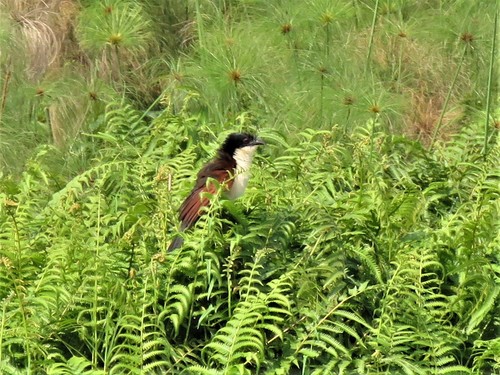 Cucal Monje
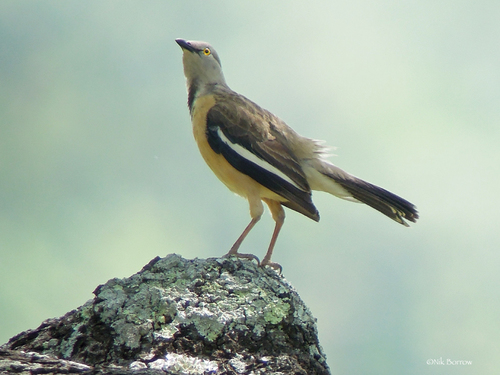 Estornino Gorjinegro
En breve
La marca de campo más confiable para separar el Cucal Monje del Estornino Gorjinegro es el tamaño y la estructura general: el cucal es mucho más grande y robusto, con una cola larga y un pico pesado, mientras que el estornino es un ave cantora pequeña y compacta. Los juveniles de Cucal Monje muestran un fuerte barrado y estriado en las alas y la cabeza, muy diferente del ala limpia y estriada y el pecho amarillo del estornino. Los cucales adultos tienen un contraste llamativo de cabeza y espalda negro-azulado brillante, alas castañas y partes inferiores pálidas, mientras que los estorninos gorjinegros tienen cabeza pálida con un pecho amarillo y una cuña negra distintiva en el pecho. Si ves un ave con un ojo amarillo brillante y una banda blanca en el ala, es el estornino; un ojo rojo oscuro y sin banda en el ala apunta al cucal.
Consejos de identificación
- Tamaño y estructura: El Cucal Monje es más del doble de la longitud del Estornino Gorjinegro y mucho más robusto, con una cola larga y un pico pesado. Si el ave parece del tamaño de un cuervo, es un cucal; si es del tamaño de un mirlo o más pequeña, es un estornino.
- Forma del pico: El cucal tiene un pico grueso, fuerte y ligeramente curvado, mientras que el pico del estornino es más fino y recto, típico de los estorninos.
- Cola: La cola del cucal es larga y ancha, a menudo sostenida hacia abajo o en abanico; la cola del estornino es más corta y más cuadrada.
- Cabeza y espalda de adultos: Los adultos de cucal tienen una cabeza y espalda negro-azul brillante; el estornino tiene una cabeza pálida, casi blanca y partes superiores marrón claro.
- Alas (posadas): Las alas del cucal son de un castaño profundo sin banda blanca; las alas del estornino son de un gris marrón oscuro con una clara banda blanca visible en el ala plegada.
- Patrón de alas juveniles: Los juveniles de cucal muestran un fuerte barrado en las alas y la espalda, y estriado rufo-pálido en la cabeza; los juveniles de estornino carecen de este barrado y tienen una cabeza y banda de ala limpias y pálidas.
- Partes inferiores: El cucal tiene partes inferiores blancas o de un pálido color canela; el estornino tiene un pecho amarillo con una cuña negra distintiva en el centro.
- Color de los ojos: El cucal tiene ojos rojos oscuros; el estornino tiene ojos amarillos brillantes, que son llamativos a corta distancia.
- Color de las patas: Las patas y pies del cucal son de un gris oscuro; el color de las patas del estornino no se describe, pero no es una marca de campo primaria.
- Vocalizaciones: El estornino emite llamados arrastrados, chillones y ásperos; los llamados del cucal son más profundos y burbujeantes (no descritos aquí, pero generalmente ciertos para los cucales).
- Comportamiento: El cucal es sigiloso, de movimiento lento y a menudo se oculta en la vegetación húmeda; el estornino es activo, social y se posa abiertamente.
- Hábitat: El cucal se encuentra en pantanos, márgenes de ríos y áreas húmedas; el estornino se encuentra en bosques más secos y sabanas.
- Sexos: Ambas especies son sexualmente monomórficas (los sexos se parecen), así que no uses el sexo para la identificación.
- Vuelo: El cucal rara vez vuela lejos y parece pesado en vuelo; el estornino tiene un vuelo más ligero y directo.
- Trampas: Los cucales inmaduros pueden parecer apagados y estriados, pero el tamaño, la estructura y el barrado siguen siendo distintivos. La banda blanca en el ala y el pecho amarillo del estornino son únicos en este par.
Tamaño
El Cucal Monje es un ave mucho más grande, midiendo entre 45 y 52 cm de longitud, en comparación con los 17 cm del Estornino Gorjinegro. El cucal también es más pesado y robusto, con una cola larga y un pico grueso y fuerte, mientras que el estornino es ligero (64-72 g), compacto y tiene una forma típica de estornino con una cola más corta y un pico más fino. Esta diferencia de tamaño es obvia incluso a distancia y es un punto clave de separación en el campo.
Plumaje
- Aves juveniles/inmaduras: Los juveniles de Cucal Monje tienen áreas negras más apagadas (no brillantes), la cabeza está estriada de rufo-pálido, y las alas son de un castaño oscuro fuertemente barrado con marrón oscuro; la espalda y la cola están barradas con canela, y la garganta y el pecho están manchados de negro. En contraste, los juveniles de Estornino Gorjinegro (no descritos específicamente, pero probablemente similares a los adultos) mostrarían la misma cabeza pálida, pecho amarillo, cuña negra en el pecho y banda blanca en el ala que los adultos, sin un fuerte barrado o estriado.
- Adultos: Los adultos de Cucal Monje tienen una cabeza, cuello y espalda negro-azul brillante, alas de un castaño profundo, cola negra con brillo verde/bronce, y partes inferiores blancas o de un pálido color canela. Los Estorninos Gorjinegros tienen una cabeza casi blanca, pecho amarillo con una cuña negra, partes superiores marrón claro que se desvanecen a alas marrón grisáceo oscuro (con una banda blanca en el ala), y una cola marrón oscuro. El color de los ojos también es distintivo: rojo oscuro en el cucal, amarillo brillante en el estornino.
Comportamiento
El Cucal Monje es típicamente lento, moviéndose a través de densa vegetación húmeda o posándose bajo, a menudo permaneciendo oculto o sigiloso. Rara vez vuela lejos y a menudo se arrastra a través de cañas o arbustos. El Estornino Gorjinegro es más activo y conspicuo, a menudo visto en pequeños grupos, posándose abiertamente y moviéndose entre los árboles o en el suelo. Su vuelo es más directo y similar al de un estornino, con cortos estallidos entre posadas.
Hábitat
El Cucal Monje se encuentra en hábitats húmedos: pantanos, márgenes de ríos, bordes de bosques y áreas generalmente húmedas en el centro tropical de África. El Estornino Gorjinegro prefiere hábitats más secos y abiertos en el centro-sur de África (Angola, Malawi, Tanzania, Zambia), a menudo en bosques o sabanas, y no está asociado con pantanos o áreas húmedas densas. Por lo tanto, el contexto del hábitat puede ayudar, pero hay cierta superposición en los bordes de los bosques.
Voz
El Estornino Gorjinegro es conocido por sus llamados arrastrados, chillones o ásperos, que son típicos de los estorninos y bastante vocales. El Cucal Monje no se describe aquí por su voz, pero los cucales generalmente tienen llamados profundos, burbujeantes o retumbantes, muy diferentes de los sonidos ásperos del estornino. Si escuchas un llamado áspero y chillón, piensa en el estornino.