

Monniksspoorkoekoek vs Witvleugelspreeuw
Centropus monachus versus Neocichla gutturalis
Speel een quiz met Monniksspoorkoekoek en Witvleugelspreeuw
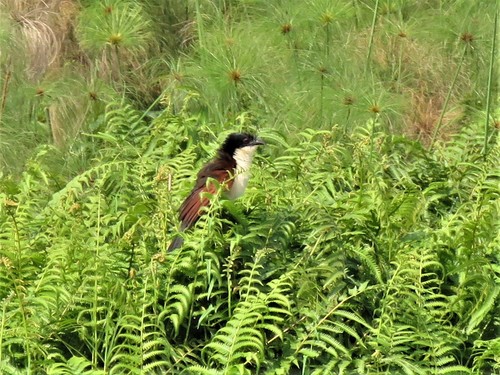 Monniksspoorkoekoek
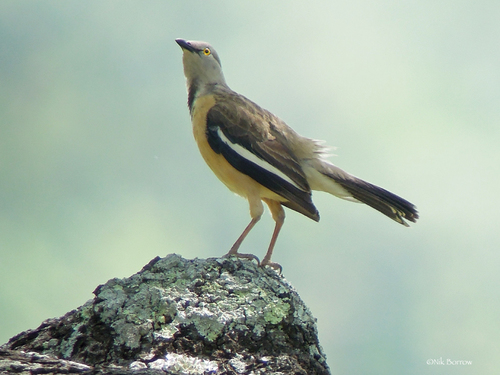 Witvleugelspreeuw
Kort gezegd
Het meest betrouwbare veldkenmerk om de Monniksspoorkoekoek van de Witvleugelspreeuw te scheiden, is de algehele grootte en structuur: de koekoek is veel groter en robuuster, met een lange staart en een zware snavel, terwijl de spreeuw een kleine, compacte zangvogel is. Juveniele Monniksspoorkoekoeken vertonen zware streping en vlekken op de vleugels en het hoofd, heel anders dan de schone, gebande vleugel en gele borst van de spreeuw. Volwassen koekoeken hebben een opvallend contrast van glanzend zwartachtig-blauw hoofd en rug, kastanjebruine vleugels en lichte onderdelen, terwijl witvleugelspreeuwen een lichte kop hebben met een gele borst en een kenmerkende zwarte wig op de borst. Als je een vogel ziet met een felgele oog en een witte vleugelband, is het de spreeuw; een donkerrood oog en geen vleugelband wijzen op de koekoek.
Herkenningstips
- Grootte en structuur: Monniksspoorkoekoek is meer dan twee keer de lengte van Witvleugelspreeuw en veel robuuster, met een lange staart en zware snavel. Als de vogel eruitziet als een kraai, is het een koekoek; als het de grootte van een lijster of kleiner is, is het een spreeuw.
- Snavelvorm: Koekoek heeft een dikke, sterke, licht gebogen snavel, terwijl de snavel van de spreeuw fijner en recht is, typisch voor spreeuwen.
- Staart: De staart van de koekoek is lang en breed, vaak naar beneden gehouden of uitgespreid; de staart van de spreeuw is korter en meer vierkant.
- Volwassen hoofd en rug: Volwassen koekoeken hebben een glanzend blauw-zwart hoofd en rug; de spreeuw heeft een lichte, gebroken witte kop en lichtbruine bovenkant.
- Vleugels (zittend): De vleugels van de koekoek zijn diep kastanjebruin zonder witte band; de vleugels van de spreeuw zijn donker grijsbruin met een duidelijke witte band zichtbaar op de gevouwen vleugel.
- Juveniele vleugelpatroon: Juveniele koekoeken vertonen zware streping op de vleugels en rug, en gestreept roestbruin op het hoofd; juveniele spreeuwen missen deze streping en hebben een schone, lichte kop en vleugelband.
- Onderdelen: Koekoek heeft witte of lichte buffonderdelen; spreeuw heeft een gele borst met een kenmerkende zwarte wig in het midden.
- Oogkleur: Koekoek heeft donkerrode ogen; spreeuw heeft felgele ogen, die opvallend zijn van dichtbij.
- Pootkleur: De poten en voeten van de koekoek zijn grijsachtig zwart; de pootkleur van de spreeuw wordt niet beschreven, maar is geen primair veldkenmerk.
- Vocalisaties: Spreeuw geeft slappe, piepende, schorre roepjes; de roepjes van de koekoek zijn dieper en meer borrelend (niet hier beschreven, maar over het algemeen waar voor koekoeken).
- Gedrag: Koekoek is schuw, langzaam bewegend, en vaak verborgen in natte vegetatie; spreeuw is actief, sociaal, en zit openlijk.
- Habitat: Koekoek is in moerassen, rivieroevers, en natte gebieden; spreeuw is in drogere bossen en savanne.
- Geslachten: Beide soorten zijn seksueel monomorf (geslachten lijken op elkaar), dus gebruik geslacht niet voor identificatie.
- Vlucht: Koekoek vliegt zelden ver en lijkt zwaar in de vlucht; spreeuw heeft een meer luchtige, directe vlucht.
- Valkuilen: Onvolwassen koekoeken kunnen dof en gestreept lijken, maar de grootte, structuur, en streping blijven kenmerkend. De witte vleugelband en gele borst van de spreeuw zijn uniek in dit paar.
Grootte
Monniksspoorkoekoek is een veel grotere vogel, met een lengte van 45–52 cm, vergeleken met de 17 cm van de Witvleugelspreeuw. De koekoek is ook zwaarder en robuuster, met een lange staart en een dikke, sterke snavel, terwijl de spreeuw licht is (64–72 g), compact is en een typische spreeuwvorm heeft met een kortere staart en fijnere snavel. Dit grootteverschil is zelfs op afstand duidelijk en is een belangrijk scheidingspunt in het veld.
Verenkleed
- Juveniele/onvolwassen vogels: Juveniele Monniksspoorkoekoeken hebben doffere zwarte gebieden (niet glanzend), het hoofd is gestreept roestbruin, en de vleugels zijn donker kastanjebruin zwaar gestreept met donkerbruin; de rug en staart zijn gestreept met buff, en de keel en borst zijn gespikkeld met zwart. In tegenstelling tot dat zouden juveniele Witvleugelspreeuwen (niet specifiek beschreven, maar waarschijnlijk vergelijkbaar met volwassenen) dezelfde lichte kop, gele borst, zwarte borstwig en witte vleugelband als volwassenen vertonen, zonder zware streping of vlekken.
- Volwassenen: Volwassen Monniksspoorkoekoeken hebben een glanzend blauw-zwart hoofd, nek en rug, diepe kastanjebruine vleugels, zwarte staart met groene/bronzen glans, en witte of lichte buffonderdelen. Witvleugelspreeuwen hebben een gebroken witte kop, gele borst met een zwarte wig, lichtbruine bovenkant die vervaagt naar donker grijsbruin vleugels (met een witte vleugelband), en een donkerbruine staart. De oogkleur is ook kenmerkend: donkerrood bij de koekoek, felgeel bij de spreeuw.
Gedrag
Monniksspoorkoekoek is typisch traag, beweegt door dichte natte vegetatie of zit laag, vaak verborgen of schuilend. Het vliegt zelden ver en klimt vaak door riet of struiken. Witvleugelspreeuw is actiever en opvallender, vaak gezien in kleine groepen, zittend openlijk, en zich bewegend in bomen of op de grond. Hun vlucht is directer en spreeuwachtig, met korte uitbarstingen tussen de zitplaatsen.
Habitat
Monniksspoorkoekoek wordt aangetroffen in natte habitats: moerassen, rivieroevers, bosranden en over het algemeen vochtige gebieden in tropisch centraal Afrika. Witvleugelspreeuw geeft de voorkeur aan drogere, meer open habitats in zuidelijk-centraal Afrika (Angola, Malawi, Tanzania, Zambia), vaak in bossen of savanne, en is niet geassocieerd met moerassen of dichte natte gebieden. Daarom kan de context van het habitat helpen, maar er is enige overlap bij bosranden.
Geluid
Witvleugelspreeuw staat bekend om zijn slappe, piepende of schorre berispende roepjes, die typisch zijn voor spreeuwen en behoorlijk vocaal. Monniksspoorkoekoek wordt hier niet beschreven voor zijn stem, maar koekoeken hebben over het algemeen diepe, borrelende of bulderende roepjes, heel anders dan de schorre geluiden van de spreeuw. Als je een harde, piepende roep hoort, denk dan aan spreeuw.
Monniksspoorkoekoek · Witvleugelspreeuw · Mijn lastige vogels