

limpa-folha-coroado vs limpa-folha-miúdo
Philydor atricapillus versus Anabacerthia amaurotis
Jogue um quiz com limpa-folha-coroado e limpa-folha-miúdo
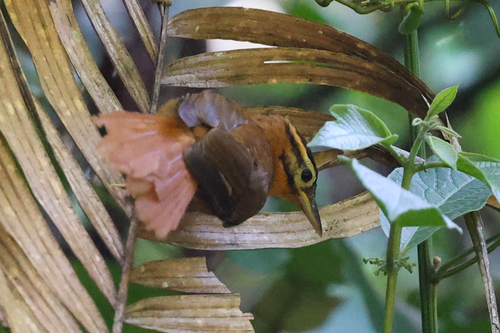 limpa-folha-coroado
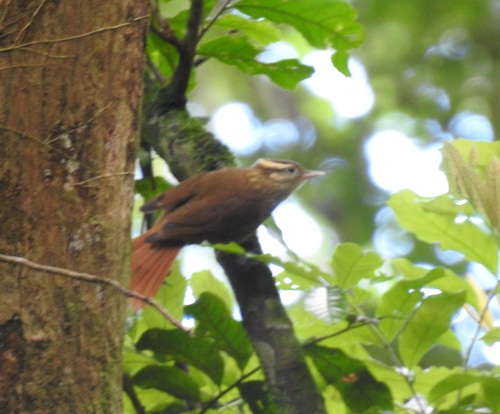 limpa-folha-miúdo
Em resumo
A marca de campo mais confiável entre o limpa-folha-coroado e o limpa-folha-miúdo é o padrão facial dramático: o limpa-folha-coroado apresenta um anel ocular e supercílios amplos e pálidos, com uma faixa marrom-escura atrás do olho, enquanto o limpa-folha-miúdo tem um supercílios amplo e branco-cremoso, mas um rosto menos contrastante e estriado. O limpa-folha-coroado é ligeiramente maior e mais rico em rufo por baixo, com um corpo inferior laranja-rufo simples, em comparação com o peito estriado e mais claro do limpa-folha-miúdo e a garganta cremosa. Em voo ou empoleirado, a cauda e as coberturas da cauda do limpa-folha-coroado se destacam em um laranja-rufo mais brilhante em contraste com os tons marrons mais suaves do limpa-folha-miúdo. Ambas as espécies têm estrutura semelhante, mas a cor do bico e as marcas faciais são fundamentais em vistas de binóculos.
Dicas de identificação
- O padrão facial é o separador mais rápido: O limpa-folha-coroado apresenta um anel ocular e supercílios amplos e pálidos (laranja-rufo na parte de trás), com uma faixa marrom-escura nítida atrás do olho e coberturas auriculares pálidas e distintas, bordadas de marrom-escuro. O supercílios do limpa-folha-miúdo é amplo e branco-cremoso, mas o rosto é menos marcado, com apenas uma leve bigode marrom e manchas/estrias claras.
- Coloração das partes inferiores: O limpa-folha-coroado é simples, rico em laranja-rufo escuro da garganta até a barriga, com flancos apenas ligeiramente mais apagados. O limpa-folha-miúdo tem uma garganta branco-cremosa, um peito marrom-claro com largas, mas borradas estrias pálidas, e uma barriga marrom-clara sem estrias. Se você ver estrias no peito, favoreça o limpa-folha-miúdo.
- Cauda e coberturas da cauda: A cauda e as coberturas da cauda do limpa-folha-coroado são brilhantes e laranja-rufo, muitas vezes parecendo mais vibrantes e uniformes. A cauda do limpa-folha-miúdo é rufo, mas menos brilhante, e as pontas das penas podem mostrar eixos nus, dando uma aparência ligeiramente mais desgrenhada.
- Coroa e nuca: A coroa do limpa-folha-coroado é marrom-escura com manchas e estrias fracas; a do limpa-folha-miúdo é marrom, com penas brancas bordadas de preto no centro das costas e um colar pálido e estreito nas laterais do pescoço.
- Sombra das partes superiores: As costas do limpa-folha-coroado são de um rufo-marrom mais rico, enquanto as do limpa-folha-miúdo são de um marrom médio; as coberturas da cauda são mais brilhantes no limpa-folha-coroado.
- Cor do bico: O limpa-folha-coroado tem uma mandíbula superior escura e uma inferior pálida cinza/esverdeada, enquanto o bico do limpa-folha-miúdo é de chifre pálido com um pouco de cinza claro. Isso é sutil, mas pode ajudar em boa luz.
- Marcas juvenis/imaturas: Se você ver um pássaro com bordas marrons escuras nas penas das partes inferiores, é um juvenil do limpa-folha-coroado. Os juvenis do limpa-folha-miúdo não são descritos, mas provavelmente se assemelham aos adultos.
- Padrão do peito: Partes inferiores simples (exceto por uma leve mancha juvenil) apontam para o limpa-folha-coroado; largas e borradas estrias pálidas no peito apontam para o limpa-folha-miúdo.
- Cor da garganta: Garganta laranja-rufo clara no limpa-folha-coroado vs. branco-cremoso no limpa-folha-miúdo.
- Cor das pernas: As pernas do limpa-folha-coroado são amarelo-ocre mais pálido a cinza-oliva; as do limpa-folha-miúdo são creme-marronzado a oliva, mas isso raramente é visível em campo.
- Vocalização: Se você ouvir um trinado acentuadamente descendente de 6–8 notas altas, é o limpa-folha-coroado. A falta de descrição vocal para o limpa-folha-miúdo significa que o silêncio não é diagnóstico.
- Tamanho e estrutura: O limpa-folha-coroado é ligeiramente maior e mais longo, mas isso não é uma marca de campo confiável, a menos que ambos estejam juntos.
- Habitat: Ambos podem ocorrer na Mata Atlântica, mas o limpa-folha-miúdo é mais restrito a este bioma; o limpa-folha-coroado pode ser encontrado em uma gama mais ampla, incluindo regiões adjacentes.
- Padrão das asas: Nenhuma marca de asa específica para idade é descrita para nenhuma das espécies; olhe para os padrões faciais e das partes inferiores em vez disso.
- Contexto: Se você estiver em uma Mata Atlântica madura e intocada, considere o limpa-folha-miúdo, mas não confie apenas no habitat para separação.
Tamanho
O limpa-folha-coroado é marginalmente maior (16–17 cm, 22 g) do que o limpa-folha-miúdo (15–16 cm, sem massa dada, mas ligeiramente mais curto em comprimento). Essa diferença é sutil em campo e geralmente não é diagnóstica, a menos que ambos sejam vistos lado a lado. Ambos são limpa-folhas de tamanho médio com proporções semelhantes.
Plumagem
- Marcas juvenis/imaturas: Os juvenis do limpa-folha-coroado são como os adultos, mas têm bordas marrons escuras nas penas das partes inferiores, o que pode fazer com que as partes inferiores pareçam ligeiramente mais manchadas; os juvenis do limpa-folha-miúdo não são especificamente descritos, mas os adultos já têm um peito estriado e um rosto manchado, então os imaturos podem parecer semelhantes aos adultos.
- Padrão facial: O limpa-folha-coroado tem um rosto muito ousado: anel ocular amplo e pálido, supercílios fortes (laranja-rufo na parte de trás), faixa pós-ocular marrom-escura e coberturas auriculares pálidas com bordas marrons-escuras. O supercílios do limpa-folha-miúdo é branco-cremoso e amplo, mas o rosto é menos acentuado, com um leve bigode marrom e estrias/manchas claras.
- Coroa e nuca: A coroa do limpa-folha-coroado é marrom-escura com manchas e estrias fracas; a do limpa-folha-miúdo é marrom com penas brancas bordadas de preto no centro das costas e um colar pálido e estreito se estendendo para o pescoço.
- Partes superiores: As costas do limpa-folha-coroado são de um rufo-marrom rico, a região do rabo é mais clara, mas mais rufo, e as coberturas da cauda são brilhantes e laranja-rufo. As costas do limpa-folha-miúdo são de um marrom médio rico, a região do rabo ligeiramente mais clara, e as coberturas da cauda são rufo, mas menos brilhantes.
- Cauda: A cauda do limpa-folha-coroado é brilhante e rufo; a do limpa-folha-miúdo é rufo com eixos nus na extremidade (pode parecer mais desgastada ou pontuda).
- Asas: Ambas as espécies têm asas marrons ricas, mas as coberturas do limpa-folha-coroado são mais escuras e as penas de voo têm pontas fuscadas escuras. As asas do limpa-folha-miúdo são de um marrom médio com coberturas primárias mais escuras.
- Partes inferiores: O limpa-folha-coroado é simples e escuro laranja-rufo no peito e na barriga, com flancos ligeiramente mais apagados e coberturas de cauda brilhantes e rufo. O limpa-folha-miúdo tem uma garganta branco-cremosa, peito marrom-claro com largas, mas borradas estrias pálidas, barriga marrom-clara sem estrias, e flancos/coberturas de cauda mais escuros com um tom rufo.
- Bico, pernas, olhos: O limpa-folha-coroado tem uma maxila escura e uma mandíbula pálida cinza/esverdeada; o bico do limpa-folha-miúdo é de chifre pálido com um pouco de cinza claro. As cores das pernas e íris são semelhantes, mas as pernas do limpa-folha-coroado são amarelo-ocre mais pálido a cinza-oliva, enquanto as do limpa-folha-miúdo são creme-marronzado a oliva.
Comportamento
Nenhuma diferença comportamental forte é observada entre essas duas espécies nas fontes. Ambas são limpa-folhas típicas, forrageando ativamente em folhagens densas. Nenhuma diferença no estilo de voo ou comportamento de forrageio é descrita.
Habitat
Ambas as espécies ocorrem na região da Mata Atlântica, mas o limpa-folha-coroado se estende até a Argentina, Brasil e Paraguai, enquanto o limpa-folha-miúdo é restrito à Mata Atlântica. Em áreas de sobreposição, o habitat não é um separador confiável, mas o limpa-folha-miúdo pode estar mais estritamente ligado à Mata Atlântica madura.
Voz
A canção do limpa-folha-coroado é um trinado rápido e acentuadamente descendente de 6–8 notas altas, começando mais baixo e terminando ligeiramente mais baixo ainda. Seus chamados incluem notas chiadas, 'pit-wit', e um 'zic' metálico muito alto. Nenhuma descrição vocal é fornecida para o limpa-folha-miúdo nas fontes, então a voz só é diagnóstica se a canção distinta do limpa-folha-coroado for ouvida.
limpa-folha-coroado · limpa-folha-miúdo · Minhas aves difíceis