

Black-capped Foliage-gleaner vs White-browed Foliage-gleaner
Philydor atricapillus contro Anabacerthia amaurotis
Fai un quiz con Black-capped Foliage-gleaner e White-browed Foliage-gleaner
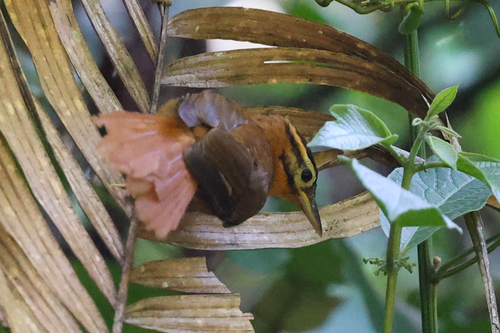 Black-capped Foliage-gleaner
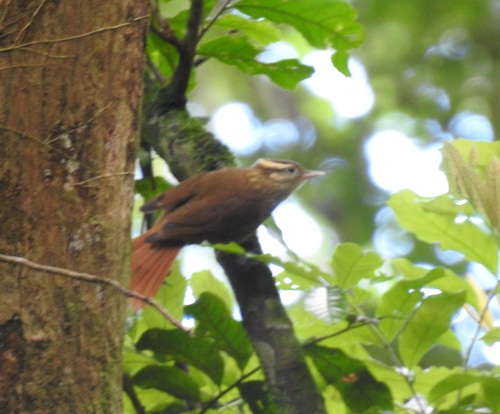 White-browed Foliage-gleaner
In breve
Il segno di campo più affidabile tra Black-capped e White-browed Foliage-gleaners è il drammatico schema facciale: Black-capped mostra un anello oculare e un supercilio di un buff pallido audace e ampio con una banda marrone scuro dietro l'occhio, mentre White-browed ha un supercilio buff-bianco ampio ma un viso meno contrastante e striato. Black-capped è leggermente più grande e più ricco di ruggine sotto, con un corpo inferiore arancione-ruggine semplice, rispetto al petto striato e marrone più chiaro di White-browed e alla gola cremosa. In volo o posato, la coda arancione-ruggine più brillante di Black-capped e le copritrici della coda si distinguono rispetto ai toni marroni più tenui di White-browed. Entrambe le specie hanno una struttura simile, ma il colore del becco e le marcature facciali sono fondamentali nelle viste binoculare.
Consigli di identificazione
- Il modello facciale è il separatore più veloce: Black-capped mostra un anello oculare e un supercilio di un buff pallido audace e ampio (arancione-ruggine verso il retro), con una banda nera marrone scuro netta dietro l'occhio e copritrici auricolari buff pallido distinte bordate di marrone scuro. Il supercilio di White-browed è ampio e buff-bianco, ma il viso è meno nettamente marcato, con solo una leggera baffo marrone e leggera maculatura/stria.
- Colorazione delle parti inferiori: Black-capped è semplice, ricco di arancione-ruggine scuro dalla gola fino alla pancia, con solo fianchi leggermente più opachi. White-browed ha una gola cremosa bianca, un petto marrone chiaro con ampie ma sfocate striature buff pallido e una pancia marrone chiaro non striata. Se vedi striature sul petto, favorisci White-browed.
- Coda e copritrici della coda: La coda e le copritrici della coda di Black-capped sono di un arancione-ruggine brillante, spesso sembrando più vivaci e uniformi. La coda di White-browed è ruggine ma meno brillante, e le punte delle piume possono mostrare fusti nudi, dando un aspetto leggermente più trasandato.
- Corona e nuca: La corona di Black-capped è marrone scuro con macchie e striature deboli; quella di White-browed è marrone, con piume bianche bordate di nero al centro della schiena e un colletto buff pallido stretto sui lati del collo.
- Ombra delle parti superiori: La schiena di Black-capped è di un ruggine-marrone più ricco, mentre quella di White-browed è di un marrone medio; le copritrici della coda sono più brillanti in Black-capped.
- Colore del becco: Black-capped ha una mandibola superiore nera e una inferiore grigia/pallida verdastra, mentre il becco di White-browed è di corno pallido con un po' di grigio pallido. Questo è sottile ma può aiutare in buona luce.
- Segni giovanili/immaturi: Se vedi un uccello con bordi marrone scuro sulle piume delle parti inferiori, è un giovanile Black-capped. I giovanili di White-browed non sono descritti ma probabilmente assomigliano agli adulti.
- Schema del petto: Parti inferiori semplici (eccetto per una leggera maculatura giovanile) indicano Black-capped; ampie e sfocate striature buff pallido sul petto indicano White-browed.
- Colore della gola: Gola arancione-ruggine chiara in Black-capped vs. cremosa bianca in White-browed.
- Colore delle gambe: Le gambe di Black-capped sono di un giallo ocra pallido a grigio oliva; quelle di White-browed sono di un crema marrone a oliva, ma questo è raramente visibile sul campo.
- Vocalizzazione: Se senti un trill discendente netto di 6–8 note alte, è Black-capped. La mancanza di descrizione vocale per White-browed significa che il silenzio non è diagnostico.
- Dimensione e struttura: Black-capped è leggermente più grande e lungo, ma questo non è un segno di campo affidabile a meno che entrambi non siano insieme.
- Habitat: Entrambi possono verificarsi nella Foresta Atlantica, ma White-browed è più ristretto a questo bioma; Black-capped può essere trovato in una gamma più ampia, comprese le regioni adiacenti.
- Schema delle ali: Non sono descritti segni specifici per età sulle ali superiori per nessuna delle due specie; guarda invece ai modelli facciali e delle parti inferiori.
- Contesto: Se ti trovi in una Foresta Atlantica matura e indisturbata, considera White-browed, ma non fare affidamento solo sull'habitat per la separazione.
Taglia
Black-capped Foliage-gleaner è marginalmente più grande (16–17 cm, 22 g) di White-browed (15–16 cm, nessuna massa fornita ma leggermente più corto in lunghezza). Questa differenza è sottile sul campo e di solito non è diagnostica a meno che entrambi non siano visti fianco a fianco. Entrambi sono foliage-gleaners di dimensioni medie con proporzioni simili.
Piumaggio
- Segni giovanili/immaturi: I giovanili di Black-capped sono simili agli adulti ma hanno bordi marrone scuro sulle piume delle parti inferiori, il che può far sembrare le parti inferiori leggermente più maculate; i giovanili di White-browed non sono specificamente descritti, ma gli adulti hanno già un petto striato e un viso maculato, quindi gli immaturi possono apparire simili agli adulti.
- Schema facciale: Black-capped ha un viso molto audace: ampio anello oculare buff pallido, forte supercilio (arancione-ruggine verso il retro), banda post-oculare marrone scuro e copritrici auricolari buff pallido con bordi marrone scuro. Il supercilio di White-browed è buff-bianco e ampio, ma il viso è meno nettamente marcato, con un leggero baffo marrone e leggera striatura/maculatura.
- Corona e nuca: La corona di Black-capped è marrone scuro con macchie e striature deboli; quella di White-browed è marrone con piume bianche bordate di nero al centro della schiena e un colletto buff pallido stretto che si estende sul collo.
- Parti superiori: La schiena di Black-capped è di un ruggine-marrone ricco, il ronzio è più pallido ma più ruggine, e le copritrici della coda sono di un arancione-ruggine brillante. La schiena di White-browed è di un marrone medio ricco, il ronzio è leggermente più pallido, le copritrici della coda sono ruggine ma meno brillanti.
- Coda: La coda di Black-capped è di un ruggine brillante; quella di White-browed è ruggine con fusti nudi all'estremità (può sembrare più usurata o appuntita).
- Ali: Entrambe le specie hanno ali marroni ricche, ma le copritrici di Black-capped sono più scure e le piume di volo hanno punte scure fuscose. Le ali di White-browed sono di un marrone medio con copritrici primarie più scure.
- Parti inferiori: Black-capped è di un arancione-ruggine scuro semplice su petto e pancia, con fianchi leggermente più opachi e copritrici della coda ruggine brillanti. White-browed ha una gola cremosa bianca, un petto marrone chiaro con ampie ma sfocate striature buff pallido, una pancia marrone chiaro non striata e fianchi/copritrici della coda marroni più scuri con una sfumatura rugginosa.
- Becco, gambe, occhi: Black-capped ha una mascella superiore nera e una mandibola grigia/pallida verdastra; il becco di White-browed è di corno pallido con un po' di grigio pallido. I colori delle gambe e dell'iride sono simili, ma le gambe di Black-capped sono di un ocra giallo pallido a grigio oliva, quelle di White-browed sono di un crema marrone a oliva.
Comportamento
Non sono notate forti differenze comportamentali tra queste due specie nelle fonti. Entrambi sono tipici foliage-gleaners, foraggiando attivamente in una fitta vegetazione. Non è descritta alcuna differenza nello stile di volo o nel comportamento di foraggiamento.
Habitat
Entrambe le specie si trovano nella regione della Foresta Atlantica, ma Black-capped si estende in Argentina, Brasile e Paraguay, mentre White-browed è ristretto alla Foresta Atlantica. Nelle aree di sovrapposizione, l'habitat non è un separatore affidabile, ma White-browed potrebbe essere più strettamente legato alla Foresta Atlantica matura.
Voce
Il canto di Black-capped è un trill veloce e nettamente discendente di 6–8 note alte, che inizia più in basso e termina leggermente più in basso. I suoi richiami includono note squeaky, 'pit-wit', e un 'zic' metallico molto alto. Nessuna descrizione vocale è fornita per White-browed nelle fonti, quindi la voce è solo diagnostica se si sente il canto distintivo di Black-capped.
Black-capped Foliage-gleaner · White-browed Foliage-gleaner · I miei uccelli difficili