

Motmot

ズグロマユカマドドリ 対 マユブトカマドドリ

Philydor atricapillus 対 Anabacerthia amaurotis

ズグロマユカマドドリとマユブトカマドドリのクイズ
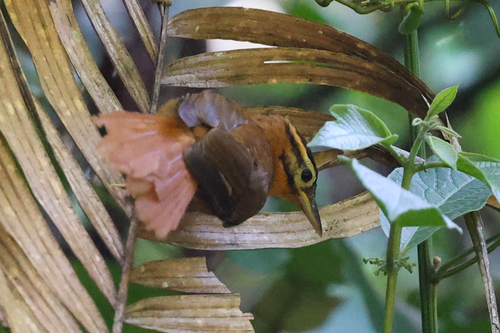
ズグロマユカマドドリ (Philydor atricapillus) ズグロマユカマドドリ
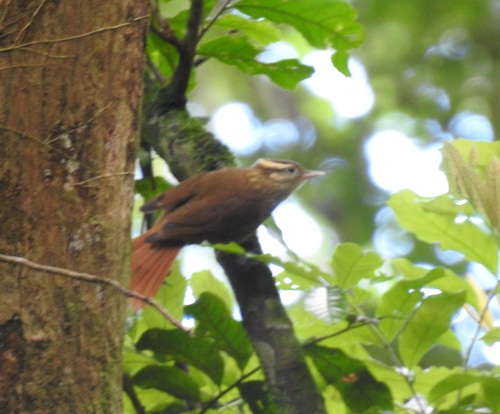
マユブトカマドドリ (Anabacerthia amaurotis) マユブトカマドドリ

メディア

読み込み中…

要点

ズグロマユカマドドリとマユブトカマドドリの最も信頼できるフィールドマークは劇的な顔の模様です:ズグロマユカマドドリは大胆で広い淡いバフのアイリングとスーペルシリウムを示し、目の後ろには黒褐色のバンドがありますが、マユブトカマドドリは広いバフホワイトのスーペルシリウムを持っていますが、顔のコントラストは少なく、縞模様があります。ズグロマユカマドドリはやや大きく、下部はより豊かなルーファスで、マユブトカマドドリの縞模様のある淡い茶色の胸とクリーミーな喉に比べて、オレンジルーファスの無地の下部を持っています。飛んでいるときや止まっているとき、ズグロマユカマドドリの明るいオレンジルーファスの尾と上尾覆羽は、マユブトカマドドリのより控えめなルーフェセントブラウンのトーンに対して際立っています。両種は構造は似ていますが、くちばしの色と顔の模様が双眼鏡での観察において重要です。

識別のコツ

  1. 顔の模様は最も迅速な区別点です: ズグロマユカマドドリは大胆で広い淡いバフのアイリングとスーペルシリウム(後ろはオレンジルーファス)を示し、目の後ろには鋭い黒褐色のバンドがあり、黒褐色で縁取られた明確な淡いバフの耳覆羽があります。マユブトカマドドリのスーペルシリウムは広くバフホワイトですが、顔の模様はあまりはっきりしておらず、わずかな茶色の口ひげと淡い斑点/縞模様があります。
  2. 下部の色合い: ズグロマユカマドドリは喉から腹部まで無地の豊かな暗いオレンジルーファスで、わずかに鈍い側面があります。マユブトカマドドリはクリーミーな白っぽい喉、広いがぼやけた淡いバフの縞模様のある淡い茶色の胸、無地の淡い茶色の腹部を持っています。胸に縞模様が見られた場合は、マユブトカマドドリを優先してください。
  3. 尾と上尾覆羽: ズグロマユカマドドリの尾と上尾覆羽は明るいオレンジルーファスで、しばしばより鮮やかで均一に見えます。マユブトカマドドリの尾はルーファスですが、明るさは劣り、羽の先端には裸の軸が見えることがあり、やや乱れた外観を与えます。
  4. 冠と後頭部: ズグロマユカマドドリの冠は暗い茶色で、わずかな斑点と中央の縞模様があります。マユブトカマドドリの冠は茶色で、背中の中央に黒縁の白い羽毛があり、首の側面に狭い淡いバフの襟があります。
  5. 上部の色合い: ズグロマユカマドドリの背中はより豊かなルーファスブラウンですが、マユブトカマドドリの背中は中程度の茶色です;上尾覆羽はズグロマユカマドドリの方が明るいです。
  6. くちばしの色: ズグロマユカマドドリは黒褐色の上顎と淡い灰色/緑がかった下顎を持ち、マユブトカマドドリのくちばしは淡い角質で、いくつかの淡い灰色があります。これは微妙ですが、良い光の中で役立つことがあります。
  7. 幼鳥/未熟なマーク: 下部の羽毛に暗い茶色の縁がある鳥を見た場合、それは幼鳥のズグロマユカマドドリです。マユブトカマドドリの幼鳥は具体的には記述されていませんが、成鳥に似ている可能性があります。
  8. 胸の模様: 無地の下部(わずかな幼鳥の斑点を除く)はズグロマユカマドドリを指し、胸の広くぼやけた淡いバフの縞模様はマユブトカマドドリを指します。
  9. 喉の色: ズグロマユカマドドリの明るいオレンジルーファスの喉と、マユブトカマドドリのクリーミーな白っぽい喉。
  10. 脚の色: ズグロマユカマドドリの脚は淡いオーカーイエローからオリーブグレーで、マユブトカマドドリの脚は茶色がかったクリームからオリーブですが、これはフィールドではほとんど見えません。
  11. 鳴き声: 6〜8の高音の急降下するトリルを聞いた場合、それはズグロマユカマドドリです。マユブトカマドドリの鳴き声の記述がないため、沈黙は診断的ではありません。
  12. サイズと構造: ズグロマユカマドドリはやや大きく、長いですが、これは両方が一緒にいる場合を除いて信頼できるフィールドマークではありません。
  13. 生息地: 両方ともアトランティックフォレストに生息できますが、マユブトカマドドリはこの生物群系により制限され、ズグロマユカマドドリは隣接する地域を含むより広い範囲で見られることがあります。
  14. 翼の模様: どちらの種にも特有の年齢に特有の上翼のマークは記述されていません;代わりに顔と下部の模様を見てください。
  15. 文脈: 成熟した未開発のアトランティックフォレストにいる場合は、マユブトカマドドリを考慮してくださいが、生息地だけに頼って区別しないでください。

大きさ

ズグロマユカマドドリはマユブトカマドドリよりもわずかに大きい(16〜17 cm、22 g)ですが、マユブトカマドドリは15〜16 cmで、質量は記載されていませんが、長さはやや短いです。この違いはフィールドでは微妙で、通常は両方が並んで見られない限り診断的ではありません。両方とも同様の比率の中型のカマドドリです。

羽色

行動

これらの2種の間に強い行動の違いは、情報源には記載されていません。両方とも典型的なカマドドリで、密な葉の中で活発に餌を探します。飛行スタイルや餌を探す際の特徴に違いは記述されていません。

生息環境

両種はアトランティックフォレスト地域に生息していますが、ズグロマユカマドドリはアルゼンチン、ブラジル、パラグアイに分布し、マユブトカマドドリはアトランティックフォレストに制限されています。重複する地域では、生息地は信頼できる区別点ではありませんが、マユブトカマドドリは成熟したアトランティックフォレストにより厳密に結びついている可能性があります。

声

ズグロマユカマドドリの歌は、6〜8の高音の急降下するトリルで、低い音から始まり、さらにわずかに低く終わります。その呼び声には、きしむ音、'ピットウィット'、非常に高い金属的な'ズィック'が含まれます。情報源にはマユブトカマドドリの鳴き声の記述が提供されていないため、ズグロマユカマドドリの独特な歌が聞こえた場合のみ、声は診断的です。

より良い説明を送る

比較と同じ項目を使ってください。文章はすぐに公開されます。

The most reliable field mark between Black-capped and White-browed Foliage-gleaners is the dramatic facial pattern: Black-capped shows a bold, wide pale buff eyering and supercilium with a blackish-brown band behind the eye, while White-browed has a wide buff-white supercilium but a less contrasting, streaked face. Black-capped is slightly larger and richer rufous below, with a plain orange-rufous underbody, compared to the White-browed’s streaked, paler brown breast and creamy throat. In flight or perched, the Black-capped’s brighter orange-rufous tail and uppertail coverts stand out against the White-browed’s more subdued, rufescent brown tones. Both species have similar structure, but bill color and facial markings are key in binocular views.

  1. Facial pattern is the quickest separator: Black-capped shows a bold, wide pale buff eyering and supercilium (orange-rufous to rear), with a sharp blackish-brown band behind the eye and distinct pale buff ear coverts bordered by blackish-brown. White-browed’s supercilium is wide and buff-white, but the face is less sharply marked, with only a faint brown moustache and light flecking/streaking.
  2. Underparts coloration: Black-capped is plain, rich dark orange-rufous from throat through belly, with only slightly duller flanks. White-browed has a creamy whitish throat, a light brown breast with broad but blurry pale buff streaks, and an unstreaked light brown belly. If you see streaking on the breast, favor White-browed.
  3. Tail and uppertail coverts: Black-capped’s tail and uppertail coverts are bright orange-rufous, often looking more vibrant and uniform. White-browed’s tail is rufous but less bright, and the feather tips may show bare shafts, giving a slightly scruffier look.
  4. Crown and nape: Black-capped’s crown is dark brown with faint spots and central streaks; White-browed’s is brown, with black-edged white feathers at the center of the back and a narrow pale buff collar on the neck sides.
  5. Upperparts shade: Black-capped’s back is a richer rufous-brown, while White-browed’s is a more medium brown; uppertail coverts are brighter in Black-capped.
  6. Bill color: Black-capped has a blackish upper mandible and pale gray/greenish lower, while White-browed’s bill is pale horn with some pale gray. This is subtle but can help in good light.
  7. Juvenile/immature marks: If you see a bird with dark brown edges on the underparts’ feathers, it is a juvenile Black-capped. White-browed juveniles are not described but likely resemble adults.
  8. Breast pattern: Plain underparts (except for faint juvenile mottling) point to Black-capped; broad, blurry pale buff streaks on the breast point to White-browed.
  9. Throat color: Light orange-rufous throat in Black-capped vs. creamy whitish in White-browed.
  10. Leg color: Black-capped’s legs are paler ochre-yellow to olive-gray; White-browed’s are brownish cream to olive, but this is rarely visible in the field.
  11. Vocalization: If you hear a sharply descending trill of 6–8 high notes, it is Black-capped. Lack of vocal description for White-browed means silence is not diagnostic.
  12. Size and structure: Black-capped is slightly larger and longer, but this is not a reliable field mark unless both are together.
  13. Habitat: Both can occur in Atlantic Forest, but White-browed is more restricted to this biome; Black-capped may be found in a wider range, including adjacent regions.
  14. Wing pattern: No distinctive age-specific upperwing marks are described for either species; look to facial and underpart patterns instead.
  15. Context: If you are in mature, undisturbed Atlantic Forest, consider White-browed, but do not rely on habitat alone for separation.

Black-capped Foliage-gleaner is marginally larger (16–17 cm, 22 g) than White-browed (15–16 cm, no mass given but slightly shorter in length). This difference is subtle in the field and not usually diagnostic unless both are seen side by side. Both are medium-sized foliage-gleaners with similar proportions.

  • Juvenile/immature marks: Black-capped juveniles are like adults but have dark brown edges on the underparts’ feathers, which may make the underparts look slightly more mottled; White-browed juveniles are not specifically described, but adults already have a streaked breast and flecked face, so immatures may appear similar to adults.
  • Facial pattern: Black-capped has a very bold face: wide pale buff eyering, strong supercilium (orange-rufous to rear), blackish-brown post-ocular band, and pale buff ear coverts with blackish-brown borders. White-browed’s supercilium is buff-white and wide, but the face is less sharply marked, with a faint brown moustache and light streaking/flecking.
  • Crown and nape: Black-capped’s crown is dark brown with faint spots and streaks; White-browed’s is brown with black-edged white feathers at the center of the back and a narrow pale buff collar extending onto the neck.
  • Upperparts: Black-capped’s back is rich rufous-brown, rump paler but more rufous, and uppertail coverts bright orange-rufous. White-browed’s back is rich medium brown, rump slightly paler, uppertail coverts rufous but less bright.
  • Tail: Black-capped’s tail is bright rufous; White-browed’s is rufous with bare shafts at the very end (may look more worn or pointed).
  • Wings: Both species have rich brown wings, but Black-capped’s coverts are darker and the flight feathers have dark fuscous tips. White-browed’s wings are medium brown with darker primary coverts.
  • Underparts: Black-capped is plain dark orange-rufous on breast and belly, with slightly duller flanks and bright rufous undertail coverts. White-browed has a creamy whitish throat, light brown breast with broad but blurry pale buff streaks, unstreaked light brown belly, and darker brown flanks/undertail coverts with a rufescent tinge.
  • Bill, legs, eyes: Black-capped has a blackish maxilla and pale gray/greenish mandible; White-browed’s bill is pale horn with some pale gray. Leg and iris colors are similar, but Black-capped’s legs are paler ochre-yellow to olive-gray, White-browed’s are brownish cream to olive.

No strong behavioral differences are noted between these two species in the sources. Both are typical foliage-gleaners, foraging actively in dense foliage. No difference in flight style or foraging jizz is described.

Both species occur in the Atlantic Forest region, but Black-capped ranges into Argentina, Brazil, and Paraguay, while White-browed is restricted to the Atlantic Forest. In areas of overlap, habitat is not a reliable separator, but White-browed may be more strictly tied to mature Atlantic Forest.

Black-capped’s song is a fast, sharply descending trill of 6–8 high notes, starting lower and ending slightly lower still. Its calls include squeaky notes, 'pit-wit', and a very high metallic 'zic'. No vocal description is provided for White-browed in the sources, so voice is only diagnostic if Black-capped’s distinctive song is heard.

変更を破棄しますか?

保存していない編集があります。今離れると失われます。

ズグロマユカマドドリ · マユブトカマドドリ · 苦手な鳥