

andorinha-de-bando vs brown-throated sunbird
Hirundo rustica versus Anthreptes malacensis
Jogue um quiz com andorinha-de-bando e brown-throated sunbird
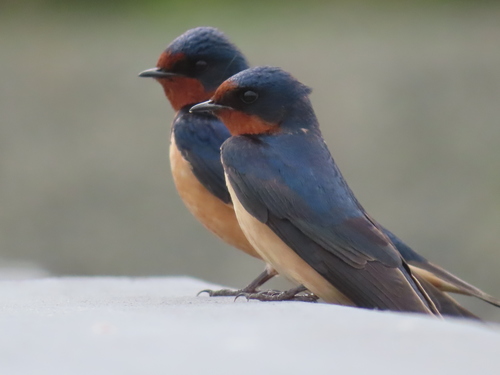 andorinha-de-bando
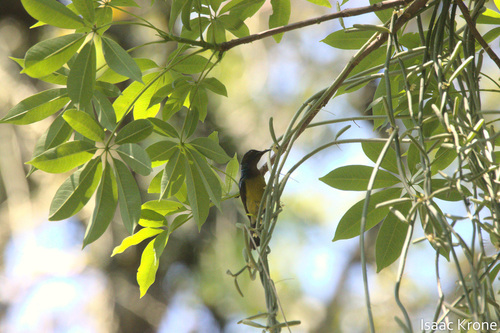 brown-throated sunbird
Em resumo
A marca de campo mais confiável é a cauda longa e profundamente bifurcada da andorinha-de-bando com manchas brancas e um rosto ruivo, em comparação com a cauda curta e quadrada do brown-throated sunbird e as partes superiores metálicas verdes/púrpuras. As andorinhas-de-bando juvenis não têm as longas fitas da cauda, mas ainda mostram um rosto ruivo pálido e partes inferiores brancas, enquanto os sunbirds nunca têm cauda bifurcada ou rosto ruivo. Em voo, a andorinha-de-bando mostra asas pontudas e um contorno aerodinâmico; o sunbird é mais compacto, com um bico pesado e asas curtas. Se você ver um pássaro com uma cauda longa, semelhante a uma andorinha, e um voo rápido, é uma andorinha-de-bando; um pássaro robusto, de bico grosso e iridescente com partes inferiores amarelas é um brown-throated sunbird.
Dicas de identificação
- Formato e comprimento da cauda: A andorinha-de-bando (adulto) tem uma cauda longa e profundamente bifurcada com manchas brancas perto das pontas; mesmo os juvenis têm uma cauda ligeiramente bifurcada. O brown-throated sunbird sempre tem uma cauda curta e quadrada, sem manchas brancas.
- Asa superior e silhueta de voo: A andorinha-de-bando mostra asas longas e pontudas e uma forma aerodinâmica e rápida. O sunbird é compacto, com asas curtas e arredondadas e um bico pesado e curvado.
- Cor do rosto e da garganta: A andorinha-de-bando (todas as idades) mostra uma testa, queixo e garganta ruivos, separados das partes inferiores por uma faixa peitoral azul. O sunbird nunca mostra um rosto ruivo; os machos têm uma cabeça metálica verde/púrpura, as fêmeas são oliva.
- Partes inferiores: A andorinha-de-bando tem partes inferiores off-white (adulto) ou mais brancas (juvenil), com uma faixa peitoral azul clara. O brown-throated sunbird é sempre amarelo por baixo (ambos os sexos), sem faixa peitoral.
- Formato do bico: A andorinha-de-bando tem um bico curto e largo, adequado para capturar insetos no ar. O brown-throated sunbird tem um bico longo, grosso e curvado para se alimentar de néctar.
- Postura empoleirada: A andorinha se empoleira ereta em fios ou galhos expostos, muitas vezes em grupos. O sunbird se empoleira sozinho ou em pares, frequentemente em flores, e pode pairar brevemente.
- Estilo de voo: O voo da andorinha é rápido, acrobático e sustentado; o do sunbird é curto, direto e muitas vezes entre empoleiramentos.
- Dimorfismo sexual: O macho da andorinha-de-bando é azul brilhante por cima, com longas fitas na cauda; a fêmea é mais opaca, com fitas mais curtas. O macho do brown-throated sunbird é iridescente verde/púrpura por cima; a fêmea é verde-oliva por cima e amarela por baixo.
- Confusão juvenil: A andorinha-de-bando juvenil não tem longas fitas na cauda, mas ainda mostra um rosto ruivo pálido e partes inferiores brancas. O sunbird juvenil/imaturo é oliva por cima, amarelo por baixo, e nunca tem um rosto ruivo ou cauda bifurcada.
- Contexto de habitat: A andorinha é vista em campos abertos, terras agrícolas e perto da água, muitas vezes em fios. O sunbird é encontrado em jardins, bordas de florestas e habitats semi-abertos no Sudeste Asiático.
- Vocalização: A andorinha emite chamadas agudas e variadas, especialmente em colônias ou quando alarmada. As chamadas do sunbird são mais suaves, de tom mais alto, e dadas de empoleiramentos.
- Impressão de tamanho: A andorinha parece maior e mais alongada devido à cauda e asas; o sunbird é menor, mais robusto e de bico pesado.
- Contexto sazonal: A andorinha é migratória em muitas regiões; o sunbird é residente no Sudeste Asiático. Fora de alcance, a identificação é quase certa.
- Armadilhas: As andorinhas juvenis podem parecer de cauda mais curta, mas ainda mostram um rosto ruivo e partes inferiores brancas. As fêmeas de sunbirds podem parecer opacas, mas sempre carecem do padrão de cauda e rosto da andorinha.
- Comportamento em grupo: As andorinhas são frequentemente vistas em bandos, especialmente em voo ou em fios; os sunbirds são mais solitários ou em pares, geralmente perto de flores.
Tamanho
A andorinha-de-bando é maior e mais esbelta, medindo 17–19 cm de comprimento (incluindo fitas da cauda), com uma envergadura de 32–34,5 cm e pesando 16–22 g [wikipedia]. O brown-throated sunbird é muito menor e mais robusto, cerca de 14 cm de comprimento e 7,4–13,5 g [wikipedia]. A longa cauda e as asas da andorinha exageram seu tamanho, enquanto o sunbird parece compacto e de bico pesado.
Plumagem
- Juvenil/imaturo: A andorinha-de-bando juvenil é mais marrom por cima, com um rosto ruivo pálido e partes inferiores brancas, e carece das longas fitas da cauda dos adultos. A cauda ainda é ligeiramente bifurcada, mas muito mais curta. Os juvenis do brown-throated sunbird não são descritos em detalhes, mas as fêmeas e imaturos são verde-oliva por cima e amareladas por baixo, sem rosto ruivo ou cauda bifurcada.
- Adulto macho da andorinha-de-bando: Partes superiores azul aço, testa/garganta ruivas, ampla faixa peitoral azul, partes inferiores off-white, e cauda muito longa e profundamente bifurcada com manchas brancas perto das pontas. A fêmea é semelhante, mas mais opaca e com fitas da cauda mais curtas.
- Adulto macho do brown-throated sunbird: Partes superiores iridescentes verdes e púrpuras, castanho nas coberturas das asas e escapulares, amarelo brilhante por baixo. A fêmea é verde-oliva por cima e amarelada por baixo, sem a iridescência do macho.
- Contraste chave: Apenas a andorinha-de-bando tem um rosto ruivo e uma faixa peitoral azul; apenas a andorinha-de-bando tem uma cauda bifurcada com manchas brancas. O sunbird nunca mostra essas características, em vez disso, apresenta partes superiores metálicas ou oliva e partes inferiores amarelas.
Comportamento
A andorinha-de-bando é quase sempre vista em voo rápido e acrobático, capturando insetos no ar, frequentemente sobre campos abertos ou água, e empoleirando-se em fios. O brown-throated sunbird é mais frequentemente visto empoleirado, alimentando-se de néctar ou frutas, e se move em pequenos saltos ou voos entre flores. As andorinhas raramente pairam; os sunbirds frequentemente fazem isso brevemente em flores. O voo da andorinha é rápido e direto com deslizamentos; o voo do sunbird é curto e ondulante.
Habitat
A andorinha-de-bando é encontrada em campos abertos, terras agrícolas e perto da água, frequentemente nidificando em edifícios ou sob beirais, e é amplamente distribuída globalmente. O brown-throated sunbird é restrito ao Sudeste Asiático, encontrado em habitats semi-abertos, jardins e bordas de florestas, e não é encontrado em campos abertos ou em fios. Ver um pássaro em um jardim urbano ou borda de floresta no Sudeste Asiático indica um sunbird; campos abertos ou terras agrícolas em qualquer outro lugar favorecem a andorinha.
Voz
A andorinha-de-bando emite uma variedade de chamadas, incluindo um witt ou witt-witt, e um alto splee-plink quando alarmada. Chamadas de alarme incluem um siflitt agudo para mamíferos e flitt-flitt para raptores. As vocalizações do brown-throated sunbird não são descritas em detalhes aqui, mas os sunbirds tipicamente emitem chamadas rápidas e agudas. Na prática, a andorinha-de-bando é mais vocal em voo e em colônias, enquanto as chamadas do sunbird são mais suaves e dadas de empoleiramentos.
andorinha-de-bando · brown-throated sunbird · Minhas aves difíceis