

banded bay cuckoo vs ashy-throated warbler
Cacomantis sonneratii versus Phylloscopus maculipennis
Jogue um quiz com banded bay cuckoo e ashy-throated warbler
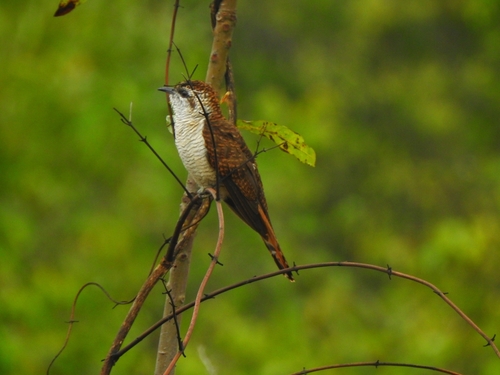 banded bay cuckoo
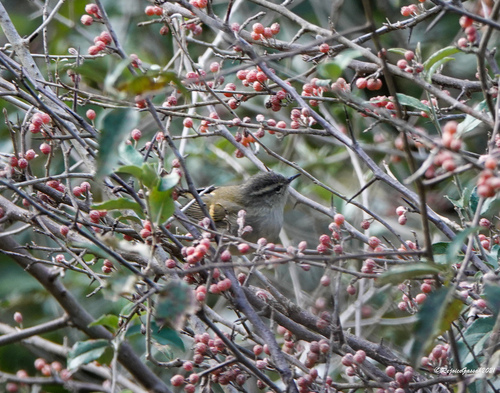 ashy-throated warbler
Em resumo
A maneira mais confiável de separar o banded bay cuckoo do ashy-throated warbler é pela estrutura e coloração geral: o cuckoo é um pássaro muito maior, de cauda longa, com partes superiores ruivas marcadas de forma ousada e um supercílios branco forte, enquanto o warbler é um pequeno pássaro verde, com um rosto simples e sem marcas. Cuckoos juvenis podem mostrar partes superiores com bordas brancas, mas mesmo assim, seu tamanho e cauda longa e graduada são inconfundíveis. Em voo ou empoleirado, o bico longo e ligeiramente curvado do cuckoo e o padrão de cauda marcante (faixa subterminal preta, pontas brancas) contrastam fortemente com o bico curto e a cauda arredondada e simples do warbler. Se você ouvir um assobio agudo de quatro notas, é o cuckoo; as vocalizações do warbler são muito mais suaves e menos distintas.
Dicas de identificação
- Tamanho e estrutura são as verificações mais rápidas: O banded bay cuckoo é muito maior e mais robusto, com uma cauda longa e graduada e um bico notavelmente longo e ligeiramente curvado. O ashy-throated warbler é pequeno, com um bico curto e fino e uma cauda curta e arredondada. Essa diferença é óbvia mesmo à distância.
- Padrão da cauda: A cauda do cuckoo é longa, com um centro marrom escuro, uma faixa subterminal preta e pontas brancas—visíveis tanto empoleirado quanto em voo. A cauda do warbler é simples e curta, sem marcas ou contraste de cor.
- Supercílios e rosto: O banded bay cuckoo tem um supercílios branco forte acima de uma linha ocular escura, dando uma aparência marcante de "sobrancelha". O ashy-throated warbler tem um supercílios muito mais fraco ou ausente e um rosto simples.
- Cor das partes superiores e marcas: O cuckoo é ruivo ou baio brilhante acima, com largas marcas escuras. O warbler é verde acima, sem marcas ou tons ruivos.
- Partes inferiores: As partes inferiores do cuckoo são brancas com finas estriações; as do warbler são simples e pálidas, sem estriações.
- Cor do bico: O cuckoo adulto tem um bico preto com uma base cinza-esverdeada na mandíbula inferior; os juvenis têm uma mandíbula inferior mais clara. O bico do warbler é uniformemente pálido e muito mais curto.
- Marcas juvenis: O jovem cuckoo mostra bordas brancas nas penas do corpo superior e uma mandíbula inferior pálida, mas permanece muito maior e mais padronizado do que qualquer warbler. Nenhum warbler juvenil pode se aproximar dessa aparência.
- Comportamento: O cuckoo frequentemente se empoleira abertamente e canta de ramos expostos; o warbler está quase sempre em movimento, voando entre as folhas e raramente se empoleirando em aberto.
- Estilo de voo: O voo do cuckoo é forte e direto; o do warbler é fraco e tremulante.
- Voz: Se você ouvir um assobio alto e agudo de quatro notas, é o cuckoo. A canção do warbler é muito mais suave e menos distinta.
- Contexto de habitat: Ambos podem estar em colinas arborizadas, mas o cuckoo é mais provável em florestas bem arborizadas durante a monção, enquanto o warbler é uma espécie de montanha, frequentemente em bandos mistos.
- Sexos e idades: Ambas as espécies são sexualmente monomórficas, então o sexo não ajuda, mas o cuckoo juvenil ainda é muito maior e mais padronizado do que qualquer warbler.
- Armadilhas comuns: A única confusão real surge se você ver um pequeno pássaro ruivo brevemente; mas o tamanho, a cauda e o padrão de rosto ousado do cuckoo são sempre diagnósticos. O warbler nunca mostra marcas, ruivo ou um supercílios forte.
- Não confie na associação com hospedeiros: Ambos são insetívoros e podem ser vistos forrageando de maneiras semelhantes, mas o tamanho e o comportamento do cuckoo são distintos.
- Se em dúvida: Concentre-se no comprimento e padrão da cauda, forma do bico e na presença ou ausência de marcas e supercílios—esses nunca se sobrepõem entre essas duas espécies.
Tamanho
O banded bay cuckoo é dramaticamente maior que o ashy-throated warbler: o cuckoo mede cerca de 22 cm de comprimento (cerca do tamanho de um pequeno tordo), enquanto o warbler é um pássaro minúsculo com uma massa corporal de apenas 5,1 g ([wikidata]). A longa cauda e o maior volume do cuckoo são óbvios mesmo à distância ou em voo. O warbler, por outro lado, é um clássico pequeno leaf warbler, muito mais delicado e compacto.
Plumagem
- O banded bay cuckoo juvenil/imaturo mostra bordas brancas nas penas do corpo superior e uma mandíbula inferior pálida, mas mantém o padrão ruivo geral e as marcas escuras, supercílios e cauda longa. Nenhuma idade do ashy-throated warbler mostra qualquer marca, tons ruivos ou supercílios tão ousados quanto os do cuckoo.
- O banded bay cuckoo adulto é ruivo ou baio brilhante acima, fortemente marcado com marrom escuro, com um supercílios branco forte e uma linha ocular escura. A cauda é graduada, com um centro marrom escuro, uma faixa subterminal preta e pontas brancas. As partes inferiores são brancas com finas estriações. Os sexos são semelhantes.
- O ashy-throated warbler é verde acima, com um rosto simples ou sutilmente marcado, sem supercílios fortes, marcas ou coloração ruiva. As partes inferiores são pálidas, mas não estriadas, e a cauda é curta e simples.
- Em todas as idades e estações, o padrão ousado e a estrutura do cuckoo são diagnósticos em relação ao warbler pequeno e simples.
Comportamento
O banded bay cuckoo frequentemente se empoleira abertamente em ramos expostos, especialmente ao cantar, e pode sair para pegar insetos ou colher da folhagem. Seus movimentos são deliberados, condizentes com seu tamanho maior. O ashy-throated warbler é muito mais ativo e inquieto, tipicamente voando entre a folhagem, colhendo insetos de maneira clássica de warbler, e raramente se empoleirando em aberto por muito tempo. O voo do cuckoo é mais direto e poderoso, enquanto o do warbler é tremulante e fraco.
Habitat
Ambas as espécies podem ocorrer em áreas arborizadas, mas o contexto ajuda: o banded bay cuckoo prefere florestas bem arborizadas, principalmente em colinas mais baixas, e é frequentemente encontrado durante a monção na Índia. O ashy-throated warbler é um pássaro do Himalaia e regiões adjacentes, tipicamente em florestas montanhosas. Se você estiver em uma densa floresta de colina durante a monção e ver um pássaro longo, ruivo e marcante, é provável que seja o cuckoo; um pássaro pequeno, verde e ativo no mesmo habitat é mais provável que seja o warbler.
Voz
O chamado do banded bay cuckoo é um assobio distintivo e agudo de quatro notas, descrito como "wee-ti wee-tee" ou "smoke-yer-pepper," com cada nota caindo em tom ([wikipedia]). Isso é alto e se propaga bem. As vocalizações do ashy-throated warbler são muito mais suaves, típicas de leaf warblers, e carecem do padrão e volume distintivos do cuckoo.
banded bay cuckoo · ashy-throated warbler · Minhas aves difíceis