

Motmot

クリイロヒメカッコウ 対 キゴシムシクイ

Cacomantis sonneratii 対 Phylloscopus maculipennis

クリイロヒメカッコウとキゴシムシクイのクイズ
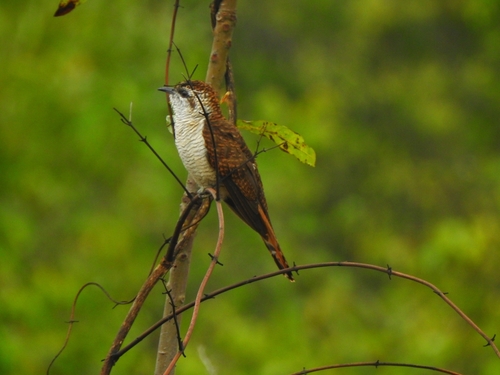
クリイロヒメカッコウ (Cacomantis sonneratii) クリイロヒメカッコウ
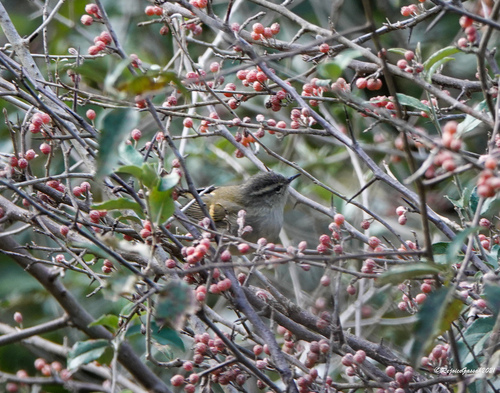
キゴシムシクイ (Phylloscopus maculipennis) キゴシムシクイ

メディア

読み込み中…

要点

バンデッドベイカッコウとキゴシムシクイを区別する最も信頼できる方法は、構造と全体的な色合いによるものです:カッコウは、はっきりとした縞模様の赤褐色の上面と強い白っぽい眉斑を持つ、はるかに大きく、長い尾を持つ鳥です。一方、ムシクイは、顔が地味で縞模様のない小さな緑がかった葉ムシクイです。幼鳥のカッコウは白い縁取りのある上面を示すことがありますが、それでもその大きさと長く段階的な尾は間違いありません。飛んでいるときや止まっているとき、カッコウの長くわずかに曲がったくちばしと目を引く尾の模様(黒い亜終端帯、白い先端)は、ムシクイの短いくちばしと地味で丸い尾と鋭く対照的です。高音の4音の口笛を聞いたら、それはカッコウです。ムシクイの鳴き声ははるかに柔らかく、特徴が少ないです。

識別のコツ

  1. サイズと構造は最も早いチェック:バンデッドベイカッコウははるかに大きく、がっしりしており、長い段階的な尾と目立つ長いわずかに曲がったくちばしを持っています。キゴシムシクイは小さく、短く細いくちばしと短く丸い尾を持っています。この違いは、距離があっても明らかです。
  2. 尾の模様:カッコウの尾は長く、暗褐色の中心部、黒い亜終端帯、白い先端を持ち、止まっているときも飛んでいるときも見えます。ムシクイの尾は地味で短く、縞模様や色の対比がありません。
  3. 眉斑と顔:バンデッドベイカッコウは、暗いアイラインの上に強い白っぽい眉斑を持ち、目を引く「眉毛のような」外観を与えます。キゴシムシクイは、はるかに弱いか、眉斑がない顔を持っています。
  4. 上面の色と縞模様:カッコウは明るい赤褐色または茶色で、広い暗い縞模様があります。ムシクイは上面が緑がかっており、縞模様や赤褐色のトーンがありません。
  5. 下面:カッコウの下面は白っぽく、細かい縞模様があります。ムシクイの下面は地味な淡色で、縞模様がありません。
  6. くちばしの色:成鳥のカッコウは、下顎の基部が緑がかった灰色の黒いくちばしを持っています。幼鳥はより淡い下顎を持っています。ムシクイのくちばしは均一に淡く、はるかに短いです。
  7. 幼鳥の特徴:若いカッコウは上体の羽に白い縁取りを示し、淡い下顎を持っていますが、いかなるムシクイよりもはるかに大きく、模様が豊かです。どの幼鳥のムシクイもこの外観には近づけません。
  8. 行動:カッコウはしばしばオープンに止まり、露出した枝から歌います。ムシクイはほとんど常に動いており、葉の間を飛び回り、オープンに止まることはめったにありません。
  9. 飛行スタイル:カッコウの飛行は強く、直接的です。ムシクイの飛行は弱く、ひらひらしています。
  10. 声:大きく高音の4音の口笛を聞いたら、それはカッコウです。ムシクイの歌ははるかに柔らかく、特徴が少ないです。
  11. 生息地の文脈:両方とも森林の丘にいることができますが、カッコウはモンスーンの間に良く木が生えた森林にいる可能性が高く、ムシクイは高地の種で、しばしば混合群れにいます。
  12. 性別と年齢:両種は性別が同形であるため、性別は役に立ちませんが、幼鳥のカッコウは依然としてどのムシクイよりもはるかに大きく、模様が豊かです。
  13. 一般的な落とし穴:実際の混乱は、小さな赤褐色の鳥を一瞬見たときにのみ発生します。しかし、カッコウの大きさ、尾、はっきりした顔の模様は常に診断的です。ムシクイは決して縞模様、赤褐色、または強い眉斑を示しません。
  14. ホストの関連性に頼らないでください:両方とも昆虫食性で、似たような方法で採餌しているのを見ることができますが、カッコウの大きさと行動は特徴的です。
  15. 疑わしい場合:尾の長さと模様、くちばしの形、縞模様と眉斑の有無に焦点を当ててください。これらはこの2種の間で重なることはありません。

大きさ

バンデッドベイカッコウはキゴシムシクイよりも劇的に大きいです:カッコウは約22 cmの長さ(小さなツグミのサイズに相当)で、ムシクイは体重がわずか5.1 gの小さな鳥です([wikidata])。カッコウの長い尾と大きな体は、距離があっても飛んでいるときでも明らかです。対照的に、ムシクイは典型的な小さな葉ムシクイで、はるかに繊細でコンパクトです。

羽色

行動

バンデッドベイカッコウは、特に歌っているときに露出した枝にオープンに止まることが多く、昆虫を捕まえたり、葉から採餌したりすることがあります。その動きは意図的で、大きなサイズにふさわしいものです。キゴシムシクイははるかに活発で落ち着きがなく、通常は葉の間を飛び回り、典型的なムシクイのスタイルで昆虫を採餌し、オープンに長く止まることはめったにありません。カッコウの飛行はより直接的で力強く、ムシクイの飛行はひらひらしていて弱いです。

生息環境

両種は森林地域に生息することがありますが、文脈が役立ちます:バンデッドベイカッコウは、主に低い丘の良く木が生えた森林を好み、インドのモンスーンの間によく見られます。キゴシムシクイはヒマラヤとその周辺地域の鳥で、通常は山地の森林に生息しています。モンスーンの間に密な丘の森林にいて、はっきりとした模様の赤褐色の長い尾の鳥を見たら、カッコウの可能性が高いです。同じ生息地にいる小さく緑がかった活発な鳥は、ムシクイの可能性が高いです。

声

バンデッドベイカッコウの鳴き声は、特徴的な高音の4音の口笛で、「ウィーティ ウィーティ」または「スモーク・ヤー・ペッパー」と表現され、各音は音程が下がります([wikipedia])。これは大きく、よく響きます。キゴシムシクイの鳴き声ははるかに柔らかく、葉ムシクイに典型的で、カッコウの特徴的なパターンと音量が欠けています。

より良い説明を送る

比較と同じ項目を使ってください。文章はすぐに公開されます。

The most reliable way to separate Banded Bay Cuckoo from Ashy-throated Warbler is by structure and overall coloration: the cuckoo is a much larger, long-tailed bird with a boldly barred rufous upperparts and a strong whitish supercilium, while the warbler is a tiny, greenish leaf warbler with a plain face and no barring. Juvenile cuckoos may show white-fringed upperparts, but even then, their size and long, graduated tail are unmistakable. In flight or perched, the cuckoo’s long, slightly curved bill and striking tail pattern (black subterminal band, white tips) contrast sharply with the warbler’s short bill and plain, rounded tail. If you hear a high-pitched, four-note whistle, it’s the cuckoo; the warbler’s vocalizations are much softer and less distinctive.

  1. Size and structure are the fastest checks: Banded Bay Cuckoo is much larger and bulkier, with a long, graduated tail and a noticeably long, slightly curved bill. Ashy-throated Warbler is tiny, with a short, fine bill and short, rounded tail. This difference is obvious even at a distance.
  2. Tail pattern: Cuckoo’s tail is long, with a dark brown center, a black subterminal band, and white tips—visible both perched and in flight. Warbler’s tail is plain and short, lacking any barring or color contrast.
  3. Supercilium and face: Banded Bay Cuckoo has a strong whitish supercilium above a dark eye-line, giving a striking "eyebrowed" look. Ashy-throated Warbler has a much weaker or absent supercilium and a plain face.
  4. Upperparts color and barring: Cuckoo is bright rufous or bay above, with broad dark barring. Warbler is greenish above, with no barring or rufous tones.
  5. Underparts: Cuckoo’s underparts are whitish with fine striations; warbler’s are plain pale, lacking striations.
  6. Bill color: Adult cuckoo has a black bill with a greenish-grey base to the lower mandible; juveniles have a paler lower mandible. Warbler’s bill is uniformly pale and much shorter.
  7. Juvenile marks: Young cuckoo shows white fringes to upper body feathers and a pale lower mandible, but remains much larger and more patterned than any warbler. No juvenile warbler can approach this appearance.
  8. Behavior: Cuckoo often perches openly and sings from exposed branches; warbler is almost always moving, flitting through leaves and rarely perching in the open.
  9. Flight style: Cuckoo’s flight is strong and direct; warbler’s is weak and fluttery.
  10. Voice: If you hear a loud, high-pitched four-note whistle, it is the cuckoo. Warbler’s song is much softer and less distinctive.
  11. Habitat context: Both can be in wooded hills, but cuckoo is more likely in well-wooded forests during monsoon, while warbler is a highland species, often in mixed flocks.
  12. Sexes and ages: Both species are sexually monomorphic, so sex does not help, but juvenile cuckoo is still much larger and more patterned than any warbler.
  13. Common pitfalls: The only real confusion arises if you see a small rufous bird briefly; but the cuckoo’s size, tail, and bold face pattern are always diagnostic. Warbler never shows barring, rufous, or a strong supercilium.
  14. Do not rely on host association: Both are insectivorous and can be seen foraging in similar ways, but the cuckoo’s size and behavior are distinctive.
  15. If in doubt: Focus on tail length and pattern, bill shape, and the presence or absence of barring and supercilium—these never overlap between these two species.

Banded Bay Cuckoo is dramatically larger than Ashy-throated Warbler: the cuckoo measures about 22 cm in length (about the size of a small thrush), while the warbler is a tiny bird with a body mass of only 5.1 g ([wikidata]). The cuckoo’s long tail and larger bulk are obvious even at a distance or in flight. The warbler, by contrast, is a classic small leaf warbler, much more delicate and compact.

  • Juvenile/immature Banded Bay Cuckoo shows white fringes to the upper body feathers and a pale lower mandible, but retains the overall rufous and dark barring, supercilium, and long tail. No age of Ashy-throated Warbler shows any barring, rufous tones, or supercilium as bold as the cuckoo’s.
  • Adult Banded Bay Cuckoo is bright rufous or bay above, heavily barred with dark brown, with a strong whitish supercilium and a dark eye-line. The tail is graduated, with a dark brown center, a black subterminal band, and white tips. Underparts are whitish with fine striations. Sexes are alike.
  • Ashy-throated Warbler is greenish above, with a plain or subtly marked face, lacking any strong supercilium, barring, or rufous coloration. The underparts are pale, but not striated, and the tail is short and plain.
  • At all ages and seasons, the cuckoo’s bold pattern and structure are diagnostic against the plain, small warbler.

Banded Bay Cuckoo often perches openly on exposed branches, especially when singing, and may sally out for insects or glean from foliage. Its movements are deliberate, befitting its larger size. Ashy-throated Warbler is much more active and restless, typically flitting through foliage, gleaning insects in classic warbler fashion, and rarely perching in the open for long. The cuckoo’s flight is more direct and powerful, while the warbler’s is fluttery and weak.

Both species can occur in wooded areas, but context helps: Banded Bay Cuckoo favors well-wooded forests, mainly in lower hills, and is often found during the monsoon in India. Ashy-throated Warbler is a bird of the Himalayas and adjacent regions, typically in montane forests. If you are in dense hill forest during the monsoon and see a boldly marked, rufous, long-tailed bird, cuckoo is likely; a tiny, greenish, active bird in the same habitat is more likely the warbler.

Banded Bay Cuckoo’s call is a distinctive, high-pitched four-note whistle, described as "wee-ti wee-tee" or "smoke-yer-pepper," with each note falling in pitch ([wikipedia]). This is loud and carries well. Ashy-throated Warbler’s vocalizations are much softer, typical of leaf warblers, and lack the cuckoo’s distinctive pattern and volume.

変更を破棄しますか?

保存していない編集があります。今離れると失われます。

クリイロヒメカッコウ · キゴシムシクイ · 苦手な鳥