

Banded Bay Cuckoo vs Ashy-throated Warbler
Cacomantis sonneratii contro Phylloscopus maculipennis
Fai un quiz con Banded Bay Cuckoo e Ashy-throated Warbler
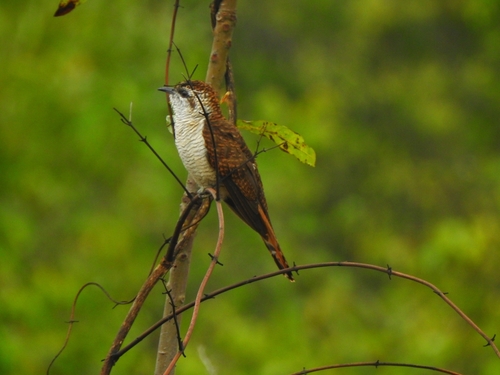 Banded Bay Cuckoo
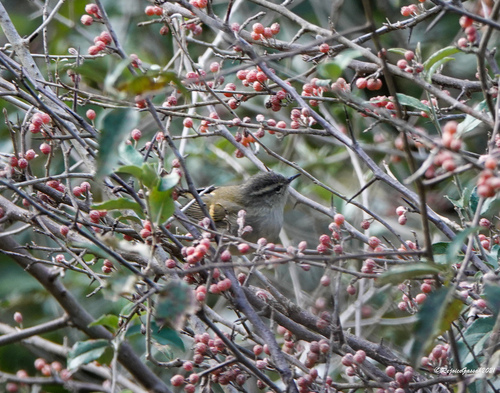 Ashy-throated Warbler
In breve
Il modo più affidabile per separare il Banded Bay Cuckoo dall'Ashy-throated Warbler è attraverso la struttura e la colorazione generale: il cuculo è un uccello molto più grande e dalla lunga coda con una parte superiore rugginosa a barre audaci e un forte supercilium biancastro, mentre il warbler è un piccolo warbler foglia verde con un volto semplice e senza barre. I cuculi juvenili possono mostrare parti superiori con frange bianche, ma anche in quel caso, la loro dimensione e la lunga coda graduata sono inconfondibili. In volo o posato, il lungo becco leggermente curvo del cuculo e il suo sorprendente schema della coda (banda subterminale nera, punte bianche) contrastano nettamente con il becco corto e la coda semplice e arrotondata del warbler. Se senti un fischio acuto a quattro note, è il cuculo; le vocalizzazioni del warbler sono molto più morbide e meno distintive.
Consigli di identificazione
- Size and structure are the fastest checks: Il Banded Bay Cuckoo è molto più grande e massiccio, con una lunga coda graduata e un becco lungo e leggermente curvo. L'Ashy-throated Warbler è piccolo, con un becco corto e fine e una coda corta e arrotondata. Questa differenza è ovvia anche a distanza.
- Tail pattern: La coda del cuculo è lunga, con un centro marrone scuro, una banda subterminale nera e punte bianche—visibili sia posato che in volo. La coda del warbler è semplice e corta, priva di barre o contrasti di colore.
- Supercilium and face: Il Banded Bay Cuckoo ha un forte supercilium biancastro sopra una linea oculare scura, dando un aspetto sorprendente "a sopracciglio". L'Ashy-throated Warbler ha un supercilium molto più debole o assente e un volto semplice.
- Upperparts color and barring: Il cuculo è di un rugginoso brillante o bay sopra, con ampie barre scure. Il warbler è verde sopra, senza barre o toni rugginosi.
- Underparts: Le parti inferiori del cuculo sono bianche con fini striature; quelle del warbler sono semplicemente pallide, prive di striature.
- Bill color: Il cuculo adulto ha un becco nero con una base grigio-verde per la mandibola inferiore; i juvenili hanno una mandibola inferiore più chiara. Il becco del warbler è uniformemente pallido e molto più corto.
- Juvenile marks: Il giovane cuculo mostra frange bianche sulle piume del corpo superiore e una mandibola inferiore pallida, ma rimane molto più grande e più decorato di qualsiasi warbler. Nessun warbler giovanile può avvicinarsi a questo aspetto.
- Behavior: Il cuculo spesso si posa apertamente e canta da rami esposti; il warbler è quasi sempre in movimento, svolazzando tra le foglie e raramente posandosi in modo aperto.
- Flight style: Il volo del cuculo è forte e diretto; quello del warbler è debole e svolazzante.
- Voice: Se senti un fischio forte e acuto a quattro note, è il cuculo. Il canto del warbler è molto più morbido e meno distintivo.
- Habitat context: Entrambi possono trovarsi in colline boschive, ma il cuculo è più probabile in foreste ben boschive durante il monsone, mentre il warbler è una specie montana, spesso in stormi misti.
- Sexes and ages: Entrambe le specie sono sessualmente monomorfiche, quindi il sesso non aiuta, ma il cuculo giovanile è comunque molto più grande e più decorato di qualsiasi warbler.
- Common pitfalls: L'unica vera confusione sorge se vedi brevemente un piccolo uccello rugginoso; ma la dimensione, la coda e il modello audace del volto del cuculo sono sempre diagnostici. Il warbler non mostra mai barre, rugginoso o un forte supercilium.
- Do not rely on host association: Entrambi sono insettivori e possono essere visti cercare cibo in modi simili, ma la dimensione e il comportamento del cuculo sono distintivi.
- If in doubt: Concentrati sulla lunghezza e sul modello della coda, sulla forma del becco e sulla presenza o assenza di barre e supercilium—questi non si sovrappongono mai tra queste due specie.
Taglia
Il Banded Bay Cuckoo è drammaticamente più grande dell'Ashy-throated Warbler: il cuculo misura circa 22 cm di lunghezza (circa la dimensione di un piccolo tordo), mentre il warbler è un piccolo uccello con una massa corporea di soli 5,1 g ([wikidata]). La lunga coda e la maggiore massa del cuculo sono evidenti anche a distanza o in volo. Il warbler, al contrario, è un classico piccolo warbler foglia, molto più delicato e compatto.
Piumaggio
- Il cuculo Banded Bay juvenile/immaturo mostra frange bianche sulle piume del corpo superiore e una mandibola inferiore pallida, ma mantiene la parte superiore rugginosa e le barre scure, il supercilium e la lunga coda. Nessuna età dell'Ashy-throated Warbler mostra barre, toni rugginosi o un supercilium così audace come quello del cuculo.
- L'adulto Banded Bay Cuckoo è di un rugginoso brillante o bay sopra, pesantemente barrato con marrone scuro, con un forte supercilium biancastro e una linea oculare scura. La coda è graduata, con un centro marrone scuro, una banda subterminale nera e punte bianche. Le parti inferiori sono bianche con fini striature. I sessi sono simili.
- L'Ashy-throated Warbler è verde sopra, con un volto semplice o leggermente marcato, privo di un forte supercilium, barre o colorazione rugginosa. Le parti inferiori sono pallide, ma non striate, e la coda è corta e semplice.
- A tutte le età e stagioni, il modello audace e la struttura del cuculo sono diagnostici rispetto al semplice e piccolo warbler.
Comportamento
Il Banded Bay Cuckoo spesso si posa apertamente su rami esposti, specialmente quando canta, e può lanciarsi per insetti o raccogliere da fogliame. I suoi movimenti sono deliberati, adatti alla sua dimensione maggiore. L'Ashy-throated Warbler è molto più attivo e irrequieto, tipicamente svolazzando tra il fogliame, raccogliendo insetti in modo classico da warbler, e raramente posandosi in modo aperto per lungo tempo. Il volo del cuculo è più diretto e potente, mentre quello del warbler è svolazzante e debole.
Habitat
Entrambe le specie possono verificarsi in aree boschive, ma il contesto aiuta: il Banded Bay Cuckoo favorisce foreste ben boschive, principalmente nelle colline più basse, ed è spesso trovato durante il monsone in India. L'Ashy-throated Warbler è un uccello dell'Himalaya e delle regioni adiacenti, tipicamente in foreste montane. Se ti trovi in una fitta foresta collinare durante il monsone e vedi un uccello lungo-tailed, rugginoso e ben marcato, è probabile che sia un cuculo; un piccolo uccello verde, attivo nello stesso habitat è più probabilmente il warbler.
Voce
Il richiamo del Banded Bay Cuckoo è un distintivo fischio acuto a quattro note, descritto come "wee-ti wee-tee" o "smoke-yer-pepper," con ogni nota che scende di tono ([wikipedia]). Questo è forte e si sente bene. Le vocalizzazioni dell'Ashy-throated Warbler sono molto più morbide, tipiche dei warbler foglia, e mancano del modello e del volume distintivi del cuculo.
Banded Bay Cuckoo · Ashy-throated Warbler · I miei uccelli difficili