

Cuco Bayo vs Mosquitero Gorjigrís
Cacomantis sonneratii frente a Phylloscopus maculipennis
Juega un quiz con Cuco Bayo y Mosquitero Gorjigrís
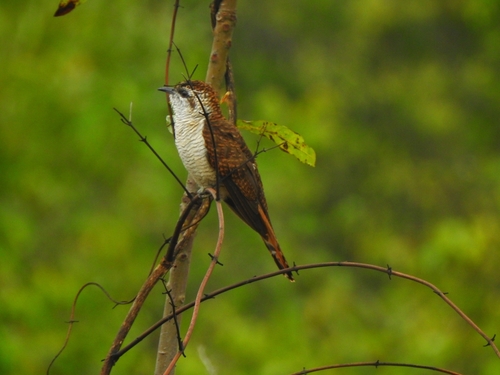 Cuco Bayo
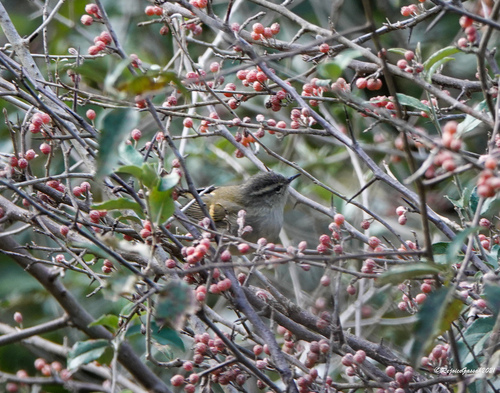 Mosquitero Gorjigrís
En breve
La forma más confiable de separar al Cuco Bayo del Mosquitero Gorjigrís es por su estructura y coloración general: el cuco es un ave mucho más grande, de cola larga, con un plumaje rufoso con barras audaces en la parte superior y un supercilio blanquecino fuerte, mientras que el mosquitero es un pequeño mosquitero verde con una cara simple y sin barras. Los cucos juveniles pueden mostrar partes superiores con bordes blancos, pero incluso entonces, su tamaño y cola larga y graduada son inconfundibles. En vuelo o posado, el largo pico ligeramente curvado del cuco y el patrón llamativo de su cola (banda subterminal negra, puntas blancas) contrastan marcadamente con el pico corto y la cola redondeada y simple del mosquitero. Si escuchas un silbido agudo de cuatro notas, es el cuco; las vocalizaciones del mosquitero son mucho más suaves y menos distintivas.
Consejos de identificación
- El tamaño y la estructura son las comprobaciones más rápidas: El Cuco Bayo es mucho más grande y robusto, con una cola larga y graduada y un pico notablemente largo y ligeramente curvado. El Mosquitero Gorjigrís es pequeño, con un pico corto y fino y una cola corta y redondeada. Esta diferencia es obvia incluso a distancia.
- Patrón de la cola: La cola del cuco es larga, con un centro marrón oscuro, una banda subterminal negra y puntas blancas, visible tanto posado como en vuelo. La cola del mosquitero es simple y corta, sin barras ni contraste de color.
- Supercilio y cara: El Cuco Bayo tiene un fuerte supercilio blanquecino sobre una línea ocular oscura, dando un aspecto llamativo de "cejas". El Mosquitero Gorjigrís tiene un supercilio mucho más débil o ausente y una cara simple.
- Color y barras de las partes superiores: El cuco es de un rufoso brillante o bayo en la parte superior, con amplias barras oscuras. El mosquitero es verde en la parte superior, sin barras ni tonos rufosos.
- Partes inferiores: Las partes inferiores del cuco son blanquecinas con finas estriaciones; las del mosquitero son pálidas y simples, sin estriaciones.
- Color del pico: El cuco adulto tiene un pico negro con una base gris verdosa en la mandíbula inferior; los juveniles tienen una mandíbula inferior más pálida. El pico del mosquitero es uniformemente pálido y mucho más corto.
- Marcas juveniles: El joven cuco muestra bordes blancos en las plumas del cuerpo superior y una mandíbula inferior pálida, pero sigue siendo mucho más grande y más marcado que cualquier mosquitero. Ningún mosquitero juvenil puede acercarse a esta apariencia.
- Comportamiento: El cuco a menudo se posa abiertamente y canta desde ramas expuestas; el mosquitero casi siempre está en movimiento, revoloteando entre las hojas y rara vez posándose en abierto.
- Estilo de vuelo: El vuelo del cuco es fuerte y directo; el del mosquitero es débil y tembloroso.
- Voz: Si escuchas un silbido fuerte y agudo de cuatro notas, es el cuco. La canción del mosquitero es mucho más suave y menos distintiva.
- Contexto del hábitat: Ambos pueden estar en colinas boscosas, pero el cuco es más probable que se encuentre en bosques bien arbolados durante el monzón, mientras que el mosquitero es una especie de tierras altas, a menudo en bandadas mixtas.
- Sexos y edades: Ambas especies son sexualmente monomórficas, por lo que el sexo no ayuda, pero el cuco juvenil sigue siendo mucho más grande y más marcado que cualquier mosquitero.
- Trampas comunes: La única confusión real surge si ves brevemente un pequeño pájaro rufoso; pero el tamaño, la cola y el patrón de cara audaz del cuco son siempre diagnósticos. El mosquitero nunca muestra barras, rufoso o un supercilio fuerte.
- No confíes en la asociación con el hospedador: Ambos son insectívoros y pueden ser vistos forrajeando de maneras similares, pero el tamaño y el comportamiento del cuco son distintivos.
- Si tienes dudas: Concéntrate en la longitud y el patrón de la cola, la forma del pico y la presencia o ausencia de barras y supercilio; estos nunca se superponen entre estas dos especies.
Tamaño
El Cuco Bayo es dramáticamente más grande que el Mosquitero Gorjigrís: el cuco mide aproximadamente 22 cm de longitud (aproximadamente el tamaño de un zorzal pequeño), mientras que el mosquitero es un pájaro pequeño con una masa corporal de solo 5.1 g ([wikidata]). La larga cola del cuco y su mayor volumen son obvios incluso a distancia o en vuelo. El mosquitero, por el contrario, es un clásico pequeño mosquitero, mucho más delicado y compacto.
Plumaje
- El Cuco Bayo juvenil/inmaduro muestra bordes blancos en las plumas del cuerpo superior y una mandíbula inferior pálida, pero retiene el rufoso general y las barras oscuras, el supercilio y la cola larga. Ninguna edad del Mosquitero Gorjigrís muestra barras, tonos rufosos o un supercilio tan audaz como el del cuco.
- El Cuco Bayo adulto es de un rufoso brillante o bayo en la parte superior, fuertemente barrado con marrón oscuro, con un fuerte supercilio blanquecino y una línea ocular oscura. La cola es graduada, con un centro marrón oscuro, una banda subterminal negra y puntas blancas. Las partes inferiores son blanquecinas con finas estriaciones. Los sexos son similares.
- El Mosquitero Gorjigrís es verde en la parte superior, con una cara simple o sutilmente marcada, careciendo de un supercilio fuerte, barras o coloración rufosa. Las partes inferiores son pálidas, pero no estriadas, y la cola es corta y simple.
- En todas las edades y estaciones, el patrón audaz y la estructura del cuco son diagnósticos frente al simple y pequeño mosquitero.
Comportamiento
El Cuco Bayo a menudo se posa abiertamente en ramas expuestas, especialmente cuando canta, y puede lanzarse a por insectos o recoger de la vegetación. Sus movimientos son deliberados, adecuados a su mayor tamaño. El Mosquitero Gorjigrís es mucho más activo e inquieto, típicamente revoloteando entre la vegetación, recogiendo insectos de manera clásica de mosquitero, y rara vez posándose en abierto por mucho tiempo. El vuelo del cuco es más directo y poderoso, mientras que el del mosquitero es tembloroso y débil.
Hábitat
Ambas especies pueden ocurrir en áreas boscosas, pero el contexto ayuda: el Cuco Bayo prefiere bosques bien arbolados, principalmente en colinas bajas, y a menudo se encuentra durante el monzón en India. El Mosquitero Gorjigrís es un pájaro de los Himalayas y regiones adyacentes, típicamente en bosques montanos. Si estás en un denso bosque de colinas durante el monzón y ves un pájaro de cola larga, rufoso y con marcas audaces, es probable que sea un cuco; un pájaro pequeño, verde y activo en el mismo hábitat es más probable que sea el mosquitero.
Voz
El canto del Cuco Bayo es un silbido distintivo y agudo de cuatro notas, descrito como "wee-ti wee-tee" o "smoke-yer-pepper," con cada nota cayendo en tono ([wikipedia]). Esto es fuerte y se escucha bien. Las vocalizaciones del Mosquitero Gorjigrís son mucho más suaves, típicas de los mosqueros, y carecen del patrón y volumen distintivos del cuco.