

asian palm swift vs blue-throated barbet
Cypsiurus balasiensis versus Psilopogon asiaticus
Jogue um quiz com asian palm swift e blue-throated barbet
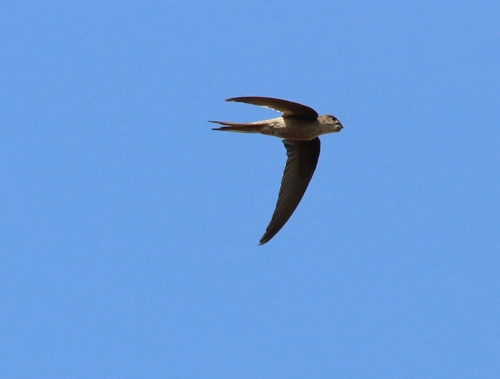 asian palm swift
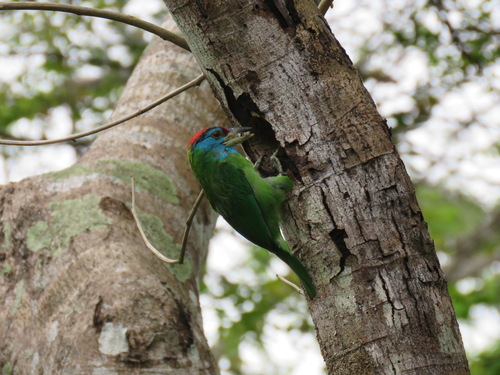 blue-throated barbet
Em resumo
A maneira mais confiável de separar asian palm swift de blue-throated barbet é pela estrutura geral e comportamento: asian palm swift é um pequeno, esbelto, aeronauta de asas em forma de crescente com uma longa cauda profundamente bifurcada, sempre visto em voo ou agarrado a superfícies verticais, enquanto blue-throated barbet é um pássaro robusto, de cauda curta e verde que se empoleira ereto nas árvores e raramente voa por longas distâncias. Os andorinhões são uniformemente marrons claros e nunca mostram o padrão de cabeça verde, azul e vermelho brilhante do barbet. Se você vê um pássaro com um corpo robusto, cabeça grande e rosto colorido empoleirado em uma árvore frutífera, é o barbet; um pássaro esbelto, com asas em forma de bumerangue cortando o ar é o andorinhão. Os andorinhões juvenis têm caudas mais curtas, mas ainda carecem de qualquer cor verde ou facial. Os chamados também são distintos: o andorinhão emite um grito agudo, enquanto o barbet produz notas repetitivas, altas e semelhantes a rãs.
Dicas de identificação
- Postura de Voo vs. Empoleirado: Asian Palm Swift é quase sempre visto em voo ou agarrado verticalmente a superfícies; ele nunca se empoleira ereto em galhos. Blue-throated Barbet é tipicamente empoleirado ereto nas árvores, raramente visto em voo sustentado.
- Estrutura Geral: Os andorinhões são esbeltos, com asas longas e caudas longas com uma cauda profundamente bifurcada (mais curta em juvenis); os barbets são robustos, de cauda curta e cabeça grande.
- Forma da Asa em Voo: Os andorinhões mostram asas longas, estreitas e em forma de crescente; os barbets têm asas curtas e arredondadas e voo ondulante.
- Forma da Cauda: Os andorinhões têm uma longa cauda profundamente bifurcada (menos em juvenis), geralmente mantida fechada; os barbets têm uma cauda curta e quadrada.
- Cor da Plumagem: Os andorinhões são marrons claros sem cor facial ou corporal; os barbets são verdes brilhantes com uma cabeça vermelha e azul (mais apagados em juvenis, mas ainda com padrão).
- Padrão da Cabeça: Os barbets mostram uma testa vermelha, faixa preta na coroa, rosto azul e queixo, e manchas vermelhas no pescoço; os andorinhões não têm padrão na cabeça em nenhuma idade.
- Forma do Bico: Os andorinhões têm um bico pequeno e plano adaptado para capturar insetos em voo; os barbets têm um bico grande, robusto e cônico adequado para frutas e insetos.
- Pernas e Pés: Os andorinhões têm pernas muito curtas, usadas apenas para se agarrar; os barbets têm pés fortes para empoleirar e escalar.
- Voz: Os andorinhões emitem um grito agudo em voo; os barbets chamam alto e repetidamente de seus poleiros com notas semelhantes a rãs.
- Habitat: Os andorinhões são comuns em áreas abertas, especialmente perto de palmeiras; os barbets são encontrados em áreas florestais com árvores frutíferas, raramente em plantações de palmeiras.
- Comportamento Alimentar: Os andorinhões se alimentam de insetos capturados em voo, frequentemente baixos sobre campos; os barbets comem frutas e alguns insetos, geralmente enquanto empoleirados.
- Confusão Juvenil: Os andorinhões jovens têm caudas mais curtas, mas permanecem marrons; os barbets juvenis são mais apagados, mas ainda verdes com uma cabeça padronizada.
- Tamanho: Os andorinhões são muito menores e mais leves (9,2 g, 13 cm) do que os barbets (79–103 g, 19–22 cm); mesmo à distância, a diferença de tamanho é marcante.
- Ninho: Os andorinhões colam ninhos sob folhas de palmeira; os barbets escavam buracos em troncos ou galhos de árvores.
- Dicas Contextuais: Um pássaro visto voando rapidamente, nunca empoleirado, em campo aberto é quase certamente um andorinhão; um pássaro sentado quieto em uma árvore frutífera, chamando alto, é um barbet.
Tamanho
Asian Palm Swift é dramaticamente menor e mais leve: cerca de 9,2 g de massa e 13 cm de comprimento, com uma construção muito esbelta. Blue-throated Barbet é muito maior e mais pesado (19–22 cm de comprimento, 79–103 g), com um corpo robusto e uma cabeça grande. Mesmo à distância, o barbet parece mais volumoso e compacto, enquanto o andorinhão parece fino como uma agulha e alongado.
Plumagem
Os andorinhões juvenis e adultos são principalmente marrons claros por toda parte, sem padrão forte, exceto uma longa cauda profundamente bifurcada (mais curta em juvenis). Suas asas são longas, estreitas e recuadas, dando uma forma de crescente ou bumerangue em voo. Não há contraste ou cor no rosto ou nas partes inferiores. Em contraste, o blue-throated barbet de todas as idades é verde brilhante com uma cauda curta e uma cabeça strikingmente colorida: os adultos mostram uma testa vermelha brilhante e coroa traseira, faixa preta na coroa, rosto azul pálido, queixo e parte superior do pescoço, e manchas vermelhas na base do azul. Os juvenis são semelhantes, mas mais apagados, com vermelhos e azuis atenuados e faixas na coroa de cor escura ou azul-preta. As partes inferiores do barbet são amarelo-verde mais claro, e a parte inferior da cauda pode ter um tom azulado. Nenhuma idade ou estação do andorinhão jamais mostra plumagem verde, azul ou vermelha.
Comportamento
Asian Palm Swifts passam quase toda a sua vida no ar, se alimentando, bebendo e até acasalando em voo; eles apenas se agarram verticalmente a folhas de palmeira ou superfícies semelhantes e nunca se empoleiram eretos em galhos. Seu voo é rápido, ágil e altamente manobrável, frequentemente baixo sobre áreas abertas ou perto de palmeiras. Blue-throated Barbets são arbóreos e sedentários, geralmente vistos empoleirados eretos em árvores, especialmente em árvores frutíferas. Seu voo é barulhento e ondulante, com explosões de batidas de asas e deslizamentos, mas passam a maior parte do tempo sentados, se alimentando ou chamando de um poleiro. Os barbets escavam buracos para ninho em árvores, enquanto os andorinhões colam ninhos sob folhas de palmeira.
Habitat
Asian Palm Swift está fortemente associado a áreas abertas e cultivo, especialmente perto de palmeiras de óleo, e frequentemente é visto voando baixo sobre áreas abertas ou plantações. Blue-throated Barbet habita florestas de planície e montanha (200–2.000 m), favorecendo áreas com árvores frutíferas, incluindo florestas perenes e decíduas, crescimento secundário e, às vezes, parques urbanos com árvores adequadas. Os barbets são incomuns em plantações de óleo, onde os andorinhões prosperam. Assim, um pássaro visto em habitat aberto e rico em palmeiras é provavelmente um andorinhão; um em floresta densa e frutífera ou dossel é provavelmente um barbet.
Voz
Asian Palm Swift emite um grito alto e agudo, típico dos andorinhões e ouvido enquanto está em voo. Blue-throated Barbet é muito vocal, com chamados altos e repetitivos, semelhantes a rãs, descritos como 'took-a-rook', 'pu-ku-ruk' ou 'kut-ru-uk', repetidos rapidamente (90–105 vezes por minuto) ao longo do dia. O chamado do barbet é frequentemente a melhor pista para sua presença, já que sua plumagem verde está bem camuflada na folhagem.
asian palm swift · blue-throated barbet · Minhas aves difíceis