

Vencejo Palmero Asiático vs Barbudo Gorjiazul Común
Cypsiurus balasiensis frente a Psilopogon asiaticus
Juega un quiz con Vencejo Palmero Asiático y Barbudo Gorjiazul Común
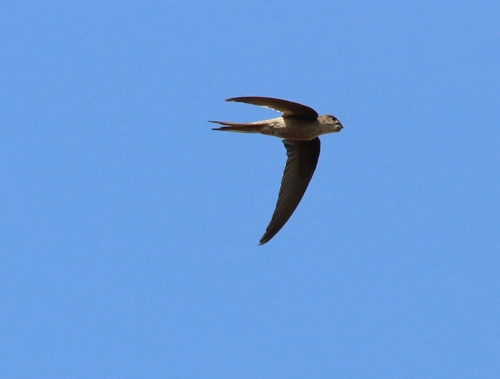 Vencejo Palmero Asiático
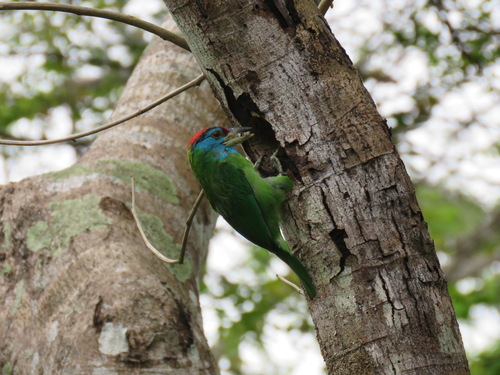 Barbudo Gorjiazul Común
En breve
La forma más confiable de separar el Vencejo Palmero Asiático del Barbudo Gorjiazul Común es por su estructura y comportamiento en general: el Vencejo Palmero Asiático es un pequeño y esbelto aéreo de alas en forma de media luna con una larga cola profundamente bifurcada, siempre visto en vuelo o aferrándose a superficies verticales, mientras que el Barbudo Gorjiazul Común es un ave robusta, de cola corta y color verde que se posa erguida en los árboles y rara vez vuela por mucho tiempo. Los vencejos son uniformemente de color marrón pálido y nunca muestran el brillante patrón de cabeza verde, azul y rojo del barbudo. Si ves un ave con un cuerpo robusto, cabeza grande y cara colorida posada en un árbol frutal, es el barbudo; un ave esbelta con alas en forma de boomerang cortando el aire es el vencejo. Los vencejos juveniles tienen colas más cortas pero aún carecen de color verde o facial. Los llamados también son distintivos: el vencejo emite un grito agudo, mientras que el barbudo produce notas repetitivas, fuertes y similares a las de una rana.
Consejos de identificación
- Vuelo vs. Postura en Percha: El Vencejo Palmero Asiático se ve casi siempre en vuelo o aferrándose verticalmente a superficies; nunca se posa erguido en ramas. El Barbudo Gorjiazul Común suele estar posado erguido en los árboles, rara vez visto en vuelo sostenido.
- Estructura General: Los vencejos son esbeltos, de alas largas y cola larga con una cola profundamente bifurcada (más corta en juveniles); los barbudos son robustos, de cola corta y cabeza grande.
- Forma de las Alas en Vuelo: Los vencejos muestran alas largas, estrechas y en forma de media luna; los barbudos tienen alas cortas y redondeadas y un vuelo ondulante.
- Forma de la Cola: Los vencejos tienen una larga cola profundamente bifurcada (menos en juveniles), generalmente mantenida cerrada; los barbudos tienen una cola corta y cuadrada.
- Color del Plumaje: Los vencejos son de un marrón pálido uniforme sin color facial o corporal; los barbudos son de un verde brillante con una cabeza roja y azul (más apagados en juveniles pero aún con patrón).
- Patrón de la Cabeza: Los barbudos muestran una frente roja, una franja negra en la corona, cara y barbilla azules, y parches rojos en el cuello; los vencejos no tienen patrón en la cabeza a ninguna edad.
- Forma del Pico: Los vencejos tienen un pico pequeño y plano adaptado para atrapar insectos en el aire; los barbudos tienen un pico grande, robusto y cónico adecuado para frutas e insectos.
- Patas y Pies: Los vencejos tienen patas muy cortas, utilizadas solo para aferrarse; los barbudos tienen pies fuertes para posarse y trepar.
- Voz: Los vencejos emiten un grito agudo en vuelo; los barbudos llaman en voz alta y repetidamente desde sus perchas con notas similares a las de una rana.
- Hábitat: Los vencejos son comunes en áreas abiertas, especialmente cerca de palmas; los barbudos se encuentran en áreas boscosas con árboles frutales, rara vez en plantaciones de palma.
- Comportamiento Alimenticio: Los vencejos se alimentan de insectos atrapados en vuelo, a menudo bajos sobre campos; los barbudos comen frutas y algunos insectos, generalmente mientras están posados.
- Confusión Juvenil: Los vencejos jóvenes tienen colas más cortas pero siguen siendo de un marrón uniforme; los barbudos juveniles son más apagados pero aún verdes con una cabeza con patrón.
- Tamaño: Los vencejos son mucho más pequeños y ligeros (9.2 g, 13 cm) que los barbudos (79–103 g, 19–22 cm); incluso a distancia, la diferencia de tamaño es notable.
- Nidificación: Los vencejos pegan nidos bajo las hojas de palma; los barbudos excavan agujeros en troncos o ramas de árboles.
- Pistas Contextuales: Un ave vista volando rápidamente, nunca posándose, en un país abierto es casi seguramente un vencejo; un ave sentada tranquilamente en un árbol frutal, llamando en voz alta, es un barbudo.
Tamaño
El Vencejo Palmero Asiático es dramáticamente más pequeño y ligero: alrededor de 9.2 g de masa y 13 cm de longitud, con una construcción muy esbelta. El Barbudo Gorjiazul Común es mucho más grande y pesado (19–22 cm de largo, 79–103 g), con un cuerpo robusto y una cabeza grande. Incluso a distancia, el barbudo parece más voluminoso y compacto, mientras que el vencejo se ve delgado como una aguja y alargado.
Plumaje
Los Vencejos Palmeros Asiáticos juveniles y adultos son principalmente de color marrón pálido por todas partes, sin un patrón fuerte excepto por una larga cola profundamente bifurcada (más corta en juveniles). Sus alas son largas, estrechas y barridas hacia atrás, dando una forma de media luna o boomerang en vuelo. No hay contraste ni color en la cara o en las partes inferiores. En contraste, el Barbudo Gorjiazul Común de todas las edades es de un verde brillante con una cola corta y una cabeza notablemente colorida: los adultos muestran una frente roja brillante y una corona trasera, una franja negra en la corona, cara, barbilla y parte superior del cuello de color azul pálido, y parches rojos en la base del azul. Los juveniles son similares pero más apagados, con rojos y azules atenuados y franjas en la corona de color gris o azul-negro. Las partes inferiores del barbudo son de un amarillo-verde más claro, y la parte inferior de la cola puede tener un tono azulado. Ninguna edad o estación del vencejo muestra plumaje verde, azul o rojo.
Comportamiento
Los Vencejos Palmeros Asiáticos pasan casi toda su vida en el aire, alimentándose, bebiendo e incluso apareándose en vuelo; solo se aferran verticalmente a las hojas de palma o superficies similares y nunca se posan erguido en ramas. Su vuelo es rápido, ágil y altamente maniobrable, a menudo bajo sobre áreas abiertas o cerca de palmas. Los Barbudos Gorjiazul Común son arbóreos y sedentarios, generalmente vistos posados erguido en los árboles, especialmente en árboles frutales. Su vuelo es ruidoso y ondulante, con ráfagas de aleteos y planeos, pero pasan la mayor parte de su tiempo sentados, alimentándose o llamando desde una percha. Los barbudos excavan agujeros para anidar en los árboles, mientras que los vencejos pegan nidos bajo las hojas de palma.
Hábitat
El Vencejo Palmero Asiático está fuertemente asociado con el campo abierto y la agricultura, especialmente cerca de palmas de aceite, y a menudo se le ve volando bajo sobre áreas abiertas o plantaciones. El Barbudo Gorjiazul Común habita en bosques de tierras bajas y montañas (200–2,000 m), favoreciendo áreas con árboles frutales, incluidos bosques de hoja perenne y caducifolios, crecimiento secundario y, a veces, parques urbanos con árboles adecuados. Los barbudos son poco comunes en plantaciones de palma, donde los vencejos prosperan. Por lo tanto, un ave vista en un hábitat abierto y rico en palmas es probablemente un vencejo; una en un denso bosque frutal o dosel es probablemente un barbudo.
Voz
El Vencejo Palmero Asiático emite un fuerte y agudo grito, típico de los vencejos y escuchado mientras vuela. El Barbudo Gorjiazul Común es muy vocal, con llamados fuertes y repetitivos similares a los de una rana descritos como 'took-a-rook', 'pu-ku-ruk' o 'kut-ru-uk', repetidos rápidamente (90–105 veces por minuto) a lo largo del día. El llamado del barbudo es a menudo la mejor pista de su presencia, ya que su plumaje verde está bien camuflado en el follaje.
Vencejo Palmero Asiático · Barbudo Gorjiazul Común · Mis aves difíciles