

Motmot

アジアヤシアマツバメ 対 アオノドゴシキドリ

Cypsiurus balasiensis 対 Psilopogon asiaticus

アジアヤシアマツバメとアオノドゴシキドリのクイズ
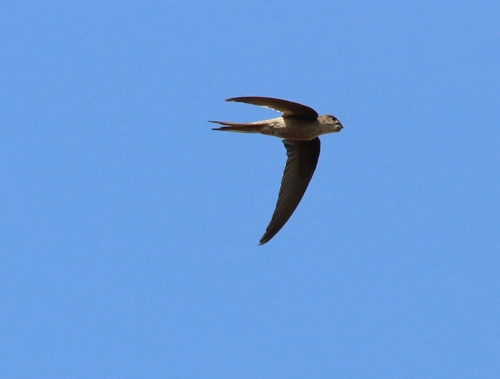
アジアヤシアマツバメ (Cypsiurus balasiensis) アジアヤシアマツバメ
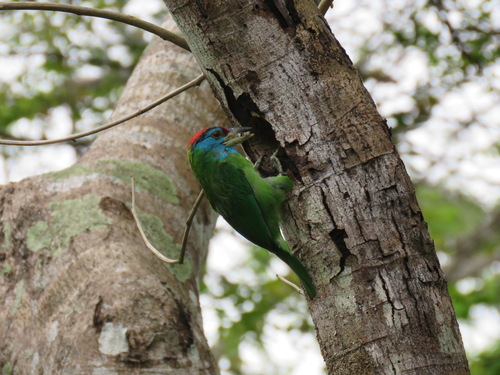
アオノドゴシキドリ (Psilopogon asiaticus) アオノドゴシキドリ

メディア

読み込み中…

要点

アジアヤシアマツバメとアオノドゴシキドリを区別する最も信頼できる方法は、全体的な構造と行動によるものです:アジアヤシアマツバメは、長く深く分かれた尾を持つ小さくて細長い三日月型の空中飛行者で、常に飛んでいるか、垂直な表面にしがみついているのに対し、アオノドゴシキドリは、太くて短い尾を持つ緑の鳥で、木に直立して止まり、長時間飛ぶことはほとんどありません。アジアヤシアマツバメは均一に淡い茶色で、ゴシキドリの明るい緑、青、赤の頭の模様は決して見せません。もし、果実のなる木に体ががっしりした大きな頭とカラフルな顔を持つ鳥を見たら、それはゴシキドリです;空中を切り裂くように飛ぶ細長いブーメラン型の鳥はアジアヤシアマツバメです。幼鳥のアジアヤシアマツバメは尾が短いですが、依然として緑や顔の色はありません。鳴き声も特徴的で、アジアヤシアマツバメは鋭い悲鳴を上げ、ゴシキドリは繰り返しの大きなカエルのような音を出します。

識別のコツ

  1. Flight vs. Perched Posture: アジアヤシアマツバメはほとんど常に飛んでいるか、垂直に表面にしがみついているのが見られ、決して枝に直立して止まることはありません。アオノドゴシキドリは通常、木に直立して止まっており、持続的な飛行はほとんど見られません。
  2. Overall Structure: アジアヤシアマツバメは細長く、長い翼と長い尾を持ち、深く分かれた尾(幼鳥では短い)を持っています;ゴシキドリはがっしりしていて、短い尾と大きな頭を持っています。
  3. Wing Shape in Flight: アジアヤシアマツバメは長く狭い三日月型の翼を持っています;ゴシキドリは短く丸い翼と波打つような飛行をします。
  4. Tail Shape: アジアヤシアマツバメは長く深く分かれた尾(幼鳥ではそれほどではない)を持ち、通常は閉じた状態で保持されます;ゴシキドリは短く四角い尾を持っています。
  5. Plumage Color: アジアヤシアマツバメは顔や体の色がなく、単調な淡い茶色です;ゴシキドリは明るい緑で、赤と青の頭を持っています(幼鳥では鈍いが、依然として模様があります)。
  6. Head Pattern: ゴシキドリは赤い額、黒い冠の縞、青い顔と顎、赤い首の斑点を示します;アジアヤシアマツバメはどの年齢でも頭の模様はありません。
  7. Bill Shape: アジアヤシアマツバメは空中で昆虫を捕まえるために適応した小さく平らなくちばしを持っています;ゴシキドリは果物や昆虫に適した大きく頑丈な円錐形のくちばしを持っています。
  8. Legs and Feet: アジアヤシアマツバメは非常に短い脚を持ち、しがみつくためだけに使用されます;ゴシキドリは止まり木や登るための強い足を持っています。
  9. Voice: アジアヤシアマツバメは飛行中に鋭い悲鳴を上げます;ゴシキドリは止まり木から大きく繰り返しカエルのような音を出します。
  10. Habitat: アジアヤシアマツバメは開けた場所、特にヤシの近くで一般的です;ゴシキドリは果実のなる木がある森林地域に生息し、ヤシのプランテーションにはめったにいません。
  11. Feeding Behavior: アジアヤシアマツバメは飛行中に捕まえた昆虫を食べ、しばしば田畑の上を低く飛びます;ゴシキドリは果物やいくつかの昆虫を食べ、通常は止まっているときに食べます。
  12. Juvenile Confusion: 幼いアジアヤシアマツバメは尾が短いですが、依然として単調な茶色です;幼いゴシキドリは鈍いですが、依然として緑で頭に模様があります。
  13. Size: アジアヤシアマツバメはゴシキドリよりもはるかに小さく軽い(9.2 g、13 cm)です;ゴシキドリは(79–103 g、19–22 cm)で、体ががっしりしていて大きな頭を持っています;距離があっても、サイズの違いは際立っています。
  14. Nesting: アジアヤシアマツバメはヤシの葉の下に巣を貼り付けます;ゴシキドリは木の幹や枝に穴を掘ります。
  15. Contextual Clues: 開けた国で急速に飛んでいる、決して止まらない鳥はほぼ確実にアジアヤシアマツバメです;果実のなる木に静かに座って大きな声で鳴いている鳥はゴシキドリです。

大きさ

アジアヤシアマツバメは劇的に小さく軽い:質量約9.2 g、長さ13 cmで、非常に細長い体型です。アオノドゴシキドリははるかに大きく重い(19–22 cm、79–103 g)で、がっしりした頑丈な体と大きな頭を持っています。距離があっても、ゴシキドリはより大きくてコンパクトに見え、アジアヤシアマツバメは針のように細くて長く見えます。

羽色

幼鳥と成鳥のアジアヤシアマツバメは全体的に主に淡い茶色で、強い模様はなく、長く深く分かれた尾(幼鳥では短い)を持っています。彼らの翼は長く狭く、後ろに引かれており、飛行中に三日月またはブーメランの形を与えます。顔や腹部にはコントラストや色はありません。それに対して、すべての年齢のアオノドゴシキドリは明るい緑で、短い尾と目を引くカラフルな頭を持っています:成鳥は明るい赤い額と後部の冠、黒い冠の縞、淡い青い顔、顎、上部の首、青の基部に赤い斑点を示します。幼鳥は似ていますが鈍く、 muted reds and blues と暗いまたは青黒い冠の縞を持っています。ゴシキドリの腹部はより明るい黄色がかった緑で、尾の裏側には青みがかっていることがあります。アジアヤシアマツバメのどの年齢や季節も緑、青、または赤の羽毛を示すことはありません。

行動

アジアヤシアマツバメはほぼ全生涯を空中で過ごし、飛行中に餌を食べたり、飲んだり、さらには交尾したりします;彼らはヤシの葉や類似の表面に垂直にしがみつくだけで、決して枝に直立して止まることはありません。彼らの飛行は速く、敏捷で、高度に機動的で、しばしば開けた場所やヤシの近くを低く飛びます。アオノドゴシキドリは樹上性で、通常は果実のなる木に直立して止まっているのが見られます。彼らの飛行は騒がしく波打つようで、翼の羽ばたきと滑空のバーストがありますが、ほとんどの時間を止まって、餌を食べたり、止まり木から呼びかけたりしています。ゴシキドリは木に巣穴を掘り、アジアヤシアマツバメはヤシの葉の下に巣を貼り付けます。

生息環境

アジアヤシアマツバメは開けた国と耕作に強く関連しており、特に油ヤシの近くで、開けた場所やプランテーションの上を低く飛んでいるのがよく見られます。アオノドゴシキドリは低地および山地の森林(200–2,000 m)に生息し、常緑樹や落葉樹の果実のなる木がある地域を好み、二次成長や時には適した木がある都市公園も含まれます。ゴシキドリは油のプランテーションでは珍しく、アジアヤシアマツバメが繁栄する場所です。したがって、開けたヤシが豊富な生息地で見られる鳥はほぼ確実にアジアヤシアマツバメであり、密な果実のなる森林や樹冠にいる鳥はほぼ確実にゴシキドリです。

声

アジアヤシアマツバメは大きく鋭い悲鳴を上げ、これはアジアヤシアマツバメに典型的で、飛行中に聞かれます。アオノドゴシキドリは非常に声が大きく、'took-a-rook'、'pu-ku-ruk'、または'kut-ru-uk'と表現される大きく繰り返しのカエルのような呼び声を持ち、日中に90–105回の速さで繰り返されます。ゴシキドリの呼び声は、その存在の最良の手がかりであることが多く、その緑の羽毛は葉の中でよくカモフラージュされています。

より良い説明を送る

比較と同じ項目を使ってください。文章はすぐに公開されます。

The most reliable way to separate Asian Palm Swift from Blue-throated Barbet is by overall structure and behavior: Asian Palm Swift is a tiny, slender, crescent-winged aerialist with a long, deeply forked tail, always seen in flight or clinging to vertical surfaces, while Blue-throated Barbet is a chunky, short-tailed, green bird that perches upright in trees and rarely flies for long. Swifts are uniformly pale brown and never show the bright green, blue, and red head pattern of the barbet. If you see a bird with a stocky body, large head, and colorful face perched in a fruiting tree, it is the barbet; a slim, boomerang-winged bird scything through the air is the swift. Juvenile swifts have shorter tails but still lack any green or facial color. Calls are also distinctive: the swift gives a shrill scream, while the barbet produces repetitive, loud, frog-like notes.

  1. Flight vs. Perched Posture: Asian Palm Swift is almost always seen in flight or clinging vertically to surfaces; it never perches upright on branches. Blue-throated Barbet is typically perched upright in trees, rarely seen in sustained flight.
  2. Overall Structure: Swifts are slim, long-winged, and long-tailed with a deeply forked tail (shorter in juveniles); barbets are chunky, short-tailed, and big-headed.
  3. Wing Shape in Flight: Swifts show long, narrow, crescent-shaped wings; barbets have short, rounded wings and undulating flight.
  4. Tail Shape: Swifts have a long, deeply forked tail (less so in juveniles), usually held closed; barbets have a short, squared tail.
  5. Plumage Color: Swifts are plain pale brown with no facial or body color; barbets are bright green with a red and blue head (duller in juveniles but still patterned).
  6. Head Pattern: Barbets show a red forehead, black crown stripe, blue face and chin, and red neck patches; swifts have no head pattern at any age.
  7. Bill Shape: Swifts have a tiny, flat bill adapted for aerial insect-catching; barbets have a large, stout, conical bill suited for fruit and insects.
  8. Legs and Feet: Swifts have very short legs, used only for clinging; barbets have strong feet for perching and climbing.
  9. Voice: Swifts emit a shrill scream in flight; barbets call loudly and repetitively from perches with frog-like notes.
  10. Habitat: Swifts are common in open areas, especially near palms; barbets are found in forested areas with fruiting trees, rarely in palm plantations.
  11. Feeding Behavior: Swifts feed on insects caught in flight, often low over fields; barbets eat fruit and some insects, usually while perched.
  12. Juvenile Confusion: Young swifts have shorter tails but remain plain brown; juvenile barbets are duller but still green with a patterned head.
  13. Size: Swifts are much smaller and lighter (9.2 g, 13 cm) than barbets (79–103 g, 19–22 cm); even at a distance, the size difference is striking.
  14. Nesting: Swifts glue nests under palm leaves; barbets excavate holes in tree trunks or branches.
  15. Contextual Clues: A bird seen flying rapidly, never perching, in open country is almost certainly a swift; a bird sitting quietly in a fruiting tree, calling loudly, is a barbet.

Asian Palm Swift is dramatically smaller and lighter: about 9.2 g in mass and 13 cm in length, with a very slender build. Blue-throated Barbet is much larger and heavier (19–22 cm long, 79–103 g), with a stocky, robust body and a large head. Even at a distance, the barbet appears bulkier and more compact, while the swift looks needle-thin and elongated.

Juvenile and adult Asian Palm Swifts are mainly pale brown all over, with no strong pattern except a long, deeply forked tail (shorter in juveniles). Their wings are long, narrow, and swept back, giving a crescent or boomerang shape in flight. There is no contrast or color on the face or underparts. In contrast, Blue-throated Barbet of all ages is bright green with a short tail and a strikingly colorful head: adults show a bright red forehead and rear crown, black crown stripe, pale blue face, chin, and upper neck, and red patches at the base of the blue. Juveniles are similar but duller, with muted reds and blues and dusky or blue-black crown stripes. The barbet's underparts are lighter yellow-green, and the underside of the tail may have a bluish cast. No age or season of the swift ever shows green, blue, or red plumage.

Asian Palm Swifts spend nearly their entire lives in the air, feeding, drinking, and even mating on the wing; they only cling vertically to palm leaves or similar surfaces and never perch upright on branches. Their flight is fast, agile, and highly maneuverable, often low over open areas or near palms. Blue-throated Barbets are arboreal and sedentary, usually seen perched upright in trees, especially at fruiting trees. Their flight is noisy and undulating, with bursts of wingbeats and glides, but they spend most of their time sitting, feeding, or calling from a perch. Barbets excavate nest holes in trees, while swifts glue nests under palm leaves.

Asian Palm Swift is strongly associated with open country and cultivation, especially near oil palms, and is often seen flying low over open areas or plantations. Blue-throated Barbet inhabits lowland and montane forests (200–2,000 m), favoring areas with fruiting trees, including evergreen and deciduous forests, secondary growth, and sometimes urban parks with suitable trees. Barbets are uncommon in oil plantations, where swifts thrive. Thus, a bird seen in open, palm-rich habitat is likely a swift; one in dense, fruiting forest or canopy is likely a barbet.

Asian Palm Swift gives a loud, shrill scream, typical of swifts and heard while in flight. Blue-throated Barbet is very vocal, with loud, repetitive, frog-like calls described as 'took-a-rook', 'pu-ku-ruk', or 'kut-ru-uk', repeated rapidly (90–105 times per minute) throughout the day. The barbet's call is often the best clue to its presence, as its green plumage is well-camouflaged in foliage.

変更を破棄しますか?

保存していない編集があります。今離れると失われます。

アジアヤシアマツバメ · アオノドゴシキドリ · 苦手な鳥