

Asian Palm Swift vs Blue-throated Barbet
Cypsiurus balasiensis contro Psilopogon asiaticus
Fai un quiz con Asian Palm Swift e Blue-throated Barbet
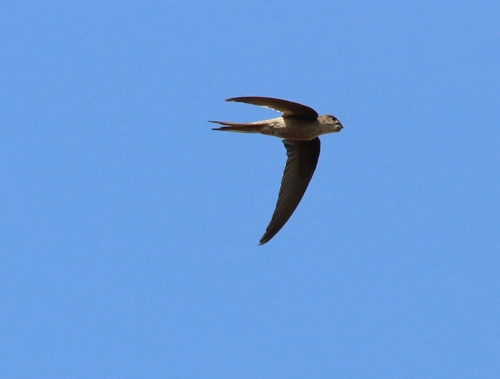 Asian Palm Swift
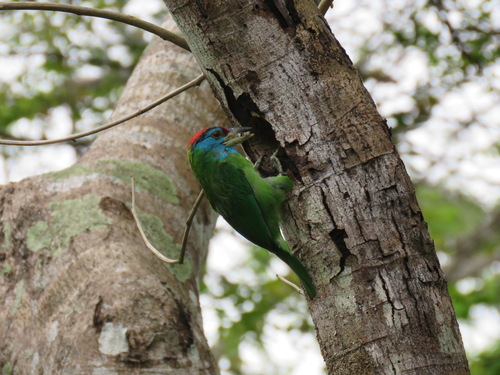 Blue-throated Barbet
In breve
Il modo più affidabile per separare l'Asian Palm Swift dal Blue-throated Barbet è attraverso la struttura generale e il comportamento: l'Asian Palm Swift è un aereonauta minuscolo, snodato e con ali a forma di mezzaluna, con una lunga coda profondamente biforcuta, sempre visto in volo o aggrappato a superfici verticali, mentre il Blue-throated Barbet è un uccello tozzo, con coda corta e di colore verde che si posiziona eretto sugli alberi e vola raramente per lungo tempo. Gli swift sono uniformemente di un marrone pallido e non mostrano mai il brillante motivo della testa verde, blu e rossa del barbet. Se vedi un uccello con un corpo robusto, una grande testa e un volto colorato posato su un albero da frutto, è il barbet; un uccello snello, con ali a forma di boomerang che taglia l'aria è lo swift. Gli swift giovani hanno code più corte ma mancano comunque di qualsiasi colore verde o facciale. Anche i richiami sono distintivi: lo swift emette un grido acuto, mentre il barbet produce note ripetitive, forti e simili a quelle di una rana.
Consigli di identificazione
- Flight vs. Perched Posture: L'Asian Palm Swift è quasi sempre visto in volo o aggrappato verticalmente a superfici; non si posiziona mai eretto sui rami. Il Blue-throated Barbet è tipicamente posato eretto sugli alberi, raramente visto in volo prolungato.
- Overall Structure: Gli swift sono snelli, con ali lunghe e coda lunga con una coda profondamente biforcuta (più corta nei giovani); i barbet sono tozzi, con coda corta e testa grande.
- Wing Shape in Flight: Gli swift mostrano ali lunghe, strette e a forma di mezzaluna; i barbet hanno ali corte e arrotondate e volo ondulato.
- Tail Shape: Gli swift hanno una lunga coda profondamente biforcuta (meno nei giovani), di solito tenuta chiusa; i barbet hanno una coda corta e squadrata.
- Plumage Color: Gli swift sono di un marrone pallido uniforme senza colore facciale o corporeo; i barbet sono di un verde brillante con una testa rossa e blu (meno vivace nei giovani ma ancora con motivo).
- Head Pattern: I barbet mostrano una fronte rossa, una striscia nera sulla corona, un volto e un mento blu, e macchie rosse sul collo; gli swift non hanno alcun motivo sulla testa a qualsiasi età.
- Bill Shape: Gli swift hanno un becco piccolo e piatto adattato per catturare insetti in volo; i barbet hanno un grande becco conico robusto adatto per frutta e insetti.
- Legs and Feet: Gli swift hanno zampe molto corte, usate solo per aggrapparsi; i barbet hanno piedi forti per posarsi e arrampicarsi.
- Voice: Gli swift emettono un grido acuto in volo; i barbet chiamano ad alta voce e ripetutamente da posatoi con note simili a quelle di una rana.
- Habitat: Gli swift sono comuni in aree aperte, specialmente vicino alle palme; i barbet si trovano in aree forestali con alberi da frutto, raramente nelle piantagioni di palme.
- Feeding Behavior: Gli swift si nutrono di insetti catturati in volo, spesso bassi sopra i campi; i barbet mangiano frutta e alcuni insetti, di solito mentre sono posati.
- Juvenile Confusion: I giovani swift hanno code più corte ma rimangono di un marrone uniforme; i giovani barbet sono meno vivaci ma ancora verdi con una testa a motivo.
- Size: Gli swift sono molto più piccoli e leggeri (9.2 g, 13 cm) rispetto ai barbet (79–103 g, 19–22 cm); anche a distanza, la differenza di dimensioni è notevole.
- Nesting: Gli swift incollano i nidi sotto le foglie di palma; i barbet scavano buchi nei tronchi degli alberi o nei rami.
- Contextual Clues: Un uccello visto volare rapidamente, mai posato, in un paese aperto è quasi certamente uno swift; un uccello seduto tranquillamente su un albero da frutto, che chiama ad alta voce, è un barbet.
Taglia
L'Asian Palm Swift è drammaticamente più piccolo e leggero: circa 9.2 g di massa e 13 cm di lunghezza, con una struttura molto snella. Il Blue-throated Barbet è molto più grande e pesante (19–22 cm di lunghezza, 79–103 g), con un corpo tozzo e robusto e una grande testa. Anche a distanza, il barbet appare più massiccio e compatto, mentre lo swift appare sottile come un ago ed allungato.
Piumaggio
Gli swift adulti e giovani dell'Asian Palm sono principalmente di un marrone pallido ovunque, senza un forte motivo eccetto una lunga coda profondamente biforcuta (più corta nei giovani). Le loro ali sono lunghe, strette e ripiegate all'indietro, dando una forma a mezzaluna o a boomerang in volo. Non c'è contrasto o colore sul volto o sulla parte inferiore. Al contrario, il Blue-throated Barbet di tutte le età è di un verde brillante con una coda corta e una testa straordinariamente colorata: gli adulti mostrano una fronte rossa brillante e una corona posteriore, una striscia nera sulla corona, un volto blu pallido, mento e parte superiore del collo, e macchie rosse alla base del blu. I giovani sono simili ma meno vivaci, con rossi e blu attenuati e strisce sulla corona di colore scuro o blu-nerastro. Le parti inferiori del barbet sono di un giallo-verde più chiaro, e la parte inferiore della coda può avere una sfumatura blu. Nessuna età o stagione dello swift mostra mai piumaggio verde, blu o rosso.
Comportamento
Gli Asian Palm Swifts trascorrono quasi tutta la loro vita in aria, nutrendosi, bevendo e persino accoppiandosi in volo; si aggrappano solo verticalmente a foglie di palma o superfici simili e non si posano mai eretti sui rami. Il loro volo è veloce, agile e altamente manovrabile, spesso basso sopra aree aperte o vicino alle palme. I Blue-throated Barbets sono arboricoli e sedentari, di solito visti posati eretti sugli alberi, specialmente su alberi da frutto. Il loro volo è rumoroso e ondulato, con esplosioni di battiti d'ali e planate, ma trascorrono la maggior parte del loro tempo seduti, nutrendosi o chiamando da un posatoio. I barbet scavano buchi per il nido negli alberi, mentre gli swift incollano i nidi sotto le foglie di palma.
Habitat
L'Asian Palm Swift è fortemente associato a paesaggi aperti e coltivazioni, specialmente vicino alle palme da olio, ed è spesso visto volare basso sopra aree aperte o piantagioni. Il Blue-throated Barbet abita foreste di pianura e montane (200–2.000 m), preferendo aree con alberi da frutto, comprese foreste sempreverdi e decidue, crescita secondaria e a volte parchi urbani con alberi adatti. I barbet sono poco comuni nelle piantagioni di olio, dove gli swift prosperano. Pertanto, un uccello visto in un habitat aperto e ricco di palme è probabilmente uno swift; uno in una foresta densa e fruttifera o nella chioma è probabilmente un barbet.
Voce
L'Asian Palm Swift emette un grido forte e acuto, tipico degli swift e udibile mentre è in volo. Il Blue-throated Barbet è molto vocale, con richiami forti e ripetitivi, simili a quelli di una rana, descritti come 'took-a-rook', 'pu-ku-ruk' o 'kut-ru-uk', ripetuti rapidamente (90–105 volte al minuto) per tutto il giorno. Il richiamo del barbet è spesso il miglior indizio della sua presenza, poiché il suo piumaggio verde è ben camuffato nel fogliame.
Asian Palm Swift · Blue-throated Barbet · I miei uccelli difficili