

asian emerald dove vs little green-pigeon
Chalcophaps indica versus Treron olax
Jogue um quiz com asian emerald dove e little green-pigeon
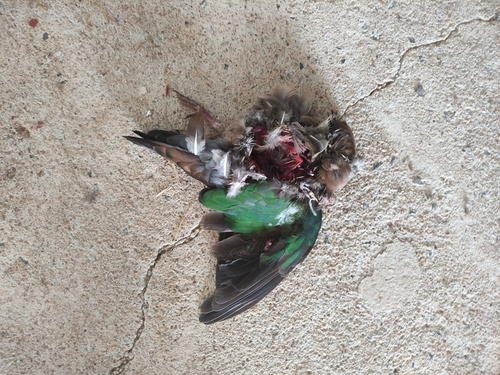 asian emerald dove
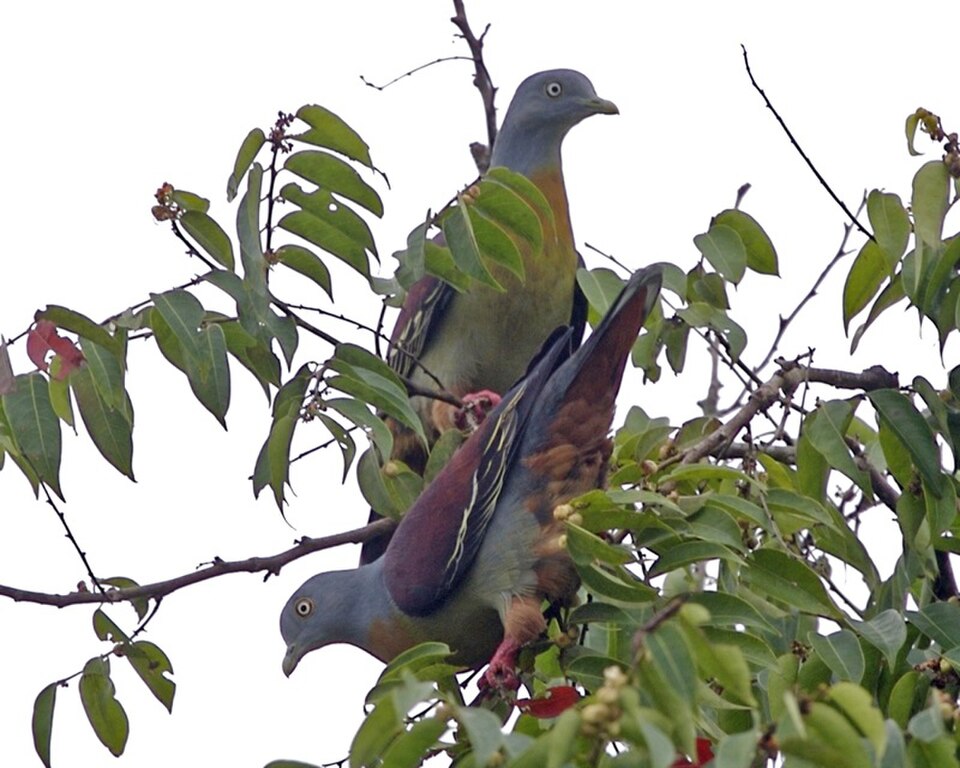 little green-pigeon
Em resumo
A marca de campo mais confiável entre asian emerald dove e little green-pigeon é a presença de asas superiores e costas de um verde esmeralda brilhante no asian emerald dove, contrastando com as partes superiores mais uniformemente verde-oliva do little green-pigeon. Em voo, o asian emerald dove exibe barras pretas e brancas ousadas na parte inferior das costas e penas de voo escuras, enquanto o little green-pigeon não possui esses padrões contrastantes. A estrutura também difere: o asian emerald dove é mais robusto, com um bico vermelho brilhante e pernas ruivas, enquanto o little green-pigeon é mais esguio e não possui o bico vermelho. O plumagem sexualmente dimórfico no little green-pigeon (machos com mancha laranja no pescoço e manto marrom) nunca é igualado pelo asian emerald dove. Os asian emerald doves imaturos têm escamação marrom, que não é vista no little green-pigeon. Ambas as espécies podem ser encontradas em florestas densas, mas suas distribuições só se sobrepõem em partes do Sudeste Asiático.
Dicas de identificação
- Asas Superiores e Costas em Voo (Todas as Idades): Procure pelas costas e asas brilhantes verdes esmeralda do asian emerald dove, com penas de voo escuras e barras pretas e brancas ousadas na parte inferior das costas—essas são visíveis em voo e nunca mostradas pelo little green-pigeon.
- Escamação Juvenil (Asian Emerald Dove): Os asian emerald doves imaturos têm escamação marrom no corpo e plumagem das asas, uma característica não presente no little green-pigeon de qualquer idade.
- Tamanho e Estrutura: O asian emerald dove é mais robusto e ligeiramente maior (23–27 cm) do que o little green-pigeon mais esguio e menor (21–22 cm). Isso é sutil, mas útil com a experiência.
- Cor do Bico: O asian emerald dove tem um bico vermelho brilhante, visível a curta distância ou em boa luz; o little green-pigeon não tem.
- Cor das Pernas: As pernas e pés do asian emerald dove são ruivos; isso não é uma marca para o little green-pigeon.
- Plumagem Masculina (Little Green-Pigeon): O macho do little green-pigeon tem uma mancha laranja distinta no pescoço que se mistura com a parte inferior amarela e um manto marrom—nunca igualado pelo asian emerald dove.
- Plumagem Feminina: A fêmea do asian emerald dove é mais marrom com uma marca cinza no ombro e não possui a mancha branca no ombro do macho. A fêmea do little green-pigeon é verde-oliva por cima e amarela por baixo, sem marrom ou laranja.
- Coroa (Macho Asian Emerald Dove): O macho do asian emerald dove tem uma coroa cinza, que não é vista no little green-pigeon.
- Mancha no Ombro: O macho do asian emerald dove mostra uma mancha branca na borda dos ombros; ausente no little green-pigeon.
- Forrageamento no Solo vs Árvore: O asian emerald dove é frequentemente visto andando no chão, enquanto o little green-pigeon está quase sempre em árvores.
- Estilo de Voo: O asian emerald dove voa baixo e diretamente pela floresta, às vezes se movendo em zigue-zague; o little green-pigeon é mais propenso a se mover de árvore em árvore.
- Vocalização: Se você ouvir um coo suave e crescente ou 'hoo-hoo-hoon', é o asian emerald dove; o little green-pigeon não é descrito como vocal nestas notas.
- Contexto de Habitat: Se visto em manguezais ou em terras agrícolas, é mais provável que seja o asian emerald dove; o little green-pigeon é mais estritamente uma ave do dossel florestal.
- Dimorfismo Sexual: Apenas o little green-pigeon mostra fortes diferenças de cor entre machos e fêmeas (marrom e laranja nos machos); os sexos do asian emerald dove são mais sutilmente diferentes.
- Aproximabilidade: O asian emerald dove é frequentemente manso e acessível, às vezes se afastando da perturbação em vez de voar; o little green-pigeon é mais propenso a voar do dossel.
Tamanho
O asian emerald dove é ligeiramente maior e mais robusto, medindo 23–27 cm de comprimento, enquanto o little green-pigeon é menor, com 21–22 cm. Essa diferença é sutil, mas pode ser notável com comparação direta ou experiência. O asian emerald dove também parece mais robusto e compacto, enquanto o little green-pigeon é mais esguio e delicado em construção. A cor do bico é uma dica estrutural útil: o asian emerald dove tem um bico vermelho brilhante, enquanto o little green-pigeon não tem.
Plumagem
- Juvenil/Imaturo: Os asian emerald doves imaturos se assemelham às fêmeas, mas têm escamação marrom distinta em seu corpo e plumagem das asas. Os imaturos do little green-pigeon não são descritos como tendo tal escamação; suas partes superiores permanecem mais uniformemente verdes-oliva.
- Adulto Macho: Os machos do asian emerald dove têm uma coroa cinza e uma mancha branca no ombro, com costas e asas de um verde esmeralda brilhante. Os machos do little green-pigeon têm uma mancha laranja no pescoço que se mistura com a parte inferior amarela e um manto marrom, que estão ausentes no asian emerald dove.
- Adulto Fêmea: As fêmeas dos asian emerald doves não têm a mancha branca no ombro e têm uma cabeça mais marrom, ligeiramente mais cinza. As fêmeas do little green-pigeon são verde-oliva por cima e amarelas por baixo, sem o marrom e laranja do macho.
- Em Voo: O asian emerald dove mostra penas de voo e cauda escuras, com largas barras pretas e brancas na parte inferior das costas—essas são visíveis em voo e diagnósticas. O little green-pigeon não mostra tais padrões contrastantes nas asas ou costas em voo, parecendo mais uniforme.
- Bico e Pernas: O asian emerald dove tem um bico vermelho brilhante e pernas ruivas; o little green-pigeon não possui essas cores.
Comportamento
O asian emerald dove é frequentemente visto andando no chão em busca de frutas caídas e é geralmente manso e acessível, frequentemente se afastando quando perturbado em vez de voar imediatamente. Seu voo é rápido, direto e baixo, serpenteando por trechos densos de floresta. O little green-pigeon, como outras espécies de Treron, é mais arbóreo, tipicamente forrageando em árvores por frutas e menos propenso a ser visto andando no chão. Ambas as espécies são frugívoras, mas seu comportamento de forrageamento difere, com o asian emerald dove sendo mais terrestre.
Habitat
Ambas as espécies habitam florestas densas e úmidas de planície, mas o asian emerald dove é mais amplamente distribuído, variando do subcontinente indiano através do Sudeste Asiático, incluindo manguezais e até fazendas. O little green-pigeon é mais restrito a Brunei, Indonésia, Malásia, Cingapura e Tailândia. Onde as distribuições se sobrepõem, ambas podem ocorrer em habitats florestais semelhantes, mas o asian emerald dove é mais provável de ser encontrado no ou perto do chão, enquanto o little green-pigeon é mais estritamente arbóreo.
Voz
O asian emerald dove emite um coo baixo, suave e gemido de cerca de seis a sete notas, começando suavemente e aumentando, além de um 'hoo-hoo-hoon' nasal. Nenhuma vocalização distinta é descrita para o little green-pigeon nestas notas, então a voz não é um separador confiável, a menos que o chamado do asian emerald dove seja ouvido.
asian emerald dove · little green-pigeon · Minhas aves difíceis