

Motmot

キンバト 対 チビアオバト

Chalcophaps indica 対 Treron olax

キンバトとチビアオバトのクイズ
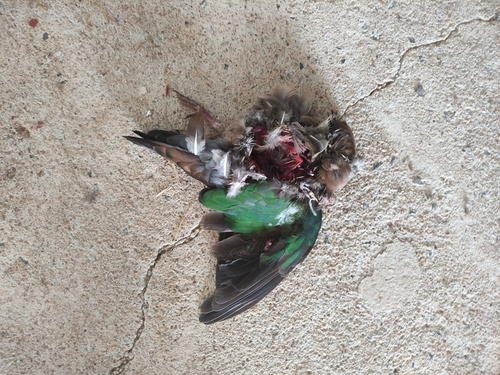
キンバト (Chalcophaps indica) キンバト
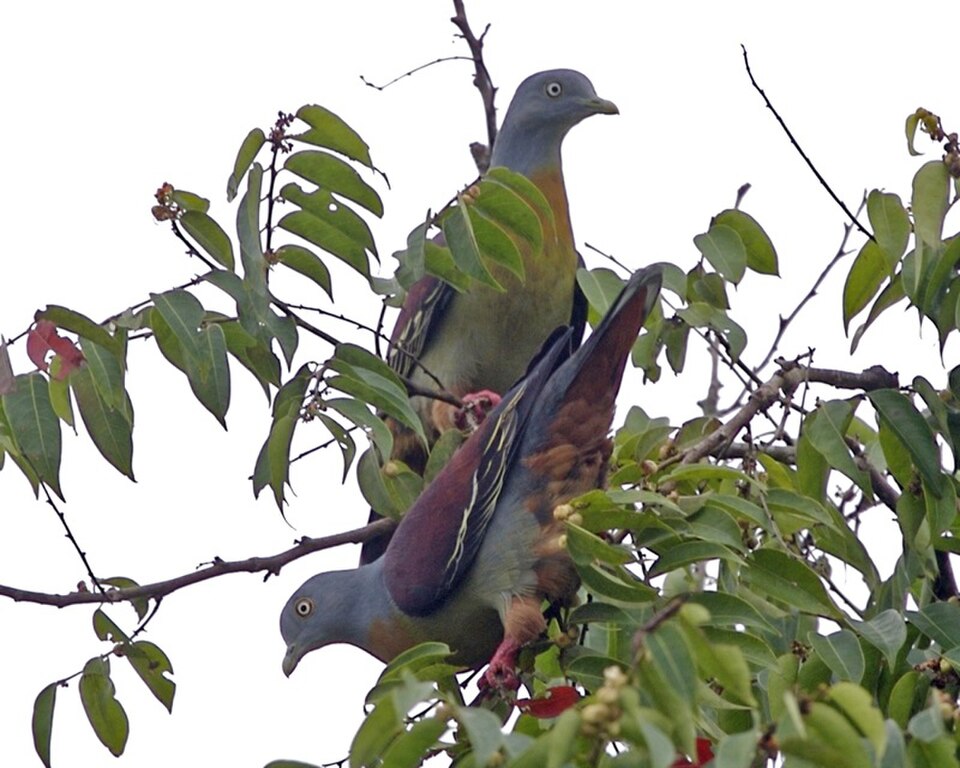
チビアオバト (Treron olax) チビアオバト

メディア

読み込み中…

要点

アジアキンバトとチビアオバトの最も信頼できるフィールドマークは、キンバトの明るいエメラルドグリーンの上翼と背中の存在であり、チビアオバトのより均一なオリーブグリーンの上面と対照的です。飛行中、キンバトは下背部に大胆な黒と白の帯と黒っぽい飛行羽を示し、チビアオバトはこれらの対照的なパターンを欠いています。構造も異なります:キンバトはずんぐりしており、明るい赤いくちばしと赤褐色の脚を持ち、チビアオバトはスリムで赤いくちばしを欠いています。チビアオバトの性的二形性の羽毛(オスはオレンジの首の斑点とマルーンのマントを持つ)は、キンバトでは決して見られません。未熟なキンバトは茶色のスカロッピングを持ち、チビアオバトでは見られません。両種は密な森林に生息していますが、その分布は東南アジアの一部でのみ重なります。

識別のコツ

  1. 飛行中の上翼と背中(すべての年齢): キンバトの明るいエメラルドグリーンの背中と翼、黒っぽい飛行羽、下背部の大胆な黒と白の帯を探してください—これらは飛行中に見え、チビアオバトでは決して示されません。
  2. 幼鳥のスカロッピング(キンバト): 未熟なキンバトは体と翼の羽毛に茶色のスカロッピングを持ち、この特徴はどの年齢のチビアオバトにも見られません。
  3. サイズと構造: キンバトはずんぐりしており、スリムで小さいチビアオバト(21–22 cm)よりもやや大きい(23–27 cm)です。これは微妙ですが、経験とともに役立ちます。
  4. くちばしの色: キンバトは明るい赤いくちばしを持ち、近距離または良好な光の下で見えます;チビアオバトは持っていません。
  5. 脚の色: キンバトの脚と足は赤褐色です;これはチビアオバトのマークではありません。
  6. オスの羽毛(チビアオバト): オスのチビアオバトは、黄色い腹部に溶け込むオレンジの首の斑点とマルーンのマントを持ち—キンバトでは決して見られません。
  7. メスの羽毛: メスのキンバトは肩に灰色のマークがあり、オスの白い肩の斑点を欠いています。メスのチビアオバトは上面がオリーブグリーンで、下面が黄色で、オスのマルーンやオレンジを欠いています。
  8. 冠の色(キンバトのオス): オスのキンバトは灰色の冠を持ち、チビアオバトでは見られません。
  9. 肩の斑点: オスのキンバトは肩の端に白い斑点を示します;チビアオバトでは欠如しています。
  10. 地面と木の採餌: キンバトはしばしば地面を歩いているのが見られますが、チビアオバトはほぼ常に木の中にいます。
  11. 飛行スタイル: キンバトは森林を低く直接飛び、時には織り交ぜながら飛びます;チビアオバトは木から木へ移動する可能性が高いです。
  12. 鳴き声: もし柔らかく、上昇するクー音や「フー・フー・フーン」を聞いたら、それはキンバトです;チビアオバトはこれらのメモでは鳴き声が記載されていません。
  13. 生息環境の文脈: マングローブや農地で見られた場合、キンバトの可能性が高いです;チビアオバトはより厳密に森林の樹冠の鳥です。
  14. 性的二形性: チビアオバトのみが色において強いオスとメスの違いを示します(オスはマルーンとオレンジ);キンバトの性別はより微妙に異なります。
  15. 近づきやすさ: キンバトはしばしばおとなしく近づきやすく、時には動揺から飛び立つのではなく、歩いて離れることがあります;チビアオバトは樹冠から飛び立つ可能性が高いです。

大きさ

アジアキンバトはやや大きくずんぐりしており、長さは23–27 cmで、チビアオバトは21–22 cmで小さいです。この違いは微妙ですが、直接比較や経験で目立つことがあります。キンバトはより頑丈でコンパクトに見え、チビアオバトはスリムでより繊細な体型です。くちばしの色は有用な構造的手がかりです:キンバトは明るい赤いくちばしを持ち、チビアオバトは持っていません。

羽色

行動

キンバトはしばしば地面を歩いて落ちた果物を探しているのが見られ、一般的におとなしく近づきやすく、動揺したときにすぐに飛び立つのではなく、頻繁に歩いて離れます。その飛行は速く、直接的で低く、密な森林の中を織り交ぜながら飛びます。チビアオバトは、他のトレロン種のように、より樹上性で、通常は果物のために木の中で採餌し、地面を歩いているのが見られることは少ないです。両種は果実食性ですが、採餌行動は異なり、キンバトはより地上性です。

生息環境

両種は密で湿った低地の森林に生息していますが、キンバトはより広範囲に分布し、インド亜大陸から東南アジア、マングローブや農場にまで及びます。チビアオバトはブルネイ、インドネシア、マレーシア、シンガポール、タイにより制限されています。分布が重なる場所では、両者は類似の森林生息地に出現する可能性がありますが、キンバトは地面またはその近くで遭遇する可能性が高く、チビアオバトはより厳密に樹上性です。

声

キンバトは約6〜7音の低く柔らかい、うめくようなクー音を出し、静かに始まり上昇し、鼻にかかった「フー・フー・フーン」も出します。これらのメモではチビアオバトのための特異な鳴き声は記載されていないため、声は信頼できる区別要因ではありません、キンバトの鳴き声が聞かれない限り。

より良い説明を送る

比較と同じ項目を使ってください。文章はすぐに公開されます。

The most reliable field mark between Asian Emerald Dove and Little Green-Pigeon is the presence of bright emerald green upperwings and back in the Emerald Dove, contrasted with the more uniformly olive-green upperparts of the Little Green-Pigeon. In flight, the Emerald Dove shows bold black and white bars on the lower back and blackish flight feathers, while the Little Green-Pigeon lacks these contrasting patterns. Structure also differs: Emerald Dove is stockier with a bright red bill and rufous legs, while Little Green-Pigeon is slimmer and lacks the red bill. Sexually dimorphic plumage in Little Green-Pigeon (males with orange neck patch and maroon mantle) is never matched by Emerald Dove. Immature Emerald Doves have brown scalloping, which is not seen in Little Green-Pigeon. Both species can be found in dense forests, but their ranges only overlap in parts of Southeast Asia.

  1. Upperwing and Back in Flight (All Ages): Look for the Emerald Dove's bright emerald green back and wings, with blackish flight feathers and bold black and white bars on the lower back—these are visible in flight and never shown by Little Green-Pigeon.
  2. Juvenile Scalloping (Emerald Dove): Immature Emerald Doves have brown scalloping on body and wing plumage, a feature not present in Little Green-Pigeon of any age.
  3. Size and Structure: Emerald Dove is stockier and slightly larger (23–27 cm) than the slimmer, smaller Little Green-Pigeon (21–22 cm). This is subtle but useful with experience.
  4. Bill Color: Emerald Dove has a bright red bill, visible at close range or in good light; Little Green-Pigeon does not.
  5. Leg Color: Emerald Dove's legs and feet are rufous; this is not a mark for Little Green-Pigeon.
  6. Male Plumage (Little Green-Pigeon): Male Little Green-Pigeon has a distinctive orange neck patch blending into yellow underparts and a maroon mantle—never matched by Emerald Dove.
  7. Female Plumage: Female Emerald Dove is browner with a grey mark on the shoulder and lacks the white shoulder patch of the male. Female Little Green-Pigeon is olive-green above and yellow below, lacking maroon or orange.
  8. Crown Color (Emerald Dove Male): Male Emerald Dove has a grey crown, which is not seen in Little Green-Pigeon.
  9. Shoulder Patch: Male Emerald Dove shows a white patch on the edge of the shoulders; absent in Little Green-Pigeon.
  10. Ground vs Tree Foraging: Emerald Dove is often seen walking on the ground, while Little Green-Pigeon is almost always in trees.
  11. Flight Style: Emerald Dove flies low and directly through forest, sometimes weaving; Little Green-Pigeon is more likely to move from tree to tree.
  12. Vocalization: If you hear a soft, rising coo or 'hoo-hoo-hoon,' it is Emerald Dove; Little Green-Pigeon is not described as vocal in these notes.
  13. Habitat Context: If seen in mangroves or on farmland, Emerald Dove is more likely; Little Green-Pigeon is more strictly a forest canopy bird.
  14. Sexual Dimorphism: Only Little Green-Pigeon shows strong male-female differences in color (maroon and orange in males); Emerald Dove's sexes are more subtly different.
  15. Approachability: Emerald Dove is often tame and approachable, sometimes walking away from disturbance rather than flushing; Little Green-Pigeon is more likely to flush from the canopy.

Asian Emerald Dove is slightly larger and stockier, measuring 23–27 cm in length, while Little Green-Pigeon is smaller at 21–22 cm. This difference is subtle but can be noticeable with direct comparison or experience. The Emerald Dove also appears more robust and compact, whereas the Little Green-Pigeon is slimmer and more delicate in build. Bill color is a useful structural cue: Emerald Dove has a bright red bill, while Little Green-Pigeon does not.

  • Juvenile/Immature: Immature Emerald Doves resemble females but have distinctive brown scalloping on their body and wing plumage. Little Green-Pigeon immatures are not described as having such scalloping; their upperparts remain more uniformly olive.
  • Adult Male: Emerald Dove males have a grey crown and a white patch on the shoulder, with bright emerald green back and wings. Little Green-Pigeon males have an orange neck patch blending into a yellow underside and a maroon mantle, which are absent in Emerald Dove.
  • Adult Female: Female Emerald Doves lack the white shoulder patch and have a browner, slightly greyer head. Female Little Green-Pigeons are olive-green above and yellow below, lacking the maroon and orange of the male.
  • In Flight: Emerald Dove shows blackish flight feathers and tail, with broad black and white bars on the lower back—these are visible in flight and diagnostic. Little Green-Pigeon does not show such contrasting wing or back patterns in flight, appearing more uniform.
  • Bill and Legs: Emerald Dove has a bright red bill and rufous legs; Little Green-Pigeon lacks these colors.

Emerald Dove is often seen walking on the ground searching for fallen fruit and is generally tame and approachable, frequently walking away when disturbed rather than flying immediately. Its flight is fast, direct, and low, weaving through dense forest patches. Little Green-Pigeon, like other Treron species, is more arboreal, typically foraging in trees for fruit and less likely to be seen walking on the ground. Both species are frugivorous, but their foraging behavior differs, with Emerald Dove more terrestrial.

Both species inhabit dense, moist lowland forests, but Emerald Dove is more widespread, ranging from the Indian subcontinent through Southeast Asia, including mangroves and even farms. Little Green-Pigeon is more restricted to Brunei, Indonesia, Malaysia, Singapore, and Thailand. Where ranges overlap, both may occur in similar forest habitats, but Emerald Dove is more likely to be encountered on or near the ground, while Little Green-Pigeon is more strictly arboreal.

Emerald Dove gives a low, soft, moaning coo of about six to seven notes, starting quietly and rising, as well as a nasal 'hoo-hoo-hoon.' No distinctive vocalization is described for Little Green-Pigeon in these notes, so voice is not a reliable separator unless the Emerald Dove's call is heard.

変更を破棄しますか?

保存していない編集があります。今離れると失われます。

キンバト · チビアオバト · 苦手な鳥