

Asian Emerald Dove vs Little Green-Pigeon
Chalcophaps indica contro Treron olax
Fai un quiz con Asian Emerald Dove e Little Green-Pigeon
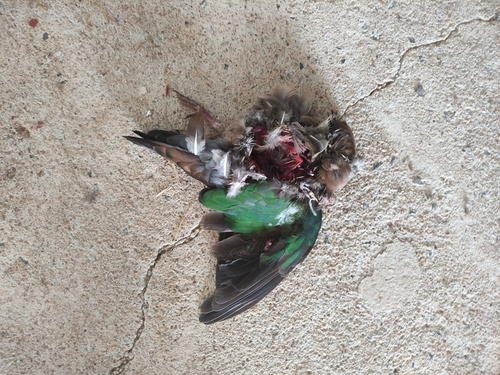 Asian Emerald Dove
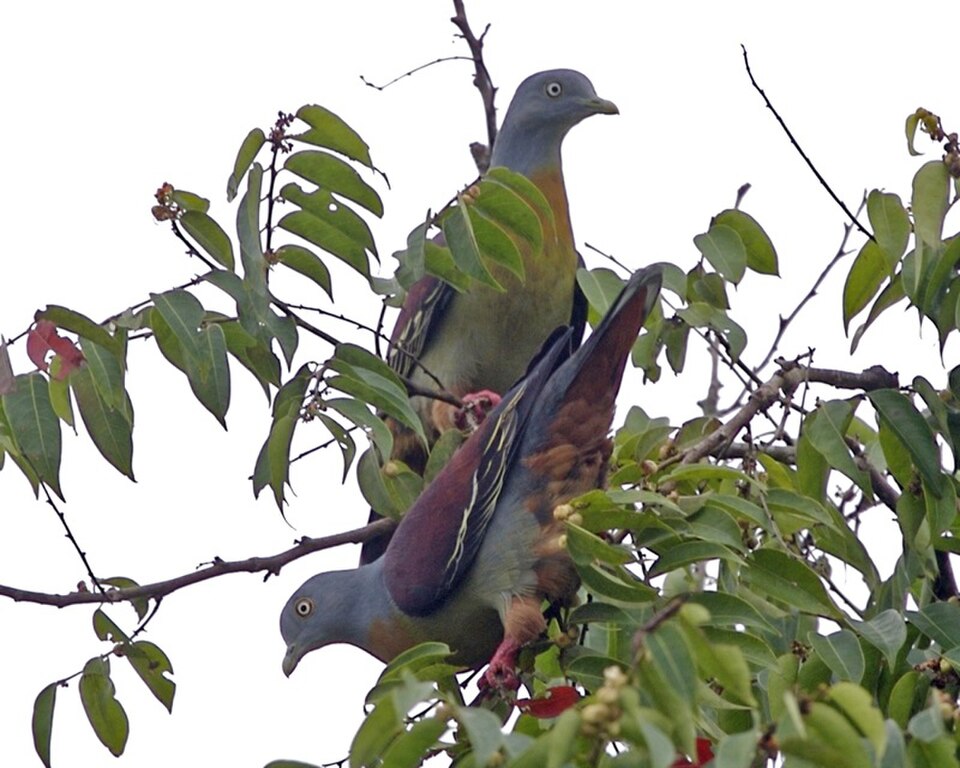 Little Green-Pigeon
In breve
Il segno di campo più affidabile tra Asian Emerald Dove e Little Green-Pigeon è la presenza di ali superiori e dorso di un brillante verde smeraldo nell'Emerald Dove, in contrasto con le parti superiori più uniformemente verde oliva del Little Green-Pigeon. In volo, l'Emerald Dove mostra barre nere e bianche audaci sulla parte bassa della schiena e piume da volo nerastre, mentre il Little Green-Pigeon manca di questi schemi contrastanti. Anche la struttura differisce: l'Emerald Dove è più robusto con un becco rosso brillante e zampe rufous, mentre il Little Green-Pigeon è più snello e privo del becco rosso. Il piumaggio sessualmente dimorfico nel Little Green-Pigeon (maschi con macchia arancione sul collo e mantello marrone) non è mai eguagliato dall'Emerald Dove. Gli Emerald Dove immaturi hanno una scaglionatura marrone, che non si vede nel Little Green-Pigeon. Entrambe le specie possono essere trovate in foreste dense, ma i loro areali si sovrappongono solo in alcune parti del sud-est asiatico.
Consigli di identificazione
- Upperwing and Back in Flight (All Ages): Cerca il dorso e le ali verdi smeraldo brillanti dell'Emerald Dove, con piume da volo nerastre e barre nere e bianche audaci sulla parte bassa della schiena—queste sono visibili in volo e mai mostrate dal Little Green-Pigeon.
- Juvenile Scalloping (Emerald Dove): Gli Emerald Dove immaturi hanno una scaglionatura marrone sul corpo e sul piumaggio delle ali, una caratteristica non presente nel Little Green-Pigeon di alcuna età.
- Size and Structure: L'Emerald Dove è più robusto e leggermente più grande (23–27 cm) rispetto al più snello e più piccolo Little Green-Pigeon (21–22 cm). Questo è sottile ma utile con l'esperienza.
- Bill Color: L'Emerald Dove ha un becco rosso brillante, visibile a distanza ravvicinata o in buona luce; il Little Green-Pigeon no.
- Leg Color: Le zampe e i piedi dell'Emerald Dove sono rufous; questo non è un segno per il Little Green-Pigeon.
- Male Plumage (Little Green-Pigeon): Il maschio del Little Green-Pigeon ha una distintiva macchia arancione sul collo che si fonde con le parti inferiori gialle e un mantello marrone—mai eguagliato dall'Emerald Dove.
- Female Plumage: La femmina dell'Emerald Dove è più marrone con un segno grigio sulla spalla e manca della macchia bianca sulla spalla del maschio. La femmina del Little Green-Pigeon è verde oliva sopra e gialla sotto, priva di marrone o arancione.
- Crown Color (Emerald Dove Male): Il maschio dell'Emerald Dove ha una corona grigia, che non si vede nel Little Green-Pigeon.
- Shoulder Patch: Il maschio dell'Emerald Dove mostra una macchia bianca sul bordo delle spalle; assente nel Little Green-Pigeon.
- Ground vs Tree Foraging: L'Emerald Dove è spesso visto camminare a terra, mentre il Little Green-Pigeon è quasi sempre sugli alberi.
- Flight Style: L'Emerald Dove vola basso e direttamente attraverso la foresta, a volte zigzagando; il Little Green-Pigeon è più propenso a muoversi da albero ad albero.
- Vocalization: Se senti un coo morbido e crescente o 'hoo-hoo-hoon,' è l'Emerald Dove; il Little Green-Pigeon non è descritto come vocale in queste note.
- Habitat Context: Se visto in mangrovie o su terreni agricoli, è più probabile che sia l'Emerald Dove; il Little Green-Pigeon è più strettamente un uccello della chioma della foresta.
- Sexual Dimorphism: Solo il Little Green-Pigeon mostra forti differenze di colore maschio-femmina (marrone e arancione nei maschi); i sessi dell'Emerald Dove sono più sottilmente diversi.
- Approachability: L'Emerald Dove è spesso domestico e avvicinabile, a volte allontanandosi dal disturbo piuttosto che volare; il Little Green-Pigeon è più propenso a volare via dalla chioma.
Taglia
L'Asian Emerald Dove è leggermente più grande e robusto, misurando 23–27 cm di lunghezza, mentre il Little Green-Pigeon è più piccolo a 21–22 cm. Questa differenza è sottile ma può essere evidente con un confronto diretto o esperienza. L'Emerald Dove appare anche più robusto e compatto, mentre il Little Green-Pigeon è più snello e delicato nella struttura. Il colore del becco è un utile indizio strutturale: l'Emerald Dove ha un becco rosso brillante, mentre il Little Green-Pigeon no.
Piumaggio
- Juvenile/Immature: Gli Emerald Dove immaturi somigliano alle femmine ma hanno una distintiva scaglionatura marrone sul loro corpo e piumaggio delle ali. Gli immaturi del Little Green-Pigeon non sono descritti come aventi tale scaglionatura; le loro parti superiori rimangono più uniformemente olive.
- Adult Male: I maschi dell'Emerald Dove hanno una corona grigia e una macchia bianca sulla spalla, con dorso e ali di un brillante verde smeraldo. I maschi del Little Green-Pigeon hanno una macchia arancione sul collo che si fonde in una parte inferiore gialla e un mantello marrone, che sono assenti nell'Emerald Dove.
- Adult Female: Le femmine degli Emerald Dove mancano della macchia bianca sulla spalla e hanno una testa più marrone, leggermente più grigia. Le femmine del Little Green-Pigeon sono verde oliva sopra e gialle sotto, prive del marrone e dell'arancione del maschio.
- In Flight: L'Emerald Dove mostra piume da volo e coda nerastre, con ampie barre nere e bianche sulla parte bassa della schiena—queste sono visibili in volo e diagnostiche. Il Little Green-Pigeon non mostra tali schemi contrastanti sulle ali o sulla schiena in volo, apparendo più uniforme.
- Bill and Legs: L'Emerald Dove ha un becco rosso brillante e zampe rufous; il Little Green-Pigeon manca di questi colori.
Comportamento
L'Emerald Dove è spesso visto camminare a terra cercando frutta caduta ed è generalmente domestico e avvicinabile, spesso allontanandosi quando disturbato piuttosto che volare immediatamente. Il suo volo è veloce, diretto e basso, zigzagando attraverso tratti di foresta densa. Il Little Green-Pigeon, come altre specie di Treron, è più arboricolo, tipicamente foraggiando negli alberi per frutta e meno probabile essere visto camminare a terra. Entrambe le specie sono frugivore, ma il loro comportamento di foraggiamento differisce, con l'Emerald Dove più terrestre.
Habitat
Entrambe le specie abitano foreste dense e umide di pianura, ma l'Emerald Dove è più diffuso, che va dal subcontinente indiano attraverso il sud-est asiatico, comprese le mangrovie e persino le fattorie. Il Little Green-Pigeon è più ristretto a Brunei, Indonesia, Malesia, Singapore e Thailandia. Dove gli areali si sovrappongono, entrambe possono verificarsi in habitat forestali simili, ma l'Emerald Dove è più probabile essere incontrato a terra o vicino al suolo, mentre il Little Green-Pigeon è più strettamente arboricolo.
Voce
L'Emerald Dove emette un coo basso, morbido e lamentoso di circa sei o sette note, iniziando silenziosamente e crescendo, così come un 'hoo-hoo-hoon' nasale. Nessuna vocalizzazione distintiva è descritta per il Little Green-Pigeon in queste note, quindi la voce non è un separatore affidabile a meno che non si senta il richiamo dell'Emerald Dove.
Asian Emerald Dove · Little Green-Pigeon · I miei uccelli difficili