

ashy drongo vs hair-crested drongo
Dicrurus leucophaeus versus Dicrurus hottentottus
Jogue um quiz com ashy drongo e hair-crested drongo
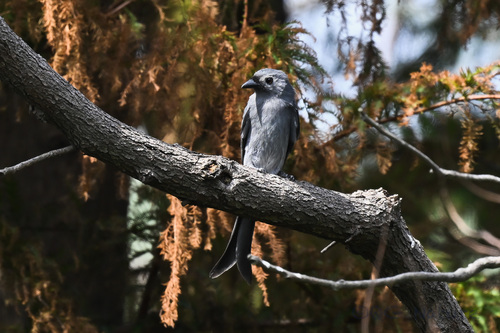 ashy drongo
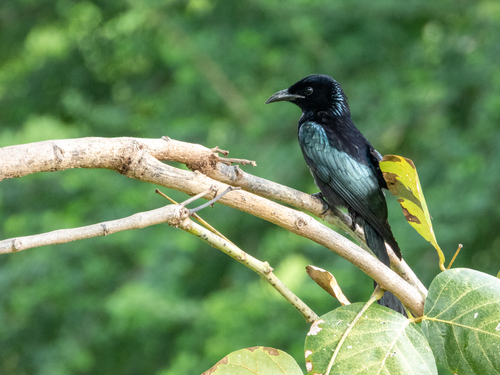 hair-crested drongo
Em resumo
A maneira mais confiável de separar o ashy drongo do hair-crested drongo é pela cor e estrutura geral: o ashy drongo é um pássaro mais esguio, principalmente cinza escuro (às vezes com marcas faciais brancas), enquanto o hair-crested drongo é muito mais robusto e tipicamente preto brilhante. A cauda do ashy drongo é longa, profundamente bifurcada e menos espalhada do que a do hair-crested, e ele se senta muito ereto quando empoleirado. Os juvenis de ashy drongo são de um cinza-marrom opaco, nunca brilhantes, enquanto o hair-crested drongo é consistentemente escuro. Se você ver um drongo com uma mancha branca ao redor do olho ou rosto pálido, é um ashy drongo. Em voo, o ashy drongo parece mais esguio e não possui a aparência pesada e crestada do hair-crested.
Dicas de identificação
- Cor geral: O ashy drongo é cinza escuro (às vezes muito escuro, mas nunca verdadeiramente preto), enquanto o hair-crested drongo é preto brilhante. Esta é a marca de campo mais consistente para adultos.
- Marcas faciais: Se você ver uma mancha branca ao redor do olho ou no rosto, é um ashy drongo (nem todos os ashy drongos têm isso, mas o hair-crested drongo nunca tem).
- Formato da cauda: A cauda do ashy drongo é longa, profundamente bifurcada e menos espalhada do que a do hair-crested drongo. A cauda do hair-crested também é longa e bifurcada, mas parece mais pesada e mais espalhada.
- Estrutura: O ashy drongo é mais esguio e mais delicado, com uma construção mais leve e pernas mais curtas. O hair-crested drongo é muito mais robusto e pesado.
- Postura empoleirada: O ashy drongo se senta muito ereto e frequentemente empoleira-se alto e de forma proeminente; o hair-crested drongo é mais pesado e pode não parecer tão ereto.
- Plumagem juvenil: Os jovens ashy drongos são de um cinza-marrom opaco, nunca escuros ou brilhantes. Se você ver um drongo imaturo marrom, é um ashy drongo. Os imaturos do hair-crested drongo não são descritos como marrons.
- Brilho: O ashy drongo não possui o brilho azul-preto do hair-crested drongo. Se o pássaro parecer brilhante ou salpicado, não é um ashy drongo.
- Cor da íris: O ashy drongo tem uma íris carmesim (pelo menos no grupo indiano longicaudatus), enquanto a cor da íris do hair-crested drongo não é descrita; use com cautela.
- Mancha rictal branca: O ashy drongo não possui uma mancha rictal branca; não é descrita para o hair-crested drongo, então não é fortemente diagnóstica.
- Silhueta em voo: O ashy drongo parece mais esguio e menos crestado em voo, com uma cauda mais longa e estreita. O hair-crested drongo parece mais pesado e pode mostrar um contorno mais crestado.
- Voz: Se você ouvir um 'drangh gip' nasal e estridente ou imitação de outros pássaros, é provável que seja um ashy drongo. A voz do hair-crested drongo não é descrita aqui.
- Habitat: Em florestas montanhosas, especialmente no inverno ou migração, o ashy drongo é mais provável. O habitat do hair-crested drongo não é especificado, então use isso apenas como evidência de apoio.
- Tamanho do grupo: O ashy drongo é geralmente visto sozinho ou em pequenos grupos, às vezes em pequenos bandos durante a migração. Os hábitos sociais do hair-crested drongo não são descritos, então isso é apenas fracamente diagnóstico.
- Impressão de tamanho: Se o pássaro parecer muito robusto e pesado, suspeite do hair-crested drongo; se esguio e delicado, suspeite do ashy drongo.
- Cuidado com a variação de subespécies: Alguns ashy drongos (por exemplo, longicaudatus) são muito escuros e podem parecer quase pretos, mas sempre verifique se há uma construção mais esguia, falta de brilho e possíveis marcas faciais brancas.
Tamanho
O ashy drongo é significativamente mais leve (38g) do que o hair-crested drongo (77g) [wikidata], tornando este último quase duas vezes mais pesado. Essa diferença de tamanho é frequentemente evidente em campo: o hair-crested drongo parece mais robusto e mais forte, enquanto o ashy drongo é visivelmente mais esguio e mais delicado em geral. O comprimento da cauda é longo em ambos, mas a do ashy drongo é proporcionalmente mais longa e menos espalhada.
Plumagem
- Pássaros juvenis/imaturos: Os imaturos de ashy drongo são de um cinza-marrom opaco, sem brilho, enquanto os imaturos de hair-crested drongo não são descritos como marrons e geralmente são escuros desde cedo. Nenhum padrão distintivo de asa superior é notado para nenhuma das espécies nas fontes.
- Adultos: O ashy drongo é principalmente cinza escuro (a tonalidade varia por subespécie), às vezes com manchas brancas ao redor do olho ou rosto (notavelmente em algumas formas do Sudeste Asiático). Sua cauda é longa, profundamente bifurcada e menos espalhada do que a do hair-crested. O hair-crested drongo é preto brilhante em geral, com uma aparência mais pesada e robusta e uma distinta aparência 'crestada' (não descrita em detalhes nas fontes, mas implícita pelo nome e contraste com o ashy drongo). O ashy drongo não possui o brilho azul-preto do hair-crested e nunca parece verdadeiramente preto.
- Marcas faciais: Apenas o ashy drongo mostra branco no rosto ou ao redor do olho em algumas subespécies; o hair-crested drongo nunca o faz.
Comportamento
O ashy drongo tende a empoleirar-se muito ereto e de forma proeminente, frequentemente alto nas árvores, e forrageia saltando para fora em busca de insetos ou coletando de troncos. Geralmente é visto sozinho, em pares ou pequenos grupos, e populações migratórias podem formar pequenos bandos. O comportamento do hair-crested drongo não é detalhado nas fontes, mas é geralmente mais robusto e pode parecer mais pesado em voo e em repouso.
Habitat
O ashy drongo prefere florestas altas e é especialmente fã de florestas montanhosas no inverno. É mais provável que seja encontrado em habitats montanhosos ou florestais, especialmente durante a migração. O habitat do hair-crested drongo não é descrito nas notas fornecidas, então o habitat é apenas fracamente diagnóstico, a menos que você esteja em uma área de invernada conhecida do ashy drongo.
Voz
O chamado do ashy drongo é descrito como um 'drangh gip' nasal e estridente ou 'gip-gip-drangh.' Ele também é um imitador habilidoso, às vezes imitando as notas de assobio de outros pássaros, como o common iora. Nenhum detalhe vocal é dado para o hair-crested drongo nas fontes, então a voz é apenas útil se você ouvir o chamado distinto do ashy drongo ou imitações.