

Grijze drongo vs Haarkuifdrongo
Dicrurus leucophaeus versus Dicrurus hottentottus
Speel een quiz met Grijze drongo en Haarkuifdrongo
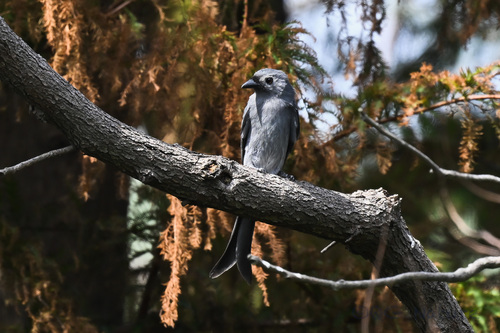 Grijze drongo
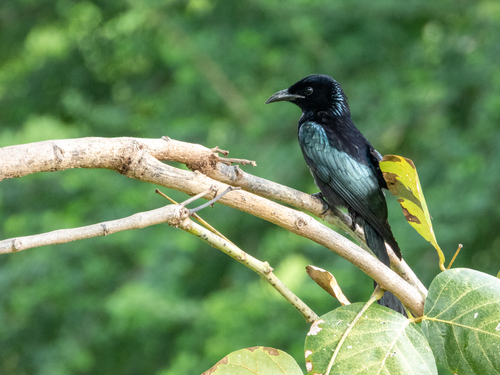 Haarkuifdrongo
Kort gezegd
De meest betrouwbare manier om Grijze drongo van Haarkuifdrongo te scheiden is door de algehele kleur en structuur: Grijze drongo is een slanker, voornamelijk donkergrijze vogel (soms met witte gezichtsmarkeringen), terwijl Haarkuifdrongo veel zwaarder is en typisch glanzend zwart. De staart van de Grijze drongo is lang, diep gevorkt en minder uitgespreid dan die van de Haarkuifdrongo, en hij zit zeer rechtop wanneer hij zit. Juveniele Grijze drongos zijn dof bruinachtig-grijs, nooit glanzend, terwijl Haarkuifdrongo consistent zwartachtig is. Als je een drongo ziet met een witte oogvlek of een bleke gezicht, is het een Grijze drongo. In de vlucht lijkt de Grijze drongo slanker en mist hij de zware, kuifachtige uitstraling van de Haarkuifdrongo.
Herkenningstips
- Algehele kleur: Grijze drongo is donkergrijs (soms zeer donker, maar nooit echt zwart), terwijl Haarkuifdrongo glanzend zwart is. Dit is het meest consistente veldkenmerk voor volwassenen.
- Gezichtsmarkeringen: Als je een witte vlek rond het oog of op het gezicht ziet, is het Grijze drongo (niet alle Grijze drongos hebben dit, maar Haarkuifdrongo heeft dit nooit).
- Staartvorm: De staart van de Grijze drongo is lang, diep gevorkt en minder uitgespreid dan die van de Haarkuifdrongo. De staart van de Haarkuifdrongo is ook lang en gevorkt, maar lijkt zwaarder en meer uitgespreid.
- Structuur: Grijze drongo is slanker en delicater, met een lichtere bouw en kortere benen. Haarkuifdrongo is veel robuuster en zwaarder.
- Zittende houding: Grijze drongo zit zeer rechtop en zit vaak hoog en prominent; Haarkuifdrongo is zwaarder en lijkt misschien niet zo rechtop.
- Juveniele verenkleed: Jonge Grijze drongos zijn dof bruinachtig-grijs, nooit zwartachtig of glanzend. Als je een bruinachtige onvolwassen drongo ziet, is het Grijze drongo. Onvolwassen Haarkuifdrongo's worden niet als bruinachtig beschreven.
- Glans: Grijze drongo mist de blauw-zwarte glans van Haarkuifdrongo. Als de vogel glanzend of gespikkeld lijkt, is het geen Grijze drongo.
- Iris kleur: Grijze drongo heeft een karmijnrode iris (tenzij in de Indiase longicaudatus-groep), terwijl de iris kleur van Haarkuifdrongo niet is beschreven; gebruik met voorzichtigheid.
- Witte rictale vlek: Grijze drongo mist een witte rictale vlek; niet beschreven voor Haarkuifdrongo, dus niet sterk diagnostisch.
- Vlucht silhouet: Grijze drongo lijkt slanker en minder kuifachtig in de vlucht, met een langere, smalere staart. Haarkuifdrongo lijkt zwaarder en kan een meer kuifachtige omtrek vertonen.
- Stem: Als je een nasale, twangy 'drangh gip' of nabootsing van andere vogels hoort, is het waarschijnlijk Grijze drongo. De stem van Haarkuifdrongo wordt hier niet beschreven.
- Habitat: In heuvelbossen, vooral in de winter of migratie, is Grijze drongo waarschijnlijker. De habitat van Haarkuifdrongo is niet gespecificeerd, dus gebruik dit alleen als ondersteunend bewijs.
- Groepsgrootte: Grijze drongo wordt meestal alleen of in kleine groepen gezien, soms in kleine zwermen tijdens de migratie. De sociale gewoonten van Haarkuifdrongo zijn niet beschreven, dus dit is alleen zwak diagnostisch.
- Grootte-indruk: Als de vogel zeer robuust en zwaar lijkt, vermoed dan Haarkuifdrongo; als hij slank en delicaat lijkt, vermoed dan Grijze drongo.
- Let op ondersoortenvariatie: Sommige Grijze drongos (bijv. longicaudatus) zijn zeer donker en kunnen bijna zwart lijken, maar controleer altijd op slanker bouw, gebrek aan glans en mogelijke witte gezichtsmarkeringen.
Grootte
Grijze drongo is aanzienlijk lichter (38g) dan Haarkuifdrongo (77g) [wikidata], waardoor de laatste bijna twee keer zo zwaar is. Dit formaatverschil is vaak evident in het veld: Haarkuifdrongo lijkt robuuster en zwaarder, terwijl Grijze drongo merkbaar slanker en delicater is. De staartlengte is lang bij beide, maar de staart van de Grijze drongo is proportioneel langer en minder uitgespreid.
Verenkleed
- Juveniele/onvolwassen vogels: Onvolwassen Grijze drongos zijn dof bruinachtig-grijs, zonder enige glans, terwijl onvolwassen Haarkuifdrongos niet als bruinachtig worden beschreven en over het algemeen zwartachtig zijn vanaf een vroege leeftijd. Geen onderscheidend bovenvleugelpatroon wordt voor beide soorten opgemerkt in de bronnen.
- Volwassenen: Grijze drongo is voornamelijk donkergrijs (schaduw varieert per ondersoort), soms met witte vlekken rond het oog of gezicht (vooral in sommige Zuidoost-Aziatische vormen). De staart is lang, diep gevorkt en minder uitgespreid dan die van de Haarkuifdrongo. Haarkuifdrongo is glanzend zwart over het algemeen, met een zwaardere, robuustere uitstraling en een onderscheidende 'haarkuif' uitstraling (niet in detail beschreven in de bronnen, maar geïmpliceerd door de naam en het contrast met Grijze drongo). Grijze drongo mist de blauw-zwarte glans van Haarkuifdrongo en lijkt nooit echt zwart.
- Gezichtsmarkeringen: Alleen Grijze drongo toont wit op het gezicht of rond het oog in sommige ondersoorten; Haarkuifdrongo doet dit nooit.
Gedrag
Grijze drongo heeft de neiging om zeer rechtop en prominent te zitten, vaak hoog in bomen, en zoekt voedsel door uit te vliegen voor insecten of door te scharrelen van stammen. Het wordt meestal alleen, in paren of kleine groepen gezien, en migrerende populaties kunnen kleine zwermen vormen. Het gedrag van Haarkuifdrongo is niet gedetailleerd in de bronnen, maar het is over het algemeen robuuster en kan zwaarder lijken in de vlucht en in rust.
Habitat
Grijze drongo geeft de voorkeur aan hoge bossen en houdt vooral van heuvelbossen in de winter. Het is waarschijnlijker te vinden in upland of beboste habitats, vooral tijdens de migratie. De habitat van Haarkuifdrongo is niet beschreven in de verstrekte aantekeningen, dus habitat is alleen zwak diagnostisch tenzij je je in een bekend overwinteringsgebied van Grijze drongo bevindt.
Geluid
De roep van Grijze drongo wordt beschreven als een nasale, twangy 'drangh gip' of 'gip-gip-drangh.' Het is ook een bekwame nabootser, die soms de fluitende noten van andere vogels zoals de gewone iora imiteert. Geen vocale details worden gegeven voor Haarkuifdrongo in de bronnen, dus de stem is alleen nuttig als je de kenmerkende roep of nabootsing van Grijze drongo hoort.