

amethyst-throated sunangel vs tourmaline sunangel
Heliangelus amethysticollis versus Heliangelus exortis
Jogue um quiz com amethyst-throated sunangel e tourmaline sunangel
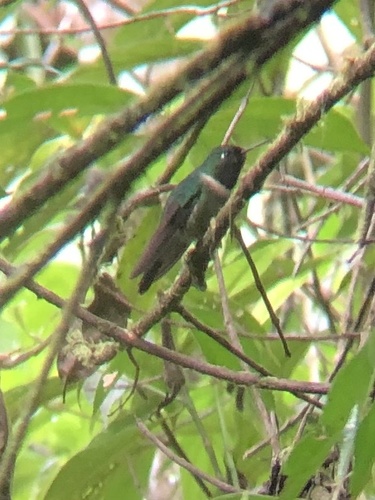 amethyst-throated sunangel
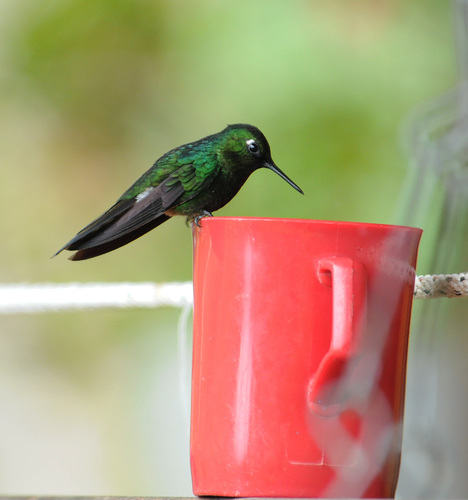 tourmaline sunangel
Em resumo
Para separar o amethyst-throated sunangel do tourmaline sunangel, concentre-se primeiro no padrão da garganta e do peito: o macho adulto do amethyst-throated apresenta uma gorja rosa ametista bordada por uma estreita faixa preta e depois uma ampla faixa canela, enquanto os machos do tourmaline têm uma gorja rosa brilhante com uma borda verde abaixo e um queixo roxo-azulado escuro. As fêmeas e os imaturos são mais complicados, mas as fêmeas do amethyst-throated têm uma garganta enferrujada com manchas pretas, enquanto as fêmeas do tourmaline apresentam uma garganta esbranquiçada com manchas verdes ou escuras. Ambas as espécies têm estrutura e tamanho semelhantes, mas diferenças sutis na cor da faixa frontal e no padrão das partes inferiores podem ajudar. A distribuição geográfica também é uma forte pista: o amethyst-throated é encontrado ao sul do Equador, enquanto o tourmaline é limitado à Colômbia e ao Equador.
Dicas de identificação
- Padrão da gorja e do peito do macho adulto: O amethyst-throated apresenta uma gorja rosa ametista com uma borda preta estreita e uma ampla faixa canela abaixo; o tourmaline tem uma gorja rosa brilhante com uma borda verde e um queixo roxo-azulado escuro. Esta é a marca mais confiável para machos adultos.
- Cor da faixa frontal: Ambas as espécies têm uma faixa frontal verde acima do bico em machos adultos, mas as fêmeas do tourmaline não possuem essa característica. Algumas subespécies do amethyst-throated têm faixas frontais turquesa ou mais claras, o que pode ajudar em certas regiões.
- Garganta de fêmeas/imaturos: A fêmea do amethyst-throated tem uma garganta enferrujada com manchas pretas; a fêmea do tourmaline tem uma garganta esbranquiçada com manchas verdes/escuras e às vezes algumas penas rosadas. Machos juvenis do tourmaline têm um queixo branco, ao contrário do amethyst-throated.
- Partes inferiores: O amethyst-throated geralmente apresenta uma barriga canela ou cinza clara com discos verdes, às vezes mais clara ou cinza em subespécies; o tourmaline tem partes inferiores cinza escuro com manchas verdes redondas.
- Padrão da cauda: Ambas têm penas centrais da cauda verde-bronze e externas azul-negras ou escuras, não separando de forma confiável, mas verifique diferenças sutis se vistas bem.
- Bico: Ambas têm bicos retos e escuros de comprimento semelhante; a forma do bico não é um separador.
- Tamanho e estrutura: Ambas são beija-flores compactos e de bico curto, medindo 10–11 cm de comprimento; o tamanho não é útil para separação.
- Confusão de juvenis/imaturos: O imaturo do amethyst-throated se assemelha à fêmea (garganta enferrujada, manchas pretas); machos juvenis do tourmaline têm um queixo branco, que é único entre os dois.
- Variação de subespécies: O amethyst-throated apresenta variação regional na cor da gorja e da barriga (por exemplo, gorja roxa avermelhada, barriga esbranquiçada ou canela em algumas formas); o tourmaline é mais consistente, mas sempre verifique a borda verde abaixo da gorja em machos.
- Distribuição geográfica: Na Colômbia, espere encontrar o tourmaline; na Bolívia ou no Peru, apenas o amethyst-throated. No Equador, ambos são possíveis, então confie na plumagem.
- Habitat: Ambas preferem bordas e interiores de florestas andinas úmidas, então o habitat não é um separador forte, exceto por país.
- Comportamento: Ambas defendem territórios ricos em néctar e caçam insetos de poleiros; o comportamento não é diagnóstico.
- Visões de aves empoleiradas vs. em voo: A maioria das marcas de campo (gorja, faixa frontal, garganta, barriga) são melhor vistas em aves empoleiradas; visões em voo podem mostrar a cor das partes inferiores e o padrão da cauda, mas são menos confiáveis para separação.
- Armadilhas de sexagem: Fêmeas e imaturos são muito mais difíceis de separar do que machos adultos; concentre-se na cor e no padrão da garganta e use a distribuição como um backup.
- Quando em dúvida: Se você não consegue ver bem a gorja ou a garganta, e está no Equador, anote todas as características possíveis e considere a localização e a elevação para ajudar a restringir a identificação.
Tamanho
Ambas as espécies são muito próximas em tamanho, com o amethyst-throated sunangel medindo cerca de 10 cm e pesando 3,8–7,7 g, e o tourmaline sunangel medindo 10–11 cm e pesando 3,5–8,5 g (machos) ou 4–5,2 g (fêmeas). No campo, o tamanho não é um separador confiável entre esses dois, pois a sobreposição é quase completa e ambas têm uma estrutura compacta de beija-flor de bico curto.
Plumagem
Para machos adultos, o padrão da gorja e do peito é o mais diagnóstico: os machos do amethyst-throated têm uma gorja rosa ametista com uma borda preta estreita e uma ampla faixa canela abaixo, enquanto os machos do tourmaline apresentam uma gorja rosa brilhante com uma borda verde e um queixo roxo-azulado escuro. A faixa frontal acima do bico é verde brilhante no amethyst-throated (às vezes turquesa ou mais clara em subespécies) e verde brilhante no tourmaline, mas as fêmeas do tourmaline não possuem essa faixa frontal. As fêmeas do amethyst-throated têm uma garganta enferrujada com manchas pretas, enquanto as fêmeas do tourmaline têm uma garganta esbranquiçada com manchas verdes a escuras e às vezes algumas penas rosadas. Machos juvenis do tourmaline têm um queixo branco, enquanto os imaturos do amethyst-throated se assemelham à fêmea. Ambas as espécies têm penas centrais da cauda verde-bronze e penas externas azul-negras ou escuras, e partes inferiores manchadas de verde, mas o amethyst-throated frequentemente apresenta uma barriga canela ou cinza clara com discos verdes, enquanto as partes inferiores do tourmaline são cinza escuro com manchas verdes redondas.
Comportamento
Ambas as espécies se alimentam de néctar e insetos, defendendo territórios ricos em flores. O amethyst-throated é conhecido por se alimentar a alturas de até 6 m e permanecer perto da cobertura na borda ou interior da floresta, frequentemente caçando insetos de um poleiro. Não há diferença comportamental observada que seja confiavelmente diagnóstica no campo entre essas duas.
Habitat
O amethyst-throated sunangel se estende da Bolívia pelo Peru até o Equador, enquanto o tourmaline sunangel é restrito à Colômbia e ao Equador. Ambas habitam florestas andinas úmidas e bordas, mas se vistas na Colômbia, é quase certamente o tourmaline; na Bolívia ou no Peru, é o amethyst-throated. No Equador, ambos podem ocorrer, então atenção cuidadosa à plumagem é necessária.
amethyst-throated sunangel · tourmaline sunangel · Minhas aves difíceis