

Colibrí Gorjiamatista (grupo amethysticollis) vs Colibrí Turmalina
Heliangelus amethysticollis frente a Heliangelus exortis
Juega un quiz con Colibrí Gorjiamatista (grupo amethysticollis) y Colibrí Turmalina
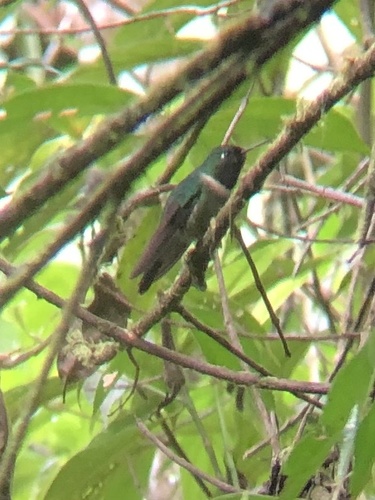 Colibrí Gorjiamatista (grupo amethysticollis)
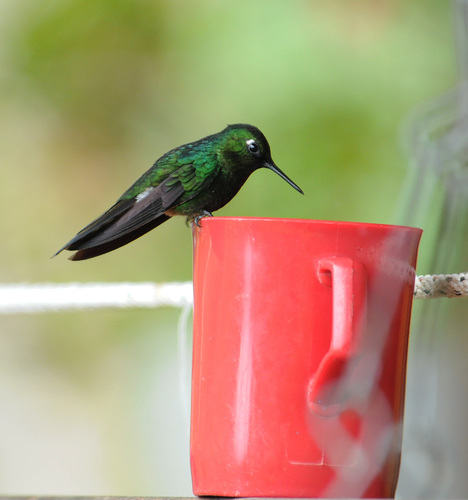 Colibrí Turmalina
En breve
Para separar el Colibrí Gorjiamatista del Colibrí Turmalina, enfócate primero en el patrón de la garganta y el pecho: el macho adulto del Colibrí Gorjiamatista muestra un gorjeo rosa amethyst con un borde negro estrecho y luego una banda canela amplia, mientras que los machos del Colibrí Turmalina tienen un gorjeo rosa brillante con un borde verde abajo y un mentón púrpura-azul oscuro. Las hembras y los inmaduros son más complicados, pero las hembras del Colibrí Gorjiamatista tienen una garganta oxidada con manchas negras, mientras que las hembras del Colibrí Turmalina muestran una garganta blanquecina con manchas verdes o oscuras. Ambas especies tienen una estructura y tamaño similares, pero las diferencias sutiles en el color del frontal y el patrón de las partes inferiores pueden ayudar. El rango geográfico también es una pista fuerte: el Colibrí Gorjiamatista se encuentra al sur de Ecuador, mientras que el Colibrí Turmalina está limitado a Colombia y Ecuador.
Consejos de identificación
- Patrón de gorjeo y pecho del macho adulto: El Colibrí Gorjiamatista muestra un gorjeo rosa amethyst con un borde negro estrecho y una banda canela amplia abajo; el Colibrí Turmalina tiene un gorjeo rosa brillante con un borde verde y un mentón púrpura-azul oscuro. Esta es la marca más confiable para los machos adultos.
- Color del frontal: Ambas especies tienen un frontal verde sobre el pico en los machos adultos, pero las hembras del Colibrí Turmalina carecen completamente de esta característica. Algunas subespecies del Colibrí Gorjiamatista tienen frontales turquesa o más pálidos, lo que puede ayudar en ciertas regiones.
- Garganta de hembras/inmaduros: La hembra del Colibrí Gorjiamatista tiene una garganta oxidada con manchas negras; la hembra del Colibrí Turmalina tiene una garganta blanquecina con manchas verdes/oscuras y a veces algunas plumas rosas. Los machos juveniles del Colibrí Turmalina tienen un mentón blanco, a diferencia del Colibrí Gorjiamatista.
- Partes inferiores: El Colibrí Gorjiamatista típicamente muestra un vientre color canela o grisáceo con discos verdes, a veces más pálido o gris en subespecies; el Colibrí Turmalina tiene partes inferiores grisáceas oscuras con manchas verdes redondas.
- Patrón de la cola: Ambos tienen plumas centrales de cola verde-bronce y exteriores azul-negro o negruzcas, no separándose de manera confiable, pero verifica diferencias sutiles si se ven bien.
- Pico: Ambos tienen picos rectos y negruzcos de longitud similar; la forma del pico no es un separador.
- Tamaño y estructura: Ambos son colibríes compactos y de pico corto, de 10 a 11 cm de largo; el tamaño no es útil para la separación.
- Confusión de juveniles/inmaduros: El inmaduro del Colibrí Gorjiamatista se asemeja a la hembra (garganta oxidada, manchas negras); los machos juveniles del Colibrí Turmalina tienen un mentón blanco, lo que es único entre los dos.
- Variación de subespecies: El Colibrí Gorjiamatista muestra variación regional en el color del gorjeo y el vientre (por ejemplo, gorjeo púrpura rojizo, vientre blanquecino o canela en algunas formas); el Colibrí Turmalina es más consistente, pero siempre verifica el borde verde debajo del gorjeo en los machos.
- Rango geográfico: En Colombia, espera el Colibrí Turmalina; en Bolivia o Perú, solo el Colibrí Gorjiamatista. En Ecuador, ambos son posibles, así que confía en el plumaje.
- Hábitat: Ambos prefieren los bordes e interiores de bosques andinos húmedos, por lo que el hábitat no es un fuerte separador excepto por país.
- Comportamiento: Ambos defienden territorios ricos en néctar y cazan insectos desde posaderos; el comportamiento no es diagnóstico.
- Vistas posadas vs. en vuelo: La mayoría de las marcas de campo (gorjeo, frontal, garganta, vientre) se ven mejor en aves posadas; las vistas en vuelo pueden mostrar el color de las partes inferiores y el patrón de la cola, pero son menos confiables para la separación.
- Trampas para la identificación de sexos: Las hembras y los inmaduros son mucho más difíciles de separar que los machos adultos; enfócate en el color y patrón de la garganta, y usa el rango como respaldo.
- Cuando tengas dudas: Si no puedes ver bien el gorjeo o la garganta, y estás en Ecuador, anota todas las características posibles y considera la ubicación y elevación para ayudar a reducir la identificación.
Tamaño
Ambas especies son muy similares en tamaño, con el Colibrí Gorjiamatista midiendo alrededor de 10 cm y pesando entre 3.8 y 7.7 g, y el Colibrí Turmalina de 10 a 11 cm y 3.5 a 8.5 g (machos) o 4 a 5.2 g (hembras). En el campo, el tamaño no es un separador confiable entre estos dos, ya que la superposición es casi completa y ambos tienen una estructura de colibrí compacto y de pico corto.
Plumaje
Para los machos adultos, el patrón de gorjeo y pecho es el más diagnóstico: los machos del Colibrí Gorjiamatista tienen un gorjeo rosa amethyst con un borde negro estrecho y una banda canela amplia abajo, mientras que los machos del Colibrí Turmalina muestran un gorjeo rosa brillante con un borde verde y un mentón púrpura-azul oscuro. El frontal sobre el pico es de un verde brillante en el Colibrí Gorjiamatista (a veces turquesa o más pálido en subespecies), y verde brillante en el Colibrí Turmalina, pero las hembras del Colibrí Turmalina carecen completamente de este frontal. Las hembras del Colibrí Gorjiamatista tienen una garganta oxidada con manchas negras, mientras que las hembras del Colibrí Turmalina tienen una garganta blanquecina con manchas verdes a oscuras y a veces algunas plumas rosas. Los machos juveniles del Colibrí Turmalina tienen un mentón blanco, mientras que los inmaduros del Colibrí Gorjiamatista se asemejan a la hembra. Ambas especies tienen plumas centrales de cola verde-bronce y plumas exteriores azul-negro o negruzcas, y partes inferiores con manchas verdes, pero el Colibrí Gorjiamatista a menudo muestra un vientre canela o grisáceo con discos verdes, mientras que las partes inferiores del Colibrí Turmalina son grisáceas oscuras con manchas verdes redondas.
Comportamiento
Ambas especies se alimentan de néctar e insectos, defendiendo territorios ricos en flores. El Colibrí Gorjiamatista es conocido por alimentarse a alturas de hasta 6 m y permanecer cerca de la cobertura en el borde o interior del bosque, a menudo cazando insectos desde un posadero. No se ha notado ninguna diferencia de comportamiento que sea confiablemente diagnóstica en el campo entre estos dos.
Hábitat
El Colibrí Gorjiamatista se extiende desde Bolivia a través de Perú hasta Ecuador, mientras que el Colibrí Turmalina está restringido a Colombia y Ecuador. Ambos habitan bosques andinos húmedos y bordes, pero si se ve en Colombia, es casi seguro que es el Colibrí Turmalina; en Bolivia o Perú, es el Colibrí Gorjiamatista. En Ecuador, ambos pueden ocurrir, por lo que se necesita atención cuidadosa al plumaje.
Colibrí Gorjiamatista (grupo amethysticollis) · Colibrí Turmalina · Mis aves difíciles