

amethyst-throated mountain-gem vs white-eared hummingbird
Lampornis amethystinus versus Basilinna leucotis
Jogue um quiz com amethyst-throated mountain-gem e white-eared hummingbird
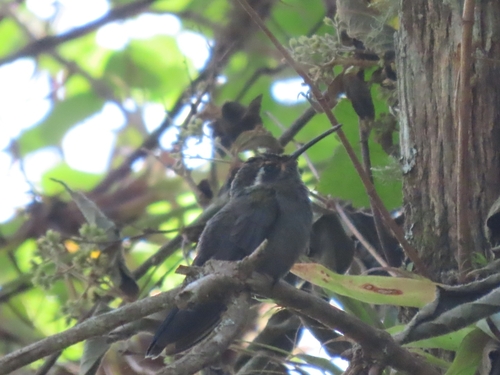 amethyst-throated mountain-gem
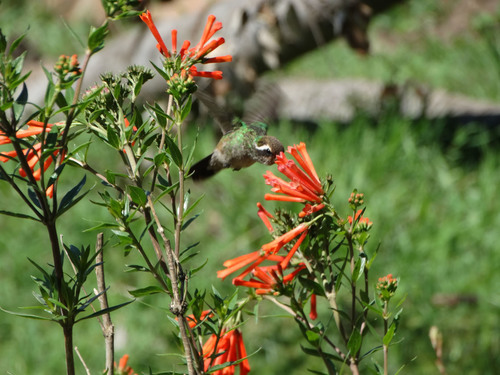 white-eared hummingbird
Em resumo
A marca de campo mais confiável para separar o amethyst-throated mountain-gem do white-eared hummingbird é a cor e a extensão da mancha da garganta (gorget) em machos adultos: o mountain-gem apresenta um gorget rosa brilhante a violeta (variando por subespécie), enquanto o white-eared hummingbird tem um queixo e garganta superiores violeta-azulados com garganta inferior verde metálica. Ambas as espécies têm uma faixa branca ousada atrás do olho, mas a do white-eared hummingbird é mais larga e mais marcante, especialmente nos machos. A cor do bico também é uma diferença chave: os machos de white-eared hummingbirds têm um bico predominantemente vermelho com a ponta preta, enquanto os mountain-gems têm um bico preto reto em ambos os sexos. Os juvenis e fêmeas de ambas as espécies podem ser confusos, mas a fêmea e os jovens do mountain-gem apresentam uma garganta canela ou pálida, não as partes inferiores cinza-escuras ou manchadas de verde do white-eared. O tamanho e a estrutura são sutilmente diferentes, com o mountain-gem sendo visivelmente maior e mais pesado, e tendo uma cauda mais larga e ligeiramente bifurcada.
Dicas de identificação
- Cor da garganta em machos adultos: Procure um gorget rosa brilhante, violeta ou azul no amethyst-throated mountain-gem (a cor varia por subespécie), em comparação com um queixo violeta-azulado e garganta inferior verde metálica no white-eared hummingbird. Esta é a marca mais confiável em boa luz.
- Faixa branca atrás do olho: Ambas as espécies têm uma faixa branca atrás do olho, mas é mais larga e mais marcante no white-eared hummingbird, especialmente nos machos. No mountain-gem, está presente, mas é menos ousada.
- Cor do bico: Os machos de white-eared hummingbirds têm um bico predominantemente vermelho com a ponta preta, enquanto ambos os sexos de mountain-gem têm um bico preto reto. As fêmeas de white-eared têm um bico predominantemente escuro com um pouco de vermelho ou laranja na base; verifique cuidadosamente em boa luz.
- Tamanho e estrutura: O mountain-gem é maior e mais robusto, com uma cauda mais larga e ligeiramente bifurcada. O white-eared é menor, mais leve e parece mais delicado, com uma cauda mais graduada.
- Coroa e face: Os machos de white-eared hummingbirds têm uma testa metálica violeta ou azulada e um rosto predominantemente preto, enquanto os machos do mountain-gem têm uma coroa verde escura e auriculares escuros. As fêmeas de white-eared têm uma coroa marrom escura, contrastando com a coroa verde das fêmeas do mountain-gem.
- Partes superiores e rabo: Os machos do mountain-gem têm um rabo bronze e coberturas de cauda superiores escuras; os white-eared têm partes superiores verde metálico brilhante a verde bronze com rabo bronze e penas de cobertura com bordas enferrujadas.
- Partes inferiores (fêmeas/juvenis): As fêmeas do mountain-gem têm uma garganta canela e partes inferiores cinza-escuras; as fêmeas do white-eared têm partes inferiores cinza pálido a branquíssimo com manchas verdes metálicas e não apresentam os tons canela.
- Padrão da cauda: A cauda do mountain-gem é preta com pontas cinzas nas penas externas e ligeiramente bifurcada; a cauda do white-eared é mais graduada, com penas centrais verde bronze e penas externas preto bronze com pontas verdes. Isso pode ser sutil, a menos que a cauda esteja aberta.
- Machos juvenis: Os jovens machos do mountain-gem podem mostrar algumas penas rosa na garganta; os juvenis do white-eared não são bem descritos, mas provavelmente não apresentam rosa ou canela na garganta.
- Contexto do habitat: Em interiores de florestas perenes montanas ou de pinheiros e carvalhos, o mountain-gem é mais provável; em bordas, clareiras ou jardins, especialmente em altitudes mais baixas, o white-eared é favorecido.
- Comportamento: O white-eared hummingbird é mais agressivo e territorial em alimentadores ou áreas de flores, frequentemente perseguindo outros beija-flores. O mountain-gem é menos territorial, exceto durante a exibição.
- Exibição: Se observado em exibição, os machos do mountain-gem realizam loops e mergulhos aéreos, geralmente pela manhã ou à noite.
- Vocalizações: Se você ouvir um murmúrio silencioso e complexo com uma introdução de duas sílabas, pode indicar o mountain-gem. As vocalizações do white-eared não são distintas para separação em campo.
- Variação entre subespécies: Esteja ciente de que as subespécies de mountain-gem (especialmente L. a. margaritae) podem ter gorgets que vão do violeta ao azul real, potencialmente sobrepondo-se à cor da garganta do white-eared, mas o tamanho geral, a cor do bico e o padrão facial ainda os separarão.
- Armadilhas: Em luz fraca, as cores da garganta podem parecer opacas ou semelhantes; confie na cor do bico, no tamanho e na ousadia da faixa branca atrás do olho como marcas de backup. Juvenis e fêmeas são os mais facilmente confundidos—procure tons canela no mountain-gem, manchas verdes no white-eared.
Tamanho
O amethyst-throated mountain-gem é distintamente maior, medindo 11,5–12,5 cm de comprimento e pesando 5–7,8 g (machos) ou 5–5,8 g (fêmeas) [wikipedia]. Em contraste, o white-eared hummingbird é menor, com 9–10 cm e mais leve, pesando 3,6 g (machos) e 3,2 g (fêmeas) [wikipedia]. Essa diferença de tamanho é geralmente aparente em comparação direta ou com experiência, especialmente em áreas onde ambas as espécies ocorrem. O mountain-gem também parece mais robusto e volumoso, enquanto o white-eared é mais delicado e ágil.
Plumagem
- Juvenis/immaturos: Os juvenis de amethyst-throated mountain-gems se assemelham às fêmeas, com partes inferiores cinza-escuras e uma garganta canela (machos podem mostrar algumas penas rosa na garganta). Os juvenis de white-eared hummingbirds não são descritos em detalhes, mas provavelmente se assemelham a fêmeas adultas, com partes inferiores cinza pálido a branquíssimo e manchas verdes metálicas, sem os tons canela do mountain-gem.
- Machos adultos: Os machos de amethyst-throated mountain-gem têm uma coroa e costas verde escuras, rabo bronze, coberturas de cauda superiores escuras e um gorget rosa brilhante (ou violeta/azul em algumas subespécies). O peito e a barriga são cinza-escuros, as coberturas de cauda inferiores são amarelas pálidas. Os machos de white-eared hummingbird têm uma testa metálica violeta ou azulada, rosto preto, faixa branca larga atrás do olho, partes superiores verde metálico brilhante a verde bronze, e um queixo/garganta superior violeta-azulado com garganta inferior verde metálica. Suas partes inferiores são bronze a verde bronze com um centro cinza-branco opaco.
- Fêmeas adultas: As fêmeas do mountain-gem são semelhantes aos machos, mas com uma garganta canela e cor geral mais apagada. As fêmeas de white-eared hummingbirds têm uma coroa marrom escura, não apresentam o gorget brilhante, e mostram partes inferiores cinza pálido a branquíssimo com manchas verdes metálicas. Ambas têm uma faixa branca atrás do olho, mas é mais larga e mais óbvia no white-eared.
- Cauda: O mountain-gem tem uma cauda larga e ligeiramente bifurcada, preta com pontas cinzas nas penas externas. A cauda do white-eared hummingbird é mais graduada, com penas centrais verde bronze e penas externas preto bronze com pontas verdes.
Comportamento
Ambas as espécies se alimentam de néctar e pequenos insetos, mas o white-eared hummingbird é notavelmente territorial, defendendo áreas de alimentação até mesmo contra beija-flores maiores. O amethyst-throated mountain-gem geralmente não é territorial, embora os machos possam defender um território durante a exibição. O white-eared hummingbird frequentemente forrageia em níveis mais baixos a médios e é mais provável de ser visto fazendo incursões rápidas e secretas em territórios de outros pássaros. As exibições do mountain-gem incluem loops e mergulhos aéreos, geralmente pela manhã e à noite.
Habitat
O amethyst-throated mountain-gem é restrito a florestas perenes montanas e de pinheiros e carvalhos no México e no norte da América Central, tipicamente em altitudes de 900 a 3.000 m. O white-eared hummingbird tem uma faixa mais ampla, desde o sudoeste dos EUA até a Nicarágua, e é encontrado em uma variedade maior de habitats florestais, incluindo bordas, clareiras e jardins, frequentemente em altitudes semelhantes, mas às vezes mais baixas. A sobreposição é possível no México, mas o white-eared é mais provável em habitats perturbados ou de borda.
Voz
A canção do amethyst-throated mountain-gem é um murmúrio silencioso e complexo com uma frase introdutória de duas sílabas e até nove frases complexas; ambos os sexos cantam. Os chamados incluem zumbidos persistentes, cliques rápidos curtos (territoriais) e apitos agudos (exibição). As vocalizações do white-eared hummingbird não são detalhadas nas notas, portanto, não são diagnosticamente confiáveis para separação.
amethyst-throated mountain-gem · white-eared hummingbird · Minhas aves difíceis