

martim-pescador-verde vs martim-pescador-pequeno
Chloroceryle amazona versus Chloroceryle americana
Jogue um quiz com martim-pescador-verde e martim-pescador-pequeno
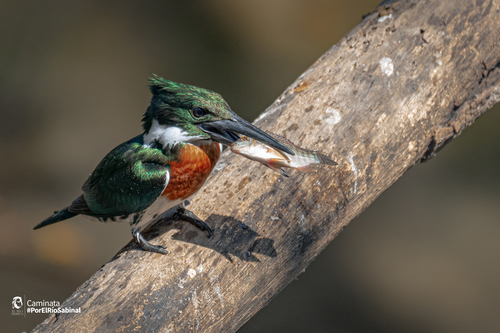 martim-pescador-verde
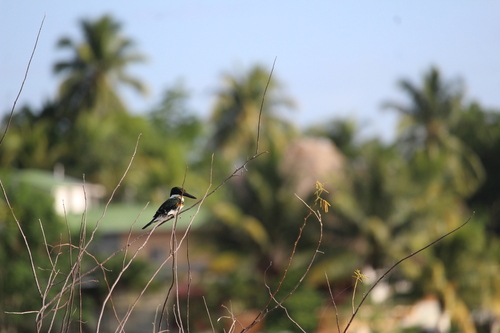 martim-pescador-pequeno
Em resumo
A marca de campo mais confiável entre o martim-pescador-verde e o martim-pescador-pequeno é o tamanho: o martim-pescador-verde é muito maior e mais robusto, com um bico mais pesado e uma crista desgrenhada, enquanto o martim-pescador-pequeno é visivelmente menor, mais esbelto e não possui crista. Os juvenis de martim-pescador-verde apresentam manchas cor de palha nas coberturas das asas superiores e uma grande mancha amarela na base do bico, que está ausente nos juvenis do martim-pescador-pequeno. Nos adultos, ambos os sexos do martim-pescador-verde têm partes superiores extensas de verde escuro e um colar branco, mas os machos têm um peito ruivo rico (as fêmeas têm verde no peito), enquanto os machos do martim-pescador-pequeno têm um peito ruivo e as fêmeas uma faixa salpicada de verde. Em voo, o martim-pescador-pequeno mostra mais branco na cauda e manchas brancas proeminentes nas asas, especialmente nas penas de voo, que são menos óbvias no martim-pescador-verde. Ambas as espécies se sobrepõem em alcance e habitat, mas o martim-pescador-verde prefere vias navegáveis maiores e mais abertas.
Dicas de identificação
- O tamanho é a primeira verificação: O martim-pescador-verde é muito maior e mais pesado que o martim-pescador-pequeno. Se o pássaro parecer pequeno e delicado, é quase certamente um martim-pescador-pequeno.
- Cresta vs. coroa lisa: O martim-pescador-verde tem uma crista desgrenhada, muitas vezes óbvia quando empoleirado ou alerta, enquanto o martim-pescador-pequeno não possui crista e tem um perfil de cabeça liso.
- Tamanho e forma do bico: O bico do martim-pescador-verde é mais longo, mais profundo e mais pesado, especialmente óbvio de perfil. O bico do martim-pescador-pequeno é proporcionalmente menor e mais fino.
- Marcas juvenis: Os juvenis de martim-pescador-verde apresentam manchas cor de palha nas coberturas das asas superiores e uma grande mancha amarela na base do bico. Os juvenis do martim-pescador-pequeno têm pequenas manchas cor de palha na coroa e nas coberturas das asas, mas não possuem a mancha amarela no bico.
- Cor do peito do macho adulto: Ambos os machos têm ruivo no peito, mas o do martim-pescador-verde é mais rico e cobre mais área, com lados verde escuro. O ruivo do martim-pescador-pequeno é mais limitado, com partes inferiores brancas e flancos salpicados de verde.
- Padrão do peito da fêmea adulta: A fêmea do martim-pescador-verde tem verde se estendendo pelo peito, quase se encontrando no meio; a fêmea do martim-pescador-pequeno tem uma garganta e peito brancos com uma faixa de manchas verdes (não verde sólido) ao longo do peito e parte superior da barriga.
- Manchas brancas nas asas e cauda: O martim-pescador-pequeno mostra duas ou mais fileiras de manchas brancas nas penas de voo e muito branco na cauda, especialmente visível em voo. O martim-pescador-verde não possui essas marcas brancas extensas.
- Padrão da cauda em voo: A cauda do martim-pescador-pequeno mostra muito branco nas penas externas; a cauda do martim-pescador-verde é principalmente verde com pouco branco.
- Altura do poleiro e comportamento: O martim-pescador-verde frequentemente se empoleira mais alto e de forma mais aberta, enquanto o martim-pescador-pequeno prefere poleiros baixos, próximos à água, e é mais ativo, frequentemente balançando a cauda.
- Contexto do habitat: Em rios ou lagos grandes e abertos, espere encontrar o martim-pescador-verde; em riachos pequenos, valas ou águas arbustivas, espere encontrar o martim-pescador-pequeno. Ambos podem se sobrepor, mas o contexto ajuda.
- Voz: Os chamados do martim-pescador-verde são altos, ásperos e semelhantes a rãs; os do martim-pescador-pequeno são menos bem descritos, mas geralmente mais suaves e menos ásperos. Use com cautela, a menos que experiente.
- Armadilhas na determinação do sexo: A fêmea do martim-pescador-verde pode ser confundida com a fêmea do martim-pescador-pequeno devido à falta de ruivo, mas a faixa de peito verde sólido (martim-pescador-verde) vs. faixa salpicada de verde (martim-pescador-pequeno) é a chave.
- Diferenças sutis na tonalidade de verde: As partes superiores do martim-pescador-verde são de um verde bronzeado escuro; as do martim-pescador-pequeno são variáveis, mas geralmente mais claras e mais salpicadas.
- Cor da base do bico em juvenis: Apenas o juvenil do martim-pescador-verde apresenta uma grande mancha amarela na base do bico; o martim-pescador-pequeno nunca apresenta isso.
- Comparação direta: Se ambas as espécies estiverem presentes, as diferenças de tamanho, estrutura e padrão de asas/cauda são inconfundíveis. Sozinho, confie no tamanho, crista e manchas nas asas/cauda.
Tamanho
O martim-pescador-verde é significativamente maior (cerca de 30 cm de comprimento, 98–140 g) que o martim-pescador-pequeno (cerca de 20 cm, 32–40 g). A diferença de tamanho é óbvia no campo, com o martim-pescador-verde parecendo quase duas vezes mais pesado e muito mais robusto. O bico do martim-pescador-verde também é proporcionalmente mais longo e pesado, e sua estrutura geral é mais robusta, enquanto o martim-pescador-pequeno é pequeno e delicado em comparação. Se vistos juntos, a diferença é marcante, mas mesmo sozinhos, o tamanho do martim-pescador-verde é mais próximo do guarda-rios-cintado, enquanto o martim-pescador-pequeno é muito menor que qualquer outro martim-pescador da América do Norte.
Plumagem
-
Juvenis: Os juvenis de martim-pescador-verde têm manchas cor de palha nas coberturas das asas superiores e uma grande mancha amarela na base do bico—essas não estão presentes nos juvenis do martim-pescador-pequeno. Os juvenis do martim-pescador-pequeno se assemelham às fêmeas adultas, mas são mais apagados, com pequenas manchas cor de palha na coroa e nas coberturas das asas.
-
Adultos: Ambas as espécies têm partes superiores verdes e um colar branco, mas o verde do martim-pescador-verde é mais escuro e mais bronzeado, e ele possui uma crista desgrenhada. O macho adulto do martim-pescador-verde tem um peito ruivo rico com lados verde escuro e uma barriga branca com listras verdes; a fêmea adulta do martim-pescador-verde não possui o ruivo, com verde se estendendo pelo peito. Os machos do martim-pescador-pequeno também têm um peito ruivo, mas suas partes inferiores são brancas com manchas verdes nos flancos; as fêmeas têm uma faixa salpicada de verde ao longo do peito e uma garganta e peito cor de palha.
-
Padrão de voo/asas: O martim-pescador-pequeno mostra duas ou mais fileiras de manchas brancas nas penas de voo e muito branco na cauda, especialmente visível em voo. O martim-pescador-verde não mostra um branco tão extenso nas asas ou na cauda.
-
Bico: Ambos têm bicos pretos com alguma parte clara na base, mas o do martim-pescador-verde é mais pesado e mais longo, com uma base amarelada na mandíbula em juvenis.
Comportamento
Ambas as espécies caçam mergulhando de um poleiro, mas o martim-pescador-verde frequentemente usa poleiros mais altos e proeminentes e pode ocasionalmente pairar antes de mergulhar. O martim-pescador-pequeno tende a usar poleiros mais baixos, próximos à água, e é mais provável de ser visto balançando a cauda ou fazendo voos curtos ao longo da margem da água. O tamanho maior do martim-pescador-verde significa que ele frequentemente parece mais deliberado e menos ativo do que o menor e mais inquieto martim-pescador-pequeno.
Habitat
Ambas as espécies são encontradas ao longo de rios, riachos, lagos e lagoas nos Neotrópicos, frequentemente se sobrepondo em alcance. No entanto, o martim-pescador-verde prefere rios maiores e águas mais abertas, frequentemente com margens arborizadas, e é menos provável de ser encontrado em florestas densas ou riachos pequenos. O martim-pescador-pequeno é mais flexível, utilizando riachos menores, lagoas e até valas, e é mais provável de ser encontrado em águas mais apertadas, arbustivas ou florestadas. Em áreas de sobreposição, o martim-pescador-verde geralmente está em águas mais amplas, enquanto o martim-pescador-pequeno está em canais mais estreitos ou mais vegetados.
Voz
O martim-pescador-verde emite notas altas, ásperas e repetidas de 'tek' ou 'klek', às vezes um 'chrit' staccato ou chamados semelhantes a rãs, e uma série acelerada de notas claras 'see see see...su su su su'. As vocalizações do martim-pescador-pequeno não estão detalhadas aqui, mas ambas as espécies podem emitir chamados agudos e ruidosos típicos de martins-pescadores. Na prática, os chamados do martim-pescador-verde são mais altos e ásperos, mas a voz sozinha nem sempre é diagnóstica sem experiência.
martim-pescador-verde · martim-pescador-pequeno · Minhas aves difíceis