

Amazone-ijsvogel vs Groene ijsvogel
Chloroceryle amazona versus Chloroceryle americana
Speel een quiz met Amazone-ijsvogel en Groene ijsvogel
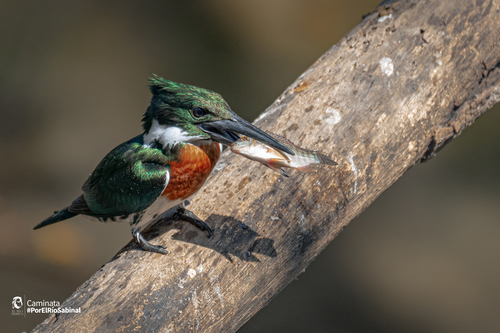 Amazone-ijsvogel
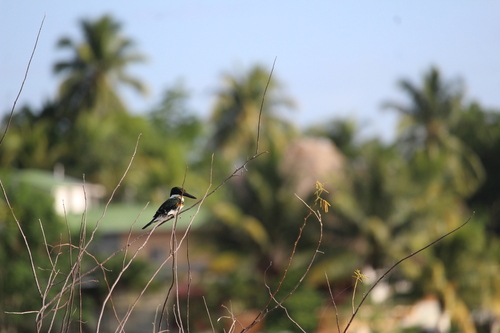 Groene ijsvogel
Kort gezegd
Het meest betrouwbare veldkenmerk tussen Amazone-ijsvogel en Groene ijsvogel is de grootte: Amazone is veel groter en robuuster, met een zwaardere snavel en een harige kuif, terwijl Groene merkbaar kleiner, slanker is en geen kuif heeft. Juveniele Amazone-ijsvogels vertonen buffkleurige vlekken op de deksels van de bovenste vleugel en een grote gele vlek aan de basis van de snavel, die afwezig is bij juveniele Groene ijsvogels. Bij volwassenen hebben beide geslachten van Amazone uitgebreide donkergroene bovenkanten en een witte kraag, maar mannetjes hebben een rijke roestbruine borst (vrouwtjes hebben groen over de borst), terwijl mannelijke Groene ijsvogels een roestbruine borst hebben en vrouwtjes een groengevlekte band. In de vlucht toont Groene ijsvogel meer wit in de staart en opvallende witte vlekken op de vleugels, vooral op de vluchtveren, wat minder duidelijk is bij Amazone. Beide soorten overlappen in verspreiding en habitat, maar Amazone geeft de voorkeur aan grotere, meer open waterwegen.
Herkenningstips
- Grootte is de eerste controle: Amazone-ijsvogel is veel groter en zwaarder dan Groene ijsvogel. Als de vogel klein en delicaat lijkt, is het bijna zeker Groene.
- Met kuif vs. gladde kroon: Amazone heeft een harige kuif, vaak duidelijk wanneer hij zit of alert is, terwijl Groene ijsvogel geen kuif heeft en een glad hoofdprofiel heeft.
- Snavelgrootte en -vorm: Amazone's snavel is langer, dieper en zwaarder, vooral duidelijk in profiel. Groene's snavel is proportioneel kleiner en fijner.
- Juveniele kenmerken: Juveniele Amazone-ijsvogels vertonen buffkleurige vlekken op de deksels van de bovenste vleugel en een grote gele vlek aan de basis van de snavel. Juveniele Groene ijsvogels hebben kleine buffkleurige vlekken op de kroon en vleugeldeksels maar missen de gele snavelvlek.
- Kleur van de borst van volwassen mannetjes: Beide mannetjes hebben roestbruin op de borst, maar Amazone's is rijker en bedekt meer oppervlakte, met donkergroene zijkanten. Groene's roestbruin is meer beperkt, met witte onderdelen en groengevlekte flanken.
- Patroon van de borst van volwassen vrouwtjes: Vrouwelijke Amazone heeft groen dat over de borst uitstrekt, bijna in het midden samenkomt; vrouwelijke Groene heeft een witte keel en borst met een band van groene spikkels (niet solide groen) over de borst en bovenbuik.
- Witte vlekken op vleugels en staart: Groene ijsvogel toont twee of meer rijen witte vlekken op de vluchtveren en veel wit in de staart, vooral zichtbaar in de vlucht. Amazone mist deze uitgebreide witte markeringen.
- Staartpatroon in de vlucht: Groene ijsvogel's staart toont veel wit op de buitenste veren; Amazone's staart is voornamelijk groen met weinig wit.
- Perch hoogte en gedrag: Amazone-ijsvogel zit vaak hoger en opener, terwijl Groene ijsvogel de voorkeur geeft aan lage, dicht bij het water gelegen zitplaatsen en actiever is, vaak flikkerend met zijn staart.
- Habitatcontext: Verwacht Amazone op grote, open rivieren of meren; verwacht Groene op kleine beken, greppels of struikachtig water. Beide kunnen overlappen, maar context helpt.
- Stem: Amazone's roepen zijn luid, ruw en kikkerachtig; Groene's zijn minder goed beschreven maar over het algemeen zachter en minder ruw. Gebruik met voorzichtigheid tenzij ervaren.
- Valstrikken bij het geslachtsbepalen: Vrouwelijke Amazone kan verward worden met vrouwelijke Groene vanwege het ontbreken van roestbruin, maar de solide groene borstband (Amazone) versus de groengevlekte band (Groene) is de sleutel.
- Subtiele verschillen in groene tint: Amazone's bovenkanten zijn donkerglanzend groen; Groene's zijn variabel maar over het algemeen bleker en meer gevlekt.
- Kleur van de snavelbasis bij juvenielen: Alleen juveniele Amazone toont een grote gele vlek aan de basis van de snavel; Groene toont dit nooit.
- Directe vergelijking: Als beide soorten aanwezig zijn, zijn de verschillen in grootte, structuur en vleugel/staartpatronen onmiskenbaar. Alleen, vertrouw op grootte, kuif, en vleugel/staartvlekken.
Grootte
Amazone-ijsvogel is significantly larger (about 30 cm long, 98–140 g) than Groene ijsvogel (about 20 cm, 32–40 g). The size gap is obvious in the field, with Amazon appearing almost twice as heavy and much bulkier. Amazon's bill is also proportionately longer and heavier, and its overall structure is more robust, while Groene ijsvogel is petite and delicate by comparison. If seen together, the difference is striking, but even alone, Amazon's size is closer to a Bandijsvogel, while Green is much smaller than any other North American kingfisher.
Verenkleed
-
Juveniles: Juvenile Amazon Kingfishers have buff spots on the upperwing coverts and a large yellow patch at the base of the bill—these are not present in Groene ijsvogel juveniles. Juvenile Green Kingfishers resemble adult females but are duller, with small buff spots on the crown and wing coverts.
-
Adults: Both species have green upperparts and a white collar, but Amazone-ijsvogel's green is darker and more bronzy, and it has a shaggy crest. Adult male Amazon has a rich rufous breast with dark green sides and a white belly with green streaks; adult female Amazon lacks the rufous, with green extending across the breast. Groene ijsvogel males also have a rufous breast, but their underparts are otherwise white with green spots on the flanks; females have a green-speckled band across the breast and a buffy throat and breast.
-
Flight/wing pattern: Groene ijsvogel shows two or more rows of white spots on the flight feathers and much white in the tail, especially visible in flight. Amazone-ijsvogel does not show such extensive white in the wings or tail.
-
Bill: Both have black bills with some pale at the base, but Amazon's is heavier and longer, with a yellowish base to the mandible in juveniles.
Gedrag
Beide soorten jagen door te duiken vanaf een zitplaats, maar Amazone-ijsvogel gebruikt vaak hogere, meer prominente zitplaatsen en kan af en toe zweven voordat hij duikt. Groene ijsvogel heeft de neiging om lagere zitplaatsen dichter bij het water te gebruiken en is waarschijnlijker te zien flikkeren met zijn staart of korte vluchten langs de waterkant te maken. Amazone's grotere grootte betekent dat het vaak meer doordacht en minder actief lijkt dan de kleinere, meer onrustige Groene ijsvogel.
Habitat
Beide soorten worden aangetroffen langs rivieren, beken, meren en lagunes in de Neotropen, vaak overlappend in verspreiding. Echter, Amazone-ijsvogel geeft de voorkeur aan grotere rivieren en meer open water, vaak met beboste oevers, en is minder waarschijnlijk in dichte bossen of kleine beken. Groene ijsvogel is flexibeler, gebruikt kleinere beken, vijvers en zelfs greppels, en is waarschijnlijker te vinden in strakkere, struikachtige of beboste waterwegen. In gebieden van overlap is Amazone meestal op breder water, Groene op smal of meer begroeid water.
Geluid
Amazone-ijsvogel geeft luide, ruwe, herhaalde 'tek' of 'klek' noten, soms een staccato 'chrit' of kikkerachtige roepen, en een versnellende reeks duidelijke 'see see see...su su su su' noten. Groene ijsvogel's vocalisaties zijn hier niet gedetailleerd, maar beide soorten kunnen scherpe, rattelende roepen geven die typisch zijn voor ijsvogels. In de praktijk zijn Amazone's roepen luider en ruwer, maar de stem alleen is niet altijd diagnostisch zonder ervaring.