

Middelste jager vs Subantarctische grote jager
Stercorarius pomarinus versus Stercorarius antarcticus
Speel een quiz met Middelste jager en Subantarctische grote jager
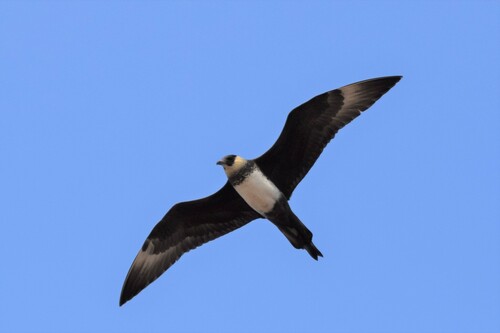 Middelste jager
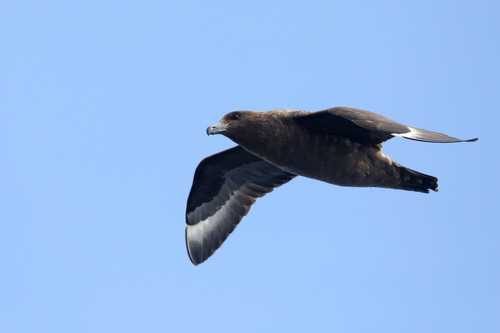 Subantarctische grote jager
Kort gezegd
Het meest betrouwbare veldkenmerk om de Middelste jager van de Subantarctische grote jager te scheiden, is de algehele grootte en structuur: de Subantarctische grote jager is veel zwaarder, robuuster en heeft bredere vleugels, terwijl de Middelste jager kleiner en slanker is, met een kenmerkende staartvorm bij broedvogels. In de vlucht tonen Middelste jagers (vooral volwassenen) een diagnostische dubbele witte flits op de ondervleugel en, in broedkleed, lange, lepelvormige centrale staartveren. Subantarctische grote jagers zijn uniform donkerbruin en missen elke witte vleugelflits, waardoor ze veel massiever en meeuwachtig lijken. Juveniele Middelste jagers zijn berucht moeilijk te scheiden van andere jagers, maar de Subantarctische grote jager is altijd veel groter en mist het witte ondervleugelpatroon van de Middelste jager. Structuur en bulk, samen met de aanwezigheid of afwezigheid van de witte vleugelflits, zijn je beste veld aanwijzingen.
Herkenningstips
- Grootte en bulk: De Subantarctische grote jager is veel zwaarder en robuuster dan de Middelste jager. Als de vogel zo massief lijkt als een grote meeuw (Zwarte rug of Glaucous), is het bijna zeker een Subantarctische grote jager.
- Witte vleugelflits: De Middelste jager van alle leeftijden en morfen toont een witte 'dubbele flits' op de ondervleugel (het meest opvallend bij volwassenen), wat de Subantarctische grote jager nooit toont. Dit is een belangrijk kenmerk in de vlucht.
- Staartvorm bij volwassenen: Broedvolwassen Middelste jagers hebben twee lange, gedraaide, lepelvormige centrale staartveren. De Subantarctische grote jager toont nooit staartstreamers; zijn staart is altijd kort en rond.
- Algemene kleur: De Subantarctische grote jager is altijd uniform donkerbruin, zonder lichte onderdelen of hoofd. De Middelste jager kan licht, donker of intermediair zijn, maar lichte morfen tonen witte onderdelen en een geelachtig-wit hoofd/nek met een zwarte pet.
- Snavel en hoofd: De Middelste jager heeft een minder massieve snavel en hoofd in vergelijking met de dikke, zware snavel en blokachtige hoofd van de Subantarctische grote jager. Dit is het meest duidelijk van dichtbij of bij gezeten vogels.
- Vluchtstijl: De Middelste jager is minder wendbaar dan kleinere jagers, maar is nog steeds gestroomlijnder en minder log dan de Subantarctische grote jager, die zwaar en meeuwachtig lijkt in de vlucht.
- Juveniele verwarring: Juveniele Middelste jagers lijken sterk op andere jagers, maar juveniele Subantarctische grote jagers zijn altijd veel groter en missen elke witte vleugelflits. Als je een grote, donkere jager zonder lichte vleugels ziet, vermoed dan een Subantarctische grote jager.
- Ondervleugelpatroon: Kijk altijd naar de witte dubbele flits bij de Middelste jager. De ondervleugel van de Subantarctische grote jager is eenvoudig donkerbruin.
- Plumagemorfen: De Middelste jager kan licht, donker of intermediair zijn, maar altijd met de vleugelflits. De Subantarctische grote jager is altijd donker.
- Habitatcontext: In de subantarctische of Antarctische gebieden wordt de Subantarctische grote jager verwacht; de Middelste jager is onwaarschijnlijk. In tropische of gematigde offshore waters is de Middelste jager waarschijnlijker.
- Gezeten vogels: De Subantarctische grote jager lijkt veel massiever en met een zware borst wanneer hij zit; de Middelste jager is slanker en minder imposant.
- Associatie met meeuwen: Subantarctische grote jagers kunnen worden gezien in interactie met grote meeuwen of pinguïnkolonies in het zuiden; Middelste jagers zijn meer pelagisch en minder waarschijnlijk in dergelijke contexten te zien.
- Hoofdpatroon: Lichte morf Middelste jagers hebben een contrasterend licht hoofd en nek met een zwarte pet, in tegenstelling tot het uniforme bruin van de Subantarctische grote jager.
- Vocalisaties: Als ze gehoord worden, geeft de Middelste jager harde kletterende roepen en 'which-yew' noten, maar dit is zelden diagnostisch op zee.
- Seizoen: Broedplumage kenmerken (staartstreamers, licht hoofd) zijn alleen aanwezig bij de Middelste jager tijdens het broedseizoen; buiten dit, vertrouw op grootte, structuur en vleugelflits.
Grootte
De Subantarctische grote jager is dramatisch zwaarder en robuuster dan de Middelste jager. De Middelste jager weegt gemiddeld ongeveer 694 g [wikidata], terwijl de Subantarctische grote jager tussen de 1,2 en 2,18 kg kan wegen, vaak meer dan het dubbele of zelfs het drievoudige van de massa van de Middelste jager [wikipedia]. In lengte is de Middelste jager 46–67 cm (inclusief staartstreamers), terwijl de Subantarctische grote jager 52–64 cm is, maar de grotere vleugelspanwijdte van de Subantarctische grote jager (126–160 cm versus 110–138 cm van de Middelste jager) en de veel zwaardere bouw zijn duidelijk in het veld. Subantarctische grote jagers concurreren met de grootste meeuwen in massa, terwijl Middelste jagers slechts iets groter zijn dan een Gewone meeuw.
Verenkleed
- Juveniele/immature vogels: Juveniele Middelste jagers zijn zeer moeilijk te scheiden van andere jagers op basis van het verenkleed alleen, maar ze tonen wel een witte 'flits' op de ondervleugel (een dubbele flits bij volwassenen) die de Subantarctische grote jager mist. Juveniele en volwassen Subantarctische grote jagers zijn uniform donkerbruin zonder enige witte vleugelflits.
- Volwassen broed Middelste jager: Toont een bruine rug, witte onderdelen, donkere primaire veren met een witte 'dubbele flits' op de ondervleugel, geelachtig-wit hoofd en nek met een zwarte pet (lichte morf), of is helemaal donkerbruin (donkere morf). Alle morfen hebben de witte vleugelflits. Broedvolwassenen hebben twee lange, gedraaide, lepelvormige centrale staartveren, die uniek en diagnostisch zijn.
- Volwassen Subantarctische grote jager: Uniform donkerbruin overal, zonder witte vleugelflits of lichte onderdelen. Geen staartstreamers. Veel massiever en met bredere vleugels.
- Intermediaire morfen: De Middelste jager kan intermediaire morfen tonen met lichtere onderdelen en nek, maar behoudt altijd de witte vleugelflits, die de Subantarctische grote jager nooit toont.
Gedrag
De Middelste jager heeft een meer gemeten, minder wendbare vlucht dan kleinere jagers, maar is nog steeds slanker en meer luchtig dan de massieve Subantarctische grote jager. Subantarctische grote jagers zijn krachtige, zware vliegers, die vaak log en meeuwachtig lijken, vooral wanneer ze zij aan zij met de Middelste jager worden vergeleken. Subantarctische grote jagers kunnen ook gedurfde, nieuwsgierige gedragingen vertonen rond mensen in de subantarctische gebieden, wat niet typisch is voor de Middelste jager.
Habitat
De Middelste jager is een migrant, die in de winter op zee in tropische oceanen verblijft en broedt in het hoge Arctische gebied. De Subantarctische grote jager broedt in subantarctische en Antarctische zones en beweegt naar het noorden wanneer hij niet broedt, maar wordt zelden in tropische wateren aangetroffen. De overlap is beperkt; de Middelste jager wordt waarschijnlijker aangetroffen tijdens oceanische migratie of offshore, terwijl de Subantarctische grote jager verbonden is met koudere zuidelijke wateren en eilanden.
Geluid
De Middelste jager geeft harde kletterende roepen en een kenmerkend 'which-yew' geluid. De vocalisaties van de Subantarctische grote jager zijn niet beschreven in de bronnen, dus de stem is op basis van de huidige informatie geen betrouwbare scheiding.
Middelste jager · Subantarctische grote jager · Mijn lastige vogels