

Motmot

トウゾクカモメ 対 ミナミオオトウゾクカモメ

Stercorarius pomarinus 対 Stercorarius antarcticus

トウゾクカモメとミナミオオトウゾクカモメのクイズ
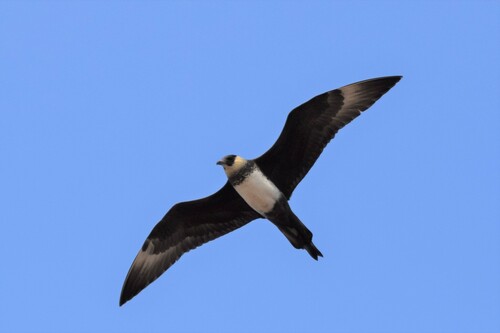
トウゾクカモメ (Stercorarius pomarinus) トウゾクカモメ
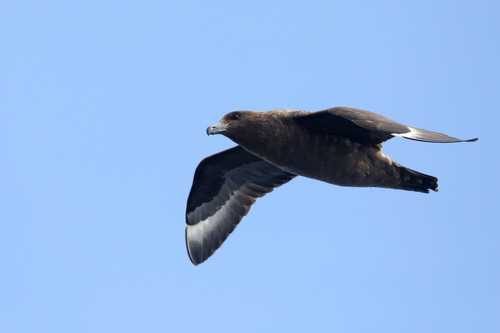
ミナミオオトウゾクカモメ (Stercorarius antarcticus) ミナミオオトウゾクカモメ

メディア

読み込み中…

要点

トウゾクカモメとミナミオオトウゾクカモメを区別する最も信頼性の高いフィールドマークは、全体のサイズと構造です:ミナミオオトウゾクカモメははるかに重く、がっしりしており、翼が広いのに対し、トウゾクカモメは小さく、より細身で、繁殖期の成鳥には特徴的な尾の形があります。飛行中、トウゾクカモメ(特に成鳥)は、下翼に診断的な二重の白いフラッシュを示し、繁殖羽毛では長く、スプーン状の中央尾羽を持っています。ミナミオオトウゾクカモメは均一に暗褐色で、白い翼のフラッシュがなく、はるかに大きく、カモメのように見えます。幼鳥のトウゾクカモメは他のスカの仲間と区別するのが非常に難しいですが、ミナミオオトウゾクカモメは常にはるかに大きく、Pomarineの白い下翼パターンがありません。構造と体重、白い翼のフラッシュの有無は、最良のフィールドの手がかりです。

識別のコツ

  1. Size and bulk: ミナミオオトウゾクカモメはトウゾクカモメよりもはるかに重く、がっしりしています。もしその鳥が大きなカモメ(ミナミオオトウゾクカモメまたはグロウカス)と同じくらい巨大に見えるなら、それはほぼ確実にミナミオオトウゾクカモメです。
  2. White wing flash: すべての年齢と形態のトウゾクカモメは、下翼に白い「二重フラッシュ」を示します(成鳥では最も明らかです)、これはミナミオオトウゾクカモメにはありません。これは飛行中の重要なマークです。
  3. Tail shape in adults: 繁殖期の成鳥トウゾクカモメは、2本の長く、ねじれた、スプーン状の中央尾羽を持っています。ミナミオオトウゾクカモメは尾のストリーマーを示すことはなく、尾は常に短く丸いです。
  4. Overall coloration: ミナミオオトウゾクカモメは常に均一に暗褐色で、淡い下部や頭はありません。トウゾクカモメは明るい、暗い、または中間的ですが、明るい形態は白い下部と黄色がかった白い頭/首に黒い帽子を持っています。
  5. Bill and head: トウゾクカモメは、ミナミオオトウゾクカモメの厚く重いくちばしとブロック状の頭に比べて、くちばしと頭がそれほど大きくありません。これは近距離または止まっている鳥で最も明らかです。
  6. Flight style: トウゾクカモメは小さなジャガーよりも機敏さに欠けますが、それでもミナミオオトウゾクカモメよりも流線型で、重くカモメのように見えます。
  7. Juvenile confusion: 幼鳥のトウゾクカモメは他のジャガーと非常に似ていますが、ミナミオオトウゾクカモメの幼鳥は常にはるかに大きく、白い翼のフラッシュがありません。もし大きくて暗いスカが翼に淡い部分がないのを見たら、ミナミオオトウゾクカモメを疑ってください。
  8. Underwing pattern: トウゾクカモメでは常に白い二重フラッシュを探してください。ミナミオオトウゾクカモメの下翼は単純な暗褐色です。
  9. Plumage morphs: トウゾクカモメは明るい、暗い、または中間的な形態を示すことがありますが、常に翼のフラッシュを持っています。ミナミオオトウゾクカモメは常に暗いです。
  10. Habitat context: サブ南極または南極では、ミナミオオトウゾクカモメが期待されますが、トウゾクカモメはありそうにありません。熱帯または温帯の沖合の水域では、トウゾクカモメの方が可能性が高いです。
  11. Perched birds: ミナミオオトウゾクカモメは止まっているときに非常に大きく、重い胸に見えますが、トウゾクカモメはスリムで、あまり威圧的ではありません。
  12. Association with gulls: ミナミオオトウゾクカモメは南で大きなカモメやペンギンのコロニーと相互作用しているのが見られることがありますが、トウゾクカモメはより外洋性で、そのような文脈で見られる可能性は低いです。
  13. Head pattern: 明るい形態のトウゾクカモメは、ミナミオオトウゾクカモメの均一な褐色とは異なり、対照的な淡い頭と首に黒い帽子を持っています。
  14. Vocalizations: 聞こえた場合、トウゾクカモメは厳しいおしゃべりの呼び声と「ウィッチ・ユー」という音を出しますが、これは海上では診断的ではありません。
  15. Season: 繁殖羽毛のマーク(尾のストリーマー、淡い頭)は、繁殖期のトウゾクカモメにのみ存在します;それ以外では、サイズ、構造、翼のフラッシュに頼ってください。

大きさ

ミナミオオトウゾクカモメはトウゾクカモメよりも劇的に重く、がっしりしています。トウゾクカモメの平均体重は約694g [wikidata]ですが、ミナミオオトウゾクカモメは1.2kgから2.18kgまでの範囲で、しばしばトウゾクカモメの質量の2倍または3倍以上になります [wikipedia]。長さでは、トウゾクカモメは46–67cm(尾のストリーマーを含む)で、ミナミオオトウゾクカモメは52–64cmですが、ミナミオオトウゾクカモメの翼幅(126–160cm対Pomarineの110–138cm)とはるかに重い体格はフィールドで明らかです。ミナミオオトウゾクカモメは質量で最大のカモメに匹敵し、トウゾクカモメは普通のカモメよりわずかに大きいだけです。

羽色

行動

トウゾクカモメは小さなジャガーよりもより計画的で機敏さに欠ける飛行を持っていますが、それでもミナミオオトウゾクカモメよりもスリムで空中を飛ぶのが得意です。ミナミオオトウゾクカモメは力強く、重い飛行をし、トウゾクカモメと並べて比較すると、しばしば鈍重でカモメのように見えます。ミナミオオトウゾクカモメはまた、サブ南極で人間の周りで大胆で好奇心旺盛な行動を示すことがありますが、これはトウゾクカモメには典型的ではありません。

生息環境

トウゾクカモメは移動性で、熱帯の海で冬を過ごし、高い北極で繁殖します。ミナミオオトウゾクカモメはサブ南極および南極地域で繁殖し、繁殖しないときは北に移動しますが、熱帯の水域ではめったに見られません。重複は限られており、トウゾクカモメは海洋移動や沖合で遭遇する可能性が高く、ミナミオオトウゾクカモメは寒い南の水域や島に結びついています。

声

トウゾクカモメは厳しいおしゃべりの呼び声と特徴的な「ウィッチ・ユー」という音を出します。ミナミオオトウゾクカモメの声は情報源に記載されていないため、現在の情報に基づいて声は信頼できる区別要因ではありません。

より良い説明を送る

比較と同じ項目を使ってください。文章はすぐに公開されます。

The most reliable field mark to separate Pomarine Skua from Brown Skua is overall size and structure: Brown Skua is much heavier, bulkier, and broader-winged, while Pomarine Skua is smaller and more slender, with a distinctive tail shape in breeding adults. In flight, Pomarine Skuas (especially adults) show a diagnostic double white flash on the underwing and, in breeding plumage, long, spoon-shaped central tail feathers. Brown Skuas are uniformly dark brown and lack any white wing flash, appearing much more massive and gull-like. Juvenile Pomarine Skuas are notoriously tricky to separate from other skuas, but Brown Skua is always much larger and lacks the Pomarine's white underwing pattern. Structure and bulk, along with the presence or absence of the white wing flash, are your best field clues.

  1. Size and bulk: Brown Skua is much heavier and bulkier than Pomarine Skua. If the bird appears as massive as a large gull (Great Black-backed or Glaucous), it is almost certainly a Brown Skua.
  2. White wing flash: Pomarine Skua of all ages and morphs shows a white 'double flash' on the underwing (most obvious in adults), which Brown Skua never shows. This is a key mark in flight.
  3. Tail shape in adults: Breeding adult Pomarine Skuas have two long, twisted, spoon-shaped central tail feathers. Brown Skua never shows tail streamers; its tail is always short and rounded.
  4. Overall coloration: Brown Skua is always uniformly dark brown, with no pale underparts or head. Pomarine Skua can be light, dark, or intermediate, but light morphs show white underparts and yellowish-white head/neck with a black cap.
  5. Bill and head: Pomarine Skua has a less massive bill and head compared to the thick, heavy bill and blocky head of Brown Skua. This is most apparent at close range or in perched birds.
  6. Flight style: Pomarine Skua is less agile than smaller jaegers but still more streamlined and less lumbering than Brown Skua, which appears heavy and gull-like in flight.
  7. Juvenile confusion: Juvenile Pomarine Skuas are very similar to other jaegers, but Brown Skua juveniles are always much larger and lack any white wing flash. If you see a large, dark skua with no pale in the wing, suspect Brown Skua.
  8. Underwing pattern: Always look for the white double flash in Pomarine Skua. Brown Skua's underwing is plain dark brown.
  9. Plumage morphs: Pomarine Skua can be light, dark, or intermediate, but always with the wing flash. Brown Skua is always dark.
  10. Habitat context: In the subantarctic or Antarctic, Brown Skua is expected; Pomarine Skua is unlikely. In tropical or temperate offshore waters, Pomarine Skua is more likely.
  11. Perched birds: Brown Skua appears much more massive and heavy-chested when perched; Pomarine Skua is slimmer and less imposing.
  12. Association with gulls: Brown Skuas may be seen interacting with large gulls or penguin colonies in the south; Pomarine Skuas are more pelagic and less likely to be seen in such contexts.
  13. Head pattern: Light-morph Pomarine Skuas have a contrasting pale head and neck with a black cap, unlike the uniform brown of Brown Skua.
  14. Vocalizations: If heard, Pomarine Skua gives harsh chattering calls and 'which-yew' notes, but this is rarely diagnostic at sea.
  15. Season: Breeding plumage marks (tail streamers, pale head) are only present in Pomarine Skua during the breeding season; outside this, rely on size, structure, and wing flash.

Brown Skua is dramatically heavier and bulkier than Pomarine Skua. Pomarine Skua averages around 694 g [wikidata], while Brown Skua can weigh from 1.2 to 2.18 kg, often more than double or even triple the mass of Pomarine Skua [wikipedia]. In length, Pomarine Skua is 46–67 cm (including tail streamers), while Brown Skua is 52–64 cm, but the Brown Skua's greater wingspan (126–160 cm vs. Pomarine's 110–138 cm) and much heavier build are obvious in the field. Brown Skuas rival the largest gulls in mass, while Pomarine Skuas are only slightly larger than a Common Gull.

  • Juvenile/immature birds: Pomarine Skua juveniles are very difficult to separate from other skuas by plumage alone, but they do show a white 'flash' on the underwing (a double flash in adults) that Brown Skua lacks. Brown Skua juveniles and adults are uniformly dark brown without any white wing flash.
  • Adult breeding Pomarine Skua: Shows a brown back, white underparts, dark primaries with a white 'double flash' on the underwing, yellowish-white head and neck with a black cap (light morph), or is all dark brown (dark morph). All morphs have the white wing flash. Breeding adults have two long, twisted, spoon-shaped central tail feathers, which are unique and diagnostic.
  • Adult Brown Skua: Uniformly dark brown overall, with no white wing flash or pale underparts. No tail streamers. Much more massive and broad-winged.
  • Intermediate morphs: Pomarine Skua can show intermediate morphs with paler underparts and neck, but always retains the white wing flash, which Brown Skua never shows.

Pomarine Skua has a more measured, less agile flight than smaller jaegers, but is still sleeker and more aerial than the massive Brown Skua. Brown Skuas are powerful, heavy fliers, often appearing lumbering and gull-like, especially when compared side-by-side with Pomarine Skua. Brown Skuas may also display bold, inquisitive behavior around humans in the subantarctic, which is not typical of Pomarine Skua.

Pomarine Skua is a migrant, wintering at sea in tropical oceans and breeding in the high Arctic. Brown Skua breeds in subantarctic and Antarctic zones and moves northward when not breeding, but is rarely found in tropical waters. Overlap is limited; Pomarine Skua is more likely encountered on oceanic migration or offshore, while Brown Skua is tied to colder southern waters and islands.

Pomarine Skua gives harsh chattering calls and a distinctive 'which-yew' sound. Brown Skua vocalizations are not described in the sources, so voice is not a reliable separator based on current information.

変更を破棄しますか?

保存していない編集があります。今離れると失われます。

トウゾクカモメ · ミナミオオトウゾクカモメ · 苦手な鳥