

Stercorario mezzano vs Brown Skua
Stercorarius pomarinus contro Stercorarius antarcticus
Fai un quiz con Stercorario mezzano e Brown Skua
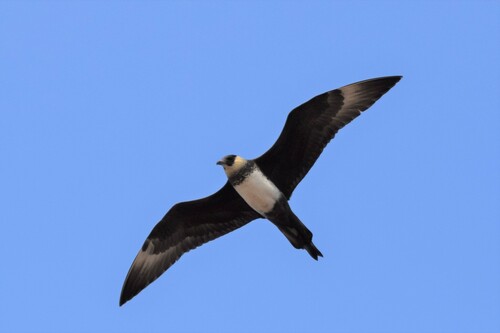 Stercorario mezzano
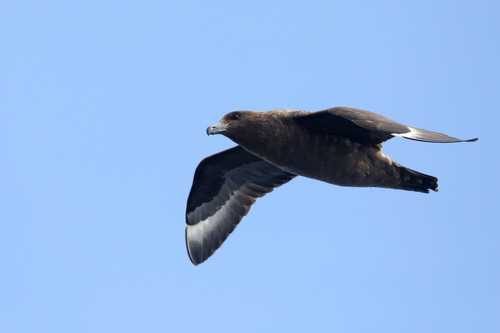 Brown Skua
In breve
Il segno di campo più affidabile per separare il Stercorario mezzano dal Brown Skua è la dimensione e la struttura complessive: il Brown Skua è molto più pesante, massiccio e con ali più larghe, mentre il Stercorario mezzano è più piccolo e più snello, con una forma della coda distintiva negli adulti in fase di riproduzione. In volo, i Stercorari mezzi (soprattutto gli adulti) mostrano un lampo bianco doppio diagnostico sulla parte inferiore dell'ala e, in abito nuziale, lunghe penne centrali della coda a forma di cucchiaio. I Brown Skua sono uniformemente marroni scuri e mancano di qualsiasi lampo bianco sulle ali, apparendo molto più massicci e simili a gabbiani. I giovani Stercorari mezzi sono notoriamente difficili da separare dagli altri skua, ma il Brown Skua è sempre molto più grande e manca del motivo bianco sulla parte inferiore dell'ala del Stercorario mezzano. La struttura e la massa, insieme alla presenza o assenza del lampo bianco sulle ali, sono i tuoi migliori indizi sul campo.
Consigli di identificazione
- Size and bulk: Il Brown Skua è molto più pesante e massiccio del Stercorario mezzano. Se l'uccello appare massiccio come un grande gabbiano (Gabbiano reale o Gabbiano glauco), è quasi certamente un Brown Skua.
- White wing flash: Il Stercorario mezzano di tutte le età e morfologie mostra un 'doppio lampo' bianco sulla parte inferiore dell'ala (più evidente negli adulti), che il Brown Skua non mostra mai. Questo è un segno chiave in volo.
- Tail shape in adults: Gli adulti in fase di riproduzione del Stercorario mezzano hanno due lunghe penne centrali della coda a forma di cucchiaio. Il Brown Skua non mostra mai streamers della coda; la sua coda è sempre corta e arrotondata.
- Overall coloration: Il Brown Skua è sempre uniformemente marrone scuro, senza parti inferiori o testa chiare. Il Stercorario mezzano può essere chiaro, scuro o intermedio, ma le morfologie chiare mostrano parti inferiori bianche e una testa/collo giallo-bianco con un berretto nero.
- Bill and head: Il Stercorario mezzano ha un becco e una testa meno massicci rispetto al becco spesso e pesante e alla testa squadrata del Brown Skua. Questo è più evidente da vicino o negli uccelli in posa.
- Flight style: Il Stercorario mezzano è meno agile rispetto ai jaeger più piccoli, ma è comunque più snello e meno pesante del Brown Skua, che appare pesante e simile a un gabbiano in volo.
- Juvenile confusion: I giovani Stercorari mezzi sono molto simili ad altri jaeger, ma i giovani Brown Skua sono sempre molto più grandi e mancano di qualsiasi lampo bianco sulle ali. Se vedi uno skua grande e scuro senza parti chiare nell'ala, sospetta un Brown Skua.
- Underwing pattern: Cerca sempre il lampo bianco doppio nel Stercorario mezzano. La parte inferiore dell'ala del Brown Skua è semplicemente marrone scuro.
- Plumage morphs: Il Stercorario mezzano può essere chiaro, scuro o intermedio, ma ha sempre il lampo sulle ali. Il Brown Skua è sempre scuro.
- Habitat context: Nella zona subantartica o antartica, ci si aspetta di trovare il Brown Skua; il Stercorario mezzano è improbabile. Nelle acque offshore tropicali o temperate, il Stercorario mezzano è più probabile.
- Perched birds: Il Brown Skua appare molto più massiccio e con il petto pesante quando è posato; il Stercorario mezzano è più snello e meno imponente.
- Association with gulls: I Brown Skua possono essere visti interagire con grandi gabbiani o colonie di pinguini a sud; i Stercorari mezzi sono più pelagici e meno probabili da vedere in tali contesti.
- Head pattern: I Stercorari mezzi di morfologia chiara hanno una testa e un collo chiari in contrasto con un berretto nero, a differenza del marrone uniforme del Brown Skua.
- Vocalizations: Se uditi, i Stercorari mezzi emettono richiami aspri e note 'which-yew', ma questo è raramente diagnostico in mare.
- Season: I segni dell'abito nuziale (streamers della coda, testa chiara) sono presenti solo nel Stercorario mezzano durante la stagione di riproduzione; al di fuori di questo, fai affidamento su dimensioni, struttura e lampo sulle ali.
Taglia
Il Brown Skua è drammaticamente più pesante e massiccio del Stercorario mezzano. Il Stercorario mezzano pesa in media circa 694 g [wikidata], mentre il Brown Skua può pesare da 1,2 a 2,18 kg, spesso più del doppio o addirittura del triplo della massa del Stercorario mezzano [wikipedia]. In lunghezza, il Stercorario mezzano è 46–67 cm (inclusi gli streamers della coda), mentre il Brown Skua è 52–64 cm, ma l'apertura alare maggiore del Brown Skua (126–160 cm contro 110–138 cm del Stercorario) e la sua costruzione molto più pesante sono evidenti sul campo. I Brown Skua competono con i gabbiani più grandi in massa, mentre i Stercorari mezzi sono solo leggermente più grandi di un Gabbiano comune.
Piumaggio
- Juvenile/immature birds: I giovani Stercorari mezzi sono molto difficili da separare dagli altri skua solo per il piumaggio, ma mostrano un 'lampo' bianco sulla parte inferiore dell'ala (un doppio lampo negli adulti) che il Brown Skua non ha. I giovani e gli adulti del Brown Skua sono uniformemente marroni scuri senza alcun lampo bianco sulle ali.
- Adult breeding Stercorario mezzano: Mostra un dorso marrone, parti inferiori bianche, primarie scure con un 'doppio lampo' bianco sulla parte inferiore dell'ala, testa e collo giallo-bianco con un berretto nero (morfologia chiara), oppure è tutto marrone scuro (morfologia scura). Tutte le morfologie hanno il lampo bianco sulle ali. Gli adulti in fase di riproduzione hanno due lunghe penne centrali della coda a forma di cucchiaio, che sono uniche e diagnostiche.
- Adult Brown Skua: Uniformemente marrone scuro in generale, senza lampo bianco sulle ali o parti inferiori chiare. Nessuno streamers della coda. Molto più massiccio e con ali più larghe.
- Intermediate morphs: Il Stercorario mezzano può mostrare morfologie intermedie con parti inferiori e collo più chiari, ma mantiene sempre il lampo bianco sulle ali, che il Brown Skua non mostra mai.
Comportamento
Il Stercorario mezzano ha un volo più misurato e meno agile rispetto ai jaeger più piccoli, ma è comunque più snello e aereo rispetto al massiccio Brown Skua. I Brown Skua sono potenti volatori pesanti, spesso apparendo goffi e simili a gabbiani, soprattutto quando confrontati fianco a fianco con il Stercorario mezzano. I Brown Skua possono anche mostrare un comportamento audace e curioso attorno agli esseri umani nella zona subantartica, che non è tipico del Stercorario mezzano.
Habitat
Il Stercorario mezzano è un migratore, svernando in mare negli oceani tropicali e riproducendosi nell'Artico settentrionale. Il Brown Skua si riproduce nelle zone subantartiche e antartiche e si sposta verso nord quando non si riproduce, ma è raramente trovato nelle acque tropicali. L'overlap è limitato; il Stercorario mezzano è più probabile da incontrare durante la migrazione oceanica o offshore, mentre il Brown Skua è legato a acque e isole meridionali più fredde.
Voce
Il Stercorario mezzano emette richiami aspri e un suono distintivo 'which-yew'. Le vocalizzazioni del Brown Skua non sono descritte nelle fonti, quindi la voce non è un separatore affidabile basato sulle informazioni attuali.