

Chinese spoorkoekoek vs Coromandelkoekoek
Centropus sinensis versus Clamator coromandus
Speel een quiz met Chinese spoorkoekoek en Coromandelkoekoek
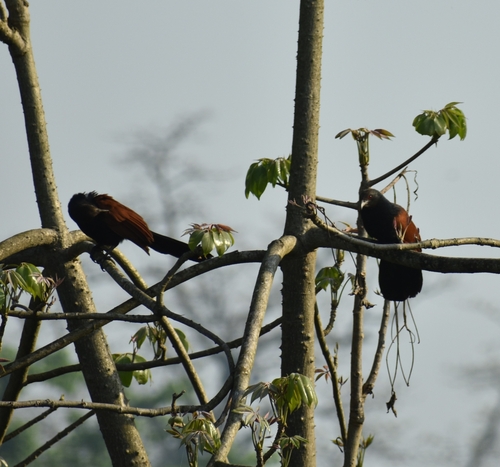 Chinese spoorkoekoek
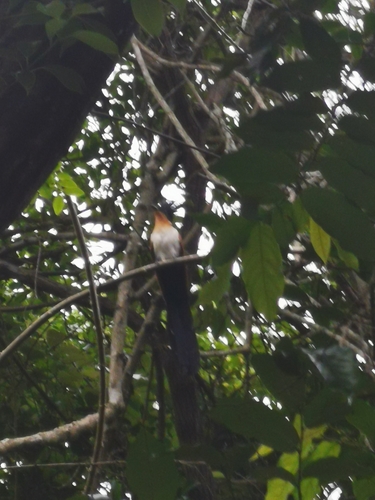 Coromandelkoekoek
Kort gezegd
Het meest betrouwbare veldkenmerk om de Chinese spoorkoekoek van de Coromandelkoekoek te scheiden, is de algehele structuur en de vorm van de staart: de Chinese spoorkoekoek is veel zwaarder gebouwd met een brede, lange staart en mist een kuif, terwijl de Coromandelkoekoek slanker is, een prominente zwarte kuif heeft en een lange, geleidelijke staart met subtiele witte punten. Juveniele Chinese spoorkoekoeken hebben gestreepte onderdelen en staart, terwijl juvenile Coromandelkoekoeken dof zijn met een schubachtige uitstraling van de vleugelveertjes. Bij volwassenen heeft de Chinese spoorkoekoek een diep zwarte kop en onderzijde met heldere kastanjebruine vleugels, maar geen witte kraag, terwijl de Coromandelkoekoek een opvallende witte nuchale halve kraag en roestbruine keel vertoont. Beide kunnen kastanjebruine vleugels vertonen, maar de context, structuur en koppatroon zijn cruciaal. Let op de zware, kraaiachtige uitstraling van de spoorkoekoek en het slanker, gekuifde profiel van de koekoek.
Herkenningstips
- Algehele structuur: De Chinese spoorkoekoek is veel robuuster en zwaarder gebouwd, met een stevige, kraaiachtige bouw en een brede staart; de Coromandelkoekoek is slanker, lichter en wendbaarder, met een lange, smalle, geleidelijke staart.
- Kuif: De Coromandelkoekoek heeft een prominente, glanzend zwarte kuif; de Chinese spoorkoekoek mist een kuif en heeft een soepel afgeronde kop.
- Staartvorm: De staart van de spoorkoekoek is breed en recht, niet duidelijk geleidelijk; de staart van de koekoek is lang en duidelijk geleidelijk (buitenste veren zijn veel korter dan de centrale), vaak met subtiele witte punten (niet zo opvallend als bij de Jacobin-koekoek).
- Kop en kraag: De Coromandelkoekoek toont een smalle witte nuchale halve kraag die de zwarte kop van de rug scheidt, en een roestbruine keel; de Chinese spoorkoekoek heeft een uniform zwarte (soms paars/blauw glanzende) kop en keel zonder witte kraag.
- Oogkleur: De Chinese spoorkoekoek heeft opvallende robijnrode ogen, zichtbaar van dichtbij; de oogkleur van de Coromandelkoekoek is niet diagnostisch.
- Vleugelkleur: Beide tonen kastanjebruine vleugels, maar de vleugels van de spoorkoekoek zijn breder en de vogel lijkt zwaarder in de vlucht; de vleugels van de koekoek zijn slanker en de vogel is gestroomlijnder.
- Juveniele verenkleed: Juveniele spoorkoekoeken (noordelijke rassen) hebben gestreepte onderdelen en staart, en vlekken op de kroon; zuidelijke juveniele spoorkoekoeken zijn onopvallend onder. Juveniele Coromandelkoekoeken zijn dof over het algemeen met een schubachtige uitstraling van de vleugelveertjes, zonder de streping van de spoorkoekoek.
- Snavel: De snavel van de spoorkoekoek is zwaar en licht gebogen, geschikt voor het foerageren op de grond; de snavel van de koekoek is slanker en typischer voor boomkoekoeken.
- Gedrag: De spoorkoekoek wordt vaak gezien terwijl hij op de grond loopt of onhandig beweegt in dichte dekking; de koekoek is meer arboreaal, vaak zittend in het open of zich aansluitend bij gemengde groepen.
- Habitat: De spoorkoekoek is algemeen in tuinen, velden en stedelijke randen; de koekoek is meer gebonden aan bosranden, secundaire groei en migratiestops.
- Stem: De spoorkoekoek geeft diepe, donderende, repetitieve roepen; de koekoek geeft fluitende, herhaalde tweeklanken. Als goed gehoord, zijn deze diagnostisch.
- Vluchtstijl: De spoorkoekoek vliegt met langzame, zware vleugelslagen en landt vaak onhandig; de koekoek is directer en wendbaarder in de vlucht.
- Seizoen: De Coromandelkoekoek is migrerend en kan voornamelijk in de winter in Zuid-India en Sri Lanka verschijnen; de spoorkoekoek is het hele jaar door resident.
- Geslachten: Beide soorten zijn vergelijkbaar in verenkleed tussen de geslachten; het vrouwtje van de spoorkoekoek is iets groter, maar dit is niet nuttig in het veld.
- Valkuilen: Beide kunnen kastanjebruine vleugels en donkere lichamen vertonen, maar alleen de koekoek combineert een kuif, witte nuchale kraag, roestbruine keel en geleidelijke staart. Controleer altijd de combinatie van structuur, koppatroon en staartvorm.
Grootte
De Chinese spoorkoekoek is dramatisch zwaarder en robuuster (lichaamsgewicht ~283 g) in vergelijking met de veel lichtere Coromandelkoekoek (~76 g) [wikidata]. Beide soorten zijn vergelijkbaar in totale lengte (spoorkoekoek ~48 cm, koekoek ~47 cm), maar het lichaam van de spoorkoekoek is veel robuuster en zijn staart is breder en minder geleidelijk. De Coromandelkoekoek is slank, met een merkbaar lichtere bouw en een lange, smalle, geleidelijke staart. In het veld lijkt de spoorkoekoek vaak bijna kraaiachtig, terwijl de koekoek slanker en wendbaarder is.
Verenkleed
- Juvenielen: Juveniele Chinese spoorkoekoeken zijn doffer zwart met vlekken op de kroon en witachtige strepen op de onderzijde en staart; noordelijke rassen vertonen gestreepte onderdelen, terwijl zuidelijke (parroti) juvenielen onopvallend dof zwart onder hebben en dof kastanjebruine vleugels. Juveniele Coromandelkoekoeken zijn over het algemeen dof met een schubachtige uitstraling van de vleugelveertjes, zonder de streping of vlekken van de spoorkoekoek.
- Volwassenen: Volwassen Chinese spoorkoekoeken hebben een zwarte kop, bovenmantel en onderzijde met een paarse/blauwe glans, met een rijke kastanjebruine rug en vleugels; geen witte kraag of kuif. Volwassen Coromandelkoekoeken tonen een glanzend zwarte kop met een prominente kuif, een smalle witte nuchale halve kraag (die de zwarte kop van de rug scheidt), kastanjebruine vleugels, roestbruine keel, doffe onderdelen en een lange, geleidelijke zwarte staart met subtiele witte punten. De ogen van de spoorkoekoek zijn robijnrood, terwijl de oogkleur van de koekoek niet als onderscheidend wordt opgemerkt.
- In de vlucht: Beide tonen kastanjebruine vleugels, maar de vleugels van de spoorkoekoek zijn breder en de vogel lijkt zwaarder; de vleugels van de koekoek zijn smaller en de staart is duidelijker geleidelijk.
Gedrag
De Chinese spoorkoekoek wordt vaak gezien terwijl hij loopt of zich verbergt in dichte vegetatie, tuinen of open land, zwaar en soms onhandig bewegend. Hij is vaak solitair of in paren, en foerageert vaak op of nabij de grond. De Coromandelkoekoek is meer arboreaal, meestal alleen gezien en soms zich aansluitend bij gemengde soorten foeragerende groepen. Hij is waarschijnlijker te zien in actieve vlucht of zittend in het open, vooral tijdens de migratie wanneer hij in ongebruikelijke plaatsen kan verschijnen, soms uitgeput. De beweging van de spoorkoekoek is langzaam en doelbewust, terwijl de koekoek wendbaarder en alerter is.
Habitat
De Chinese spoorkoekoek is een wijdverspreide bewoner van het Indische subcontinent en Zuidoost-Azië, te vinden in een breed scala aan habitats van dichte jungle tot gecultiveerd land en stedelijke tuinen. Hij is een habitatgeneralist, vaak dicht bij menselijke bewoning. De Coromandelkoekoek broedt langs de Himalaya en migreert in de winter naar Sri Lanka, Zuid-India en Zuidoost-Azië, waaronder Indonesië, Thailand en de Filipijnen. Hij is nauwer verbonden met bosranden, secundaire groei en bosrijke gebieden, en is minder waarschijnlijk te vinden in stedelijke tuinen of open teelt in vergelijking met de spoorkoekoek. Tijdens de migratie kan de koekoek op atypische habitats verschijnen.
Geluid
Het lied van de Chinese spoorkoekoek varieert per ras, maar is over het algemeen een diepe, resonante en repetitieve 'coop-coop-coop' of 'whoop'-reeks, vaak geleverd vanuit dekking. De Coromandelkoekoek geeft fluitende tweeklanken, herhaald met korte intervallen, en is minder waarschijnlijk te horen die de diepe donderende roepen van de spoorkoekoek geeft. Vocalisaties zijn onderscheidend als ze goed gehoord worden, maar zijn mogelijk niet altijd diagnostisch bij korte ontmoetingen.
Chinese spoorkoekoek · Coromandelkoekoek · Mijn lastige vogels