

Cucal Chino vs Críalo Oriental
Centropus sinensis frente a Clamator coromandus
Juega un quiz con Cucal Chino y Críalo Oriental
 Cucal Chino
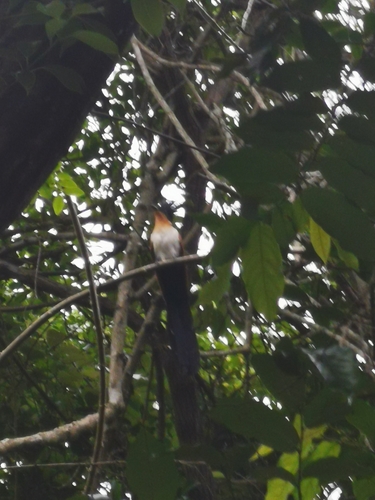 Críalo Oriental
En breve
La marca de campo más confiable para separar el Cucal Chino del Críalo Oriental es la estructura general y la forma de la cola: el Cucal Chino es mucho más robusto, con una cola ancha y larga, y carece de cresta, mientras que el Críalo Oriental es más delgado, tiene una cresta negra prominente y una cola larga y graduada con puntas blancas sutiles. Los juveniles de Cucal Chino muestran partes inferiores y cola con barras, mientras que los juveniles de Críalo Oriental son oscuros con un aspecto escamoso en las plumas de las alas. En los adultos, el Cucal Chino tiene una cabeza y partes inferiores de un negro profundo con alas castañas brillantes, pero sin collar blanco, mientras que el Críalo Oriental muestra un striking medio collar nuchal blanco y una garganta rufo. Ambos pueden mostrar alas castañas, pero el contexto, la estructura y el patrón de la cabeza son clave. Presta atención al aspecto pesado y similar a un cuervo del Cucal y al perfil más esbelto y con cresta del Críalo.
Consejos de identificación
- Estructura general: El Cucal Chino es mucho más voluminoso y pesado, con una construcción robusta similar a un cuervo y una cola ancha; el Críalo Oriental es esbelto, más ligero y ágil, con una cola larga, estrecha y graduada.
- Cresta: El Críalo Oriental tiene una cresta negra brillante y prominente; el Cucal Chino carece de cresta y tiene una cabeza suavemente redondeada.
- Forma de la cola: La cola del Cucal es ancha y de bordes rectos, no claramente graduada; la cola del Críalo es larga y claramente graduada (las plumas exteriores son mucho más cortas que las centrales), a menudo con puntas blancas sutiles (no tan marcadas como en el Críalo Jacobino).
- Cabeza y collar: El Críalo Oriental muestra un medio collar nuchal blanco estrecho que separa la cabeza negra de la parte posterior, y una garganta rufo; el Cucal Chino tiene una cabeza y garganta uniformemente negras (a veces con brillo púrpura/azul) sin collar blanco.
- Color de los ojos: El Cucal Chino tiene ojos rojos rubí llamativos, visibles a corta distancia; el color de los ojos del Críalo Oriental no es diagnóstico.
- Color de las alas: Ambos muestran alas castañas, pero las del Cucal son más anchas y el ave parece más pesada en vuelo; las alas del Críalo son más delgadas y el ave es más aerodinámica.
- Plumaje juvenil: El juvenil de Cucal (razas del norte) tiene partes inferiores y cola con barras, y manchas en la corona; los juveniles de Cucal del sur son sin marcas por debajo. El juvenil del Críalo Oriental es en general oscuro con un aspecto escamoso en las plumas de las alas, careciendo de las barras del Cucal.
- Pico: El pico del Cucal es pesado y ligeramente curvado hacia abajo, adecuado para forrajear en el suelo; el pico del Críalo es más delgado y más típico de los cucos arbóreos.
- Comportamiento: El Cucal es a menudo visto caminando en el suelo o moviéndose torpemente en la cubierta densa; el Críalo es más arbóreo, a menudo posándose en el abierto o uniéndose a bandadas mixtas.
- Hábitat: El Cucal es común en jardines, campos y bordes urbanos; el Críalo está más vinculado al borde del bosque, crecimiento secundario y sitios de parada migratoria.
- Voz: El Cucal emite llamadas profundas, resonantes y repetitivas; el Críalo emite notas gemelas flautadas y repetidas. Si se escuchan bien, estas son diagnósticas.
- Estilo de vuelo: El Cucal vuela con aleteos lentos y pesados y a menudo aterriza torpemente; el Críalo es más directo y ágil en vuelo.
- Temporada: El Críalo Oriental es migratorio y puede aparecer en el sur de India y Sri Lanka principalmente en invierno; el Cucal es residente durante todo el año.
- Sexos: Ambas especies son similares en plumaje entre sexos; la hembra del Cucal es ligeramente más grande, pero esto no es útil en el campo.
- Trampas: Ambos pueden mostrar alas castañas y cuerpos oscuros, pero solo el Críalo combina una cresta, collar nuchal blanco, garganta rufo y cola graduada. Siempre verifica la combinación de estructura, patrón de cabeza y forma de cola.
Tamaño
El Cucal Chino es dramáticamente más pesado y voluminoso (masa corporal ~283 g) en comparación con el mucho más ligero Críalo Oriental (~76 g) [wikidata]. Ambas especies son similares en longitud total (Cucal ~48 cm, Críalo ~47 cm), pero el cuerpo del Cucal es mucho más robusto y su cola es más ancha y menos graduada. El Críalo Oriental es esbelto, con una construcción notablemente más ligera y una cola larga, estrecha y graduada. En el campo, el Cucal a menudo parece casi similar a un cuervo, mientras que el Críalo es más esbelto y ágil.
Plumaje
- Juveniles: Los juveniles de Cucal Chino son de un negro más apagado con manchas en la corona y barras blanquecinas en la parte inferior y la cola; las razas del norte muestran partes inferiores con barras, mientras que los juveniles del sur (parroti) tienen partes inferiores de negro apagado sin marcas y alas castañas oscuras. Los juveniles del Críalo Oriental son en general oscuros con una apariencia escamosa en las plumas de las alas, careciendo de las barras o manchas del Cucal.
- Adultos: Los adultos de Cucal Chino tienen una cabeza negra, manto superior y partes inferiores con brillo púrpura/azul, con un rico dorso y alas castañas; sin collar blanco ni cresta. Los adultos del Críalo Oriental muestran una cabeza negra brillante con una cresta prominente, un medio collar nuchal blanco estrecho (que separa la cabeza negra de la parte posterior), alas castañas, garganta rufo, partes inferiores oscuras y una larga cola negra graduada con puntas blancas sutiles. Los ojos del Cucal son rojos rubí, mientras que el color de los ojos del Críalo no se nota como distintivo.
- En vuelo: Ambos muestran alas castañas, pero las alas del Cucal son más anchas y el ave parece más pesada; las alas del Críalo son más estrechas y la cola más claramente graduada.
Comportamiento
El Cucal Chino se ve a menudo caminando o moviéndose furtivamente en vegetación densa, jardines o campo abierto, moviéndose pesadamente y a veces torpemente. Tiende a ser solitario o en parejas, a menudo forrajeando en o cerca del suelo. El Críalo Oriental es más arbóreo, generalmente visto solo y a veces uniéndose a bandadas de forrajeo de especies mixtas. Es más probable que se vea en vuelo activo o posado a la vista, especialmente durante la migración cuando puede aparecer en lugares inusuales, a veces exhausto. El movimiento del Cucal es lento y deliberado, mientras que el Críalo es más ágil y alerta.
Hábitat
El Cucal Chino es un residente ampliamente distribuido en el subcontinente indio y el sudeste asiático, encontrado en una amplia gama de hábitats desde la jungla densa hasta tierras cultivadas y jardines urbanos. Es un generalista de hábitat, a menudo cerca de la vivienda humana. El Críalo Oriental cría a lo largo de los Himalayas y migra hacia el sur en invierno a Sri Lanka, el sur de India y el sudeste asiático, incluyendo Indonesia, Tailandia y Filipinas. Está más estrechamente asociado con los bordes del bosque, el crecimiento secundario y las áreas boscosas, y es menos probable que se encuentre en jardines urbanos o cultivos abiertos en comparación con el Cucal. Durante la migración, el Críalo puede aparecer en hábitats atípicos.
Voz
La canción del Cucal Chino varía según la raza, pero generalmente es una serie profunda, resonante y repetitiva de 'coop-coop-coop' o 'whoop', a menudo emitida desde la cubierta. El Críalo Oriental emite notas gemelas flautadas, repetidas con intervalos cortos, y es menos probable que se escuche emitiendo las profundas llamadas resonantes del Cucal. Las vocalizaciones son distintivas si se escuchan bien, pero pueden no ser siempre diagnósticas en encuentros breves.