

Grote glansspreeuw vs Groenstaartglansspreeuw
Lamprotornis australis versus Lamprotornis chalybaeus
Speel een quiz met Grote glansspreeuw en Groenstaartglansspreeuw
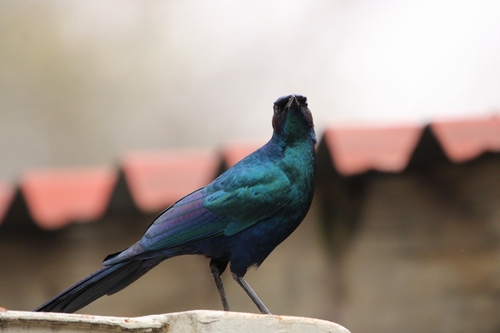 Grote glansspreeuw
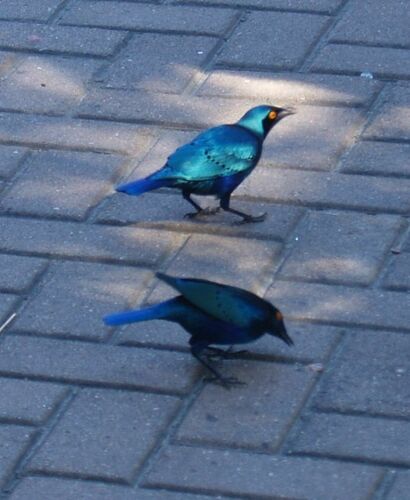 Groenstaartglansspreeuw
Kort gezegd
De meest betrouwbare manier om de Grote glansspreeuw van de Groenstaartglansspreeuw te scheiden, is door te focussen op het verenkleed, vooral de kleur en de mate van glans op de onderdelen en de oorvlek. De Groenstaartglansspreeuw heeft een opvallende blauwe oorvlek en een paars-blauwe buik, terwijl de Grote glansspreeuw deze kenmerken mist en meer uniform glanzend lijkt. Juveniele Groenstaartglansspreeuwen zijn doffer met zwartachtig bruine onderdelen, wat verwarring kan veroorzaken met de Grote, maar de oorvlek en het algehele glanspatroon blijven nuttig. Beide zijn vergelijkbaar in grootte en structuur, dus zorgvuldige aandacht voor de details van het verenkleed is essentieel, vooral in gemengde groepen of overlappende habitats.
Herkenningstips
- Controleer op een blauwe oorvlek: De Groenstaartglansspreeuw heeft altijd een duidelijke blauwe oorvlek, zelfs bij doffere juvenielen. De Grote glansspreeuw mist deze eigenschap op alle leeftijden.
- Kijk naar de buikkleur: De Groenstaartglansspreeuw heeft een paars-blauwe buik, waarbij het blauw naar voren uitstrekt van de poten. De Grote glansspreeuw is meer uniform glanzend zonder een contrasterende buik.
- Verwarring bij juvenielen: Juveniele Groenstaartglansspreeuwen zijn doffer met zwartachtig bruine onderdelen, maar de blauwe oorvlek en enige glans blijven. Als je een doffe spreeuw met een blauwe oorvlek ziet, is het nog steeds een Groenstaartglansspreeuw.
- Iris kleur: Beide soorten hebben heldergele of oranje irissen als volwassenen, dus dit is geen nuttig scheidingskenmerk.
- Algehele glans: De Grote glansspreeuw lijkt meer uniform glanzend, zonder het sterke contrast tussen oorvlek, buik en bovenste delen dat te zien is bij de Groenstaartglansspreeuw.
- Staart en structuur: Beide hebben een korte staart en zijn robuust; staartlengte en structuur zijn niet nuttig voor scheiding.
- Groepsgedrag: Grote, luidruchtige groepen in open bos of rond vee zijn waarschijnlijker Groenstaartglansspreeuwen. De Grote glansspreeuw is minder sociaal en wordt vaker in paren of kleine groepen gezien.
- Habitatcontext: In zeer open, goed begraasde savannes of gebieden met vee is de Groenstaartglansspreeuw waarschijnlijker. In dichtere bossen of drogere, minder open habitats is de Grote glansspreeuw typischer.
- Verspreiding: Als je buiten Zuid-Afrika bent, zie je bijna zeker de Groenstaartglansspreeuw. In Zuid-Afrika kunnen beide soorten voorkomen, dus zorgvuldige controles van het verenkleed zijn nodig.
- Gemengde groepen: In gemengde spreeuwgroepen, gebruik de blauwe oorvlek en buikkleur om de Groenstaartglansspreeuw tussen de Grote glansspreeuw en andere Lamprotornis spreeuwen te onderscheiden.
- Vluchtzicht: Er zijn geen onderscheidende vleugel- of vluchtpatroonverschillen beschreven, dus vertrouw op het lichaam en het hoofdverenkleed, zelfs in de vlucht.
- Seizoensgebonden beweging: De Groenstaartglansspreeuw kan in nieuwe gebieden verschijnen tijdens migratie of seizoensgebonden bewegingen; de Grote glansspreeuw is meer sedentaire.
- Vocalisaties: Als je een nasale 'squee-ar' roep hoort, vermoed dan de Groenstaartglansspreeuw, maar vertrouw niet alleen op de stem, tenzij je zeer vertrouwd bent met beide soorten.
- Geslachtsverschillen: Beide soorten zijn seksueel vergelijkbaar; gebruik geslacht niet voor identificatie.
- Valstrikken: Wees voorzichtig met doffe juveniele Groenstaartglansspreeuwen, die oppervlakkig op de Grote glansspreeuw kunnen lijken, maar controleer altijd op de blauwe oorvlek en enige glans op de bovenste delen.
Grootte
Beide soorten zijn zeer vergelijkbaar in grootte, waarbij de Groenstaartglansspreeuw gemiddeld iets zwaarder is (85,8 g) dan de Grote glansspreeuw (80,0 g) [wikidata]. In het veld is dit verschil verwaarloosbaar en geen betrouwbare scheidingsfactor. Beide hebben een vergelijkbare korte staart en robuuste spreeuwstructuur, dus grootte en vorm alleen zijn niet diagnostisch.
Verenkleed
- Juveniele/onvolwassen vogels: Juveniele Groenstaartglansspreeuwen zijn over het algemeen doffer, met zwartachtig bruine onderdelen, maar behouden nog steeds een blauwe oorvlek en enige glans op de bovenste delen. Juveniele Grote glansspreeuwen worden niet in detail beschreven, maar missen de kenmerkende blauwe oorvlek en paars-blauwe buik.
- Volwassenen: Volwassen Groenstaartglansspreeuwen zijn glanzend blauw-groen, met een duidelijke blauwe oorvlek en een paars-blauwe buik. Het blauw van de buik is een belangrijk kenmerk, dat naar voren uitstrekt van de poten. Volwassen Grote glansspreeuwen zijn meer uniform glanzend zonder een contrasterende blauwe oorvlek of paars-blauwe buik, wat een minder contrasterend uiterlijk geeft. Beide soorten hebben heldergele of oranje irissen bij volwassenen.
- Vluchtzicht: Er zijn geen specifieke bovenste vleugel- of vluchtpatroonverschillen beschreven voor deze twee soorten, dus scheiding is afhankelijk van het lichaam en het hoofdverenkleed, zelfs in de vlucht.
Gedrag
De Groenstaartglansspreeuw is zeer sociaal, vormt vaak grote groepen en mengt zich met andere spreeuwsoorten. Het is bekend dat het op vee zit, zich voeden met insecten die door de dieren worden verstoord en soms ectoparasieten verwijdert. De Grote glansspreeuw wordt beschreven als monogaam en vermoedelijk sedentaire, zonder vermelding van dergelijke groepsvorming of associaties met vee. In het veld is de Groenstaartglansspreeuw waarschijnlijker in grote, luidruchtige groepen te zien, terwijl de Grote glansspreeuw kan worden aangetroffen in paren of kleine familiegroepen.
Habitat
De Grote glansspreeuw is inheems in droge en mesische bossen en savannes van Zuid-Afrika, typisch in minder open habitats. De Groenstaartglansspreeuw is algemeen in open bossen en savannes, met een veel breder verspreidingsgebied dat zich uitstrekt van West- naar Oost-Afrika en in het noordoosten van Zuid-Afrika en Angola. Het onderneemt ook enige seizoensgebonden migratie, dus kan worden aangetroffen in een breder scala aan open habitats, soms buiten het kerngebied van de Grote glansspreeuw. Overlap is mogelijk in Zuid-Afrika, maar de Groenstaartglansspreeuw is over het algemeen wijdverspreider en talrijker [ebird].
Geluid
De Groenstaartglansspreeuw heeft een scala aan muzikale of schurende roepen, waarvan de meest bekende een nasale 'squee-ar' is. Er is geen specifieke vocale beschrijving voor de Grote glansspreeuw in de verstrekte notities, dus de stem is geen betrouwbare scheidingsfactor, tenzij je zeer vertrouwd bent met lokale spreeuwroepen.
Grote glansspreeuw · Groenstaartglansspreeuw · Mijn lastige vogels