

Motmot

コシアカテリムク 対 セイキムクドリ

Lamprotornis australis 対 Lamprotornis chalybaeus

コシアカテリムクとセイキムクドリのクイズ
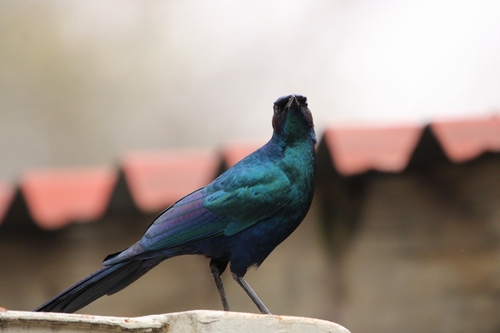
コシアカテリムク (Lamprotornis australis) コシアカテリムク

セイキムクドリ (Lamprotornis chalybaeus) セイキムクドリ

メディア

読み込み中…

要点

コシアカテリムクとセイキムクドリを区別する最も信頼できる方法は、羽毛に焦点を当てることで、特に腹部の色と光沢の程度、そして耳の斑点に注目することです。セイキムクドリは目を引く青い耳の斑点と紫青色の腹部を示しますが、コシアカテリムクはこれらの特徴がなく、より均一に光沢があります。幼鳥のセイキムクドリは黒褐色の腹部を持ち、コシアカテリムクと混同されることがありますが、耳の斑点と全体の光沢パターンは依然として有用です。両者はサイズと構造が似ているため、羽毛の詳細に注意を払うことが重要です。特に混合群れや重複する生息地では注意が必要です。

識別のコツ

  1. 青い耳の斑点を確認する: セイキムクドリは常に明確な青い耳の斑点を示し、幼鳥でもその特徴があります。コシアカテリムクはすべての年齢でこの特徴がありません。
  2. 腹部の色を確認する: セイキムクドリは紫青色の腹部を持ち、青色が脚の前方に広がっています。コシアカテリムクは対照的な腹部がなく、より均一に光沢があります。
  3. 幼鳥の混同: 幼鳥のセイキムクドリは黒褐色の腹部を持ちますが、青い耳の斑点といくつかの光沢を保持しています。青い耳の斑点を持つ鈍いムクドリを見た場合、それは依然としてセイキムクドリです。
  4. 虹彩の色: 両種は成鳥として明るい黄色またはオレンジの虹彩を持っているため、これは有用な区別のマークではありません。
  5. 全体の光沢: コシアカテリムクはより均一に光沢があり、セイキムクドリに見られる耳の斑点、腹部、上面の間の強いコントラストが欠けています。
  6. 尾と構造: 両者は短い尾を持ち、頑丈です。尾の長さと構造は区別には役立ちません。
  7. 群れ行動: 開けた森林や家畜の周りにいる大きく騒がしい群れは、セイキムクドリである可能性が高いです。コシアカテリムクは群れを作ることが少なく、ペアや小さなグループで見られることが多いです。
  8. 生息地の文脈: 非常に開けた、よく草が食べられたサバンナや家畜のいる地域では、セイキムクドリがより一般的です。より密な森林や乾燥した、あまり開けていない生息地では、コシアカテリムクがより典型的です。
  9. 分布: 南部アフリカの外にいる場合、ほぼ確実にセイキムクドリを見ています。南部アフリカでは、両種が発生する可能性があるため、羽毛の詳細な確認が必要です。
  10. 混合群れ: 混合ムクドリの群れでは、青い耳の斑点と腹部の色を使って、コシアカテリムクの中からセイキムクドリを見分けてください。
  11. 飛行時の視点: これらの2種の間に特有の翼や飛行パターンの違いは記載されていないため、飛行中でも体と頭の羽毛に頼ってください。
  12. 季節的な移動: セイキムクドリは移動や季節的な移動中に新しい地域に現れることがありますが、コシアカテリムクはより定住的です。
  13. 鳴き声: 鼻にかかった「スキュアー」という呼び声を聞いた場合、セイキムクドリを疑ってください。ただし、両種に非常に精通していない限り、声だけに頼らないでください。
  14. 性差: 両種は性的に似ているため、識別に性を使用しないでください。
  15. 落とし穴: 鈍い幼鳥のセイキムクドリには注意してください。コシアカテリムクに見えることがありますが、常に青い耳の斑点と上面の光沢を確認してください。

大きさ

両種はサイズが非常に近く、セイキムクドリは平均してコシアカテリムクよりもわずかに重い(85.8g対80.0g)です[wikidata]。現場では、この違いは無視できるものであり、信頼できる区別のポイントではありません。両者は似たような短い尾を持つ頑丈なムクドリの構造を持っているため、サイズと形状だけでは診断できません。

羽色

行動

セイキムクドリは非常に群れを作りやすく、大きな群れを形成し、他のムクドリ種と混ざることがよくあります。家畜に止まることが知られており、動物によって動かされた昆虫を食べたり、時には外部寄生虫を取り除いたりします。コシアカテリムクは一夫一妻制であり、推測される定住性を持ち、群れや家畜との関連については言及されていません。現場では、セイキムクドリは大きく騒がしいグループで見られる可能性が高いのに対し、コシアカテリムクはペアや小さな家族グループで遭遇することが多いです。

生息環境

コシアカテリムクは南部アフリカの乾燥したおよび湿潤な森林やサバンナに生息しており、通常はあまり開けていない生息地に見られます。セイキムクドリは開けた森林やサバンナに一般的で、西アフリカから東アフリカ、さらには南アフリカ北東部やアンゴラにかけて非常に広い範囲を持っています。また、季節的な移動を行うこともあるため、コシアカテリムクのコア範囲の外にあるさまざまな開けた生息地でも見られることがあります。南部アフリカでは重複が可能ですが、セイキムクドリは一般的により広範囲に分布し、豊富です[ebird]。

声

セイキムクドリは、最もよく知られているのが鼻にかかった「スキュアー」という呼び声を含む、さまざまな音楽的または不快な呼び声を持っています。提供されたメモにはコシアカテリムクの特定の鳴き声の説明はないため、声は信頼できる区別のポイントではありません。

より良い説明を送る

比較と同じ項目を使ってください。文章はすぐに公開されます。

The most reliable way to separate Burchell's Starling from Greater Blue-eared Starling is by focusing on plumage, especially the color and extent of gloss on the underparts, and the ear patch. Greater Blue-eared Starling shows a striking blue ear patch and a purple-blue belly, while Burchell's Starling lacks these features and appears more uniformly glossy. Juvenile Greater Blue-eared Starlings are duller with blackish brown underparts, which can cause confusion with Burchell's, but the ear patch and overall gloss pattern remain useful. Both are similar in size and structure, so careful attention to plumage details is essential, especially in mixed flocks or overlapping habitats.

  1. Check for a blue ear patch: Greater Blue-eared Starling always shows a distinct blue ear patch, even in duller juveniles. Burchell's Starling lacks this feature at all ages.
  2. Look at the belly color: Greater Blue-eared Starling has a purple-blue belly, with the blue extending forward of the legs. Burchell's Starling is more uniformly glossy without a contrasting belly.
  3. Juvenile confusion: Juvenile Greater Blue-eared Starlings are duller with blackish brown underparts, but the blue ear patch and some gloss remain. If you see a dull starling with a blue ear patch, it's still Greater Blue-eared.
  4. Iris color: Both species have bright yellow or orange irises as adults, so this is not a useful separation mark.
  5. Overall gloss: Burchell's Starling appears more uniformly glossy, lacking the strong contrast between ear patch, belly, and upperparts seen in Greater Blue-eared.
  6. Tail and structure: Both are short-tailed and robust; tail length and structure are not helpful for separation.
  7. Flocking behavior: Large, noisy flocks in open woodland or around livestock are more likely to be Greater Blue-eared Starlings. Burchell's is less gregarious and more likely to be seen in pairs or small groups.
  8. Habitat context: In very open, well-grazed savannahs or areas with livestock, Greater Blue-eared is more likely. In denser woodland or drier, less open habitats, Burchell's is more typical.
  9. Range: If you are outside southern Africa, you are almost certainly seeing Greater Blue-eared Starling. In southern Africa, both species can occur, so careful plumage checks are needed.
  10. Mixed flocks: In mixed starling flocks, use the blue ear patch and belly color to pick out Greater Blue-eared among Burchell's and other Lamprotornis starlings.
  11. Flight views: No distinctive wing or flight pattern differences are described, so rely on body and head plumage even in flight.
  12. Seasonal movement: Greater Blue-eared may appear in new areas during migration or seasonal movements; Burchell's is more sedentary.
  13. Vocalizations: If you hear a nasal 'squee-ar' call, suspect Greater Blue-eared, but do not rely on voice alone unless you are very familiar with both species.
  14. Sex differences: Both species are sexually similar; do not use sex for identification.
  15. Pitfalls: Beware of dull juvenile Greater Blue-eared Starlings, which can look superficially like Burchell's, but always check for the blue ear patch and any gloss on the upperparts.

Both species are very close in size, with Greater Blue-eared Starling averaging slightly heavier (85.8g) than Burchell's Starling (80.0g) [wikidata]. In the field, this difference is negligible and not a reliable separation point. Both have similar short-tailed, robust starling structure, so size and shape alone are not diagnostic.

  • Juvenile/immature birds: Juvenile Greater Blue-eared Starlings are duller overall, with blackish brown underparts, but still retain a blue ear patch and some gloss on the upperparts. Burchell's Starling juveniles are not described in detail but lack the distinctive blue ear patch and purple-blue belly.
  • Adults: Greater Blue-eared Starling adults are glossy blue-green overall, with a distinct blue ear patch and a purple-blue belly. The blue of the belly is a key mark, extending forward of the legs. Burchell's Starling adults are more uniformly glossy without a contrasting blue ear patch or purple-blue belly, giving a less contrasting appearance overall. Both species have bright yellow or orange irises in adults.
  • Flight views: No specific upperwing or flight pattern differences are described for these two species, so separation relies on body and head plumage even in flight.

Greater Blue-eared Starling is highly gregarious, often forming large flocks and mixing with other starling species. It is known to perch on livestock, feeding on insects disturbed by the animals and sometimes removing ectoparasites. Burchell's Starling is described as monogamous and presumably sedentary, with no mention of such flocking or livestock associations. In the field, Greater Blue-eared is more likely to be seen in large, noisy groups, while Burchell's may be encountered in pairs or small family groups.

Burchell's Starling is native to dry and mesic woodlands and savannahs of southern Africa, typically in less open habitats. Greater Blue-eared Starling is common in open woodland and savannah, with a much broader range extending from West to East Africa and into northeastern South Africa and Angola. It also undertakes some seasonal migration, so may be found in a wider variety of open habitats, sometimes outside the core range of Burchell's. Overlap is possible in southern Africa, but Greater Blue-eared is generally more widespread and abundant [ebird].

Greater Blue-eared Starling has a range of musical or grating calls, with the most familiar being a nasal 'squee-ar.' There is no specific vocal description for Burchell's Starling in the provided notes, so voice is not a reliable separation point unless you are very familiar with local starling calls.

変更を破棄しますか?

保存していない編集があります。今離れると失われます。

コシアカテリムク · セイキムクドリ · 苦手な鳥