

Motmot

ホオジロニショクアリドリ 対 メガネアリドリ

Gymnopithys leucaspis 対 Gymnopithys rufigula

ホオジロニショクアリドリとメガネアリドリのクイズ
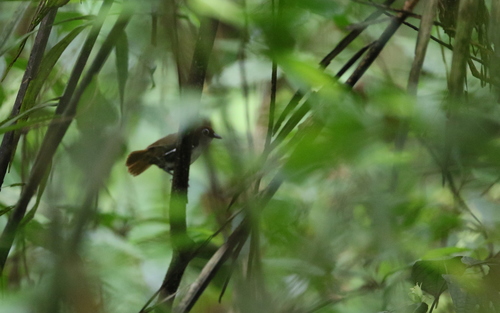
ホオジロニショクアリドリ (Gymnopithys leucaspis) ホオジロニショクアリドリ
メガネアリドリ (Gymnopithys rufigula) メガネアリドリ

メディア

読み込み中…

要点

ホオジロニショクアリドリとメガネアリドリを区別する最も信頼できるフィールドマークは、喉と頬の色です:ホオジロニショクアリドリは大胆な白い頬と喉を示し、メガネアリドリは豊かなルーファス・チェスナットの頬と上喉を持っています。両種は目の周りに裸の青い皮膚を持ち、全体的な構造は似ていますが、成鳥の腹部と顔の色彩は著しく異なります。幼鳥はより難解で、ホオジロニショクアリドリは白が現れる前に茶色がかった腹部を持ちますが、それでもルーファスの色調がないことが助けになります。両種は南アメリカ北部に生息していますが、分布はブラジルでのみ重なります。最も迅速なフィールド分離のために顔と喉の色に注目してください。

識別のコツ

  1. Face and throat color (all ages): ホオジロニショクアリドリは成鳥で常に鮮明な白い頬と喉を示し、メガネアリドリは常に頬と上喉にルーファス・チェスナットを示します。これが最も信頼できるマークです。
  2. Juvenile underparts: 未成熟のホオジロニショクアリドリは白が現れる前に茶色がかった腹部を持ちますが、顔や喉にルーファスの色調は決して示しません。頬/喉に白が現れ始めた茶色の幼鳥を見た場合は、ホオジロニショクアリドリを優先してください。
  3. Crown and nape color: ホオジロニショクアリドリはチェスナットブラウンの冠と後頭部を持ち、メガネアリドリの冠/後頭部はオリーブブラウンです。これは微妙で、良い光の中で使用するのが最適です。
  4. Mask and facial pattern: ホオジロニショクアリドリはロアから目を通って首の下まで続く黒っぽいマスクを持ち、メガネアリドリは茶色がかった黒の額/ロアを持っていますが、強い黒のマスクはありません。
  5. Underpart color: ホオジロニショクアリドリは白い胸と暗い茶色の下腹部を持ち、メガネアリドリはシナモン色の下喉/上胸とオリーブブラウンの腹部を持っています。
  6. Scapular patch (female): メスのホオジロニショクアリドリは肩羽の間にシナモン色のパッチを示し、メスのメガネアリドリはシナモン色の肩羽間パッチを持っていますが、その他はより鈍く、顔に白を示すことはありません。
  7. Upperparts: ホオジロニショクアリドリは上面がチェスナットブラウンで、いくつかのルーファスの縁取りがあります。メガネアリドリは上面がオリーブブラウンで、暗い黄色がかった茶色の翼と尾を持っています。これは補助的なマークです。
  8. Bare blue skin around eye: 両種はこれを持っているため、分離には役立ちません。
  9. Size and structure: ホオジロニショクアリドリはわずかに長いが軽いです。メガネアリドリは短いが、重くなることがあります。これは信頼できるフィールドマークではありません。
  10. Range: ブラジルの外にいる場合は国を確認してください:ホオジロニショクアリドリは西と南(コロンビア、エクアドル、ペルー)、メガネアリドリは北東(フランス領ギアナ、ガイアナ、スリナム、ベネズエラ)にいます。ブラジルでは両方が生息しているため、羽毛を使用してください。
  11. Army ant swarms: 両種はアリを追い、ブラジルの群れで一緒に見られることがありますが、行動だけを使用しないでください。
  12. No distinctive flight pattern: どちらの種も分離のための独特の上翼や飛行マークは持っていません。短い飛行の視界でも顔と腹部の色に注目してください。
  13. Subspecies variation: 一部のホオジロニショクアリドリの亜種はより暗いか、尾羽の覆いがより淡いですが、すべてが白い頬/喉を保持しています。メガネアリドリの亜種は喉/腹部の色合いが異なりますが、顔に白を示すことはありません。
  14. Plumage pitfalls: 白い頬/喉がまだ完全に発達していない未成熟のホオジロニショクアリドリに注意してください—ルーファスの色調がないことと白の出現を探してください。
  15. Sex differences: 両種のメスは鈍く、シナモン色の肩羽/肩羽間パッチを持っていますが、ホオジロニショクアリドリのメスだけが白い頬/喉を示すことがあります。

大きさ

ホオジロニショクアリドリは長さがわずかに大きく(13.5–15 cm)約25 gの平均ですが、メガネアリドリは少し短く(11.5–14 cm)でも重くなることがあります(26–32 g)。フィールドでは、このサイズの違いは微妙で、信頼できる分離点ではありません。両方とも小さく、コンパクトなアリドリで、比例は似ています。

羽色

行動

両種は典型的なアリドリで、下層で餌を探し、しばしばアリの群れを追いかけます。彼らの餌の取り方と一般的な行動は非常に似ており、フィールドでの分離には役立ちません。

生息環境

ホオジロニショクアリドリはブラジル、コロンビア、エクアドル、ペルーに生息し、メガネアリドリはブラジル、フランス領ギアナ、ガイアナ、スリナム、ベネズエラに生息しています。彼らの分布はブラジルでのみ重なります。両方とも湿った低地の森林に生息し、アリの群れに関連しているため、国レベルを除いては生息地だけでは診断できません。

より良い説明を送る

比較と同じ項目を使ってください。文章はすぐに公開されます。

The most reliable field mark to separate White-cheeked Antbird from Rufous-throated Antbird is the color of the throat and cheek: White-cheeked Antbird shows a bold white cheek and throat, while Rufous-throated Antbird has a rich rufous-chestnut cheek and upper throat. Both species have bare blue skin around the eye and similar overall structure, but their underpart and facial coloration are strikingly different in adults. Juveniles are trickier, as White-cheeked Antbird starts with brownish underparts before the white emerges, but even then, the lack of rufous tones helps. Both occur in northern South America, but their ranges only overlap in Brazil. Focus on face and throat color for the quickest field separation.

  1. Face and throat color (all ages): White-cheeked Antbird always shows a crisp white cheek and throat in adults; Rufous-throated Antbird always shows rufous-chestnut on the cheek and upper throat. This is the single most reliable mark.
  2. Juvenile underparts: Immature White-cheeked Antbirds have brownish underparts before the white emerges, but never show rufous tones on the face or throat. If you see a brownish juvenile with a hint of white coming in on the cheek/throat, favor White-cheeked.
  3. Crown and nape color: White-cheeked Antbird has a chestnut-brown crown and nape, while Rufous-throated Antbird's crown/nape is olive-brown. This is subtle and best used in good light.
  4. Mask and facial pattern: White-cheeked Antbird has a blackish mask running from lores through the eye and down the neck; Rufous-throated Antbird has a brownish-black forehead/lores but lacks the strong black mask.
  5. Underpart color: White-cheeked Antbird has a white breast and dark brown lower belly; Rufous-throated Antbird has cinnamon lower throat/upper breast and olive-brown belly.
  6. Scapular patch (female): Female White-cheeked Antbird shows a cinnamon patch between the scapulars; female Rufous-throated Antbird has a cinnamon intrascapular patch but is otherwise duller and never shows white on the face.
  7. Upperparts: White-cheeked Antbird is chestnut-brown above with some rufous edging; Rufous-throated Antbird is olive-brown above with dark yellow-brown wings and tail. This is a supporting mark.
  8. Bare blue skin around eye: Both species have this, so it does not help for separation.
  9. Size and structure: White-cheeked Antbird is slightly longer but lighter; Rufous-throated Antbird is shorter but can be heavier. This is not a reliable field mark.
  10. Range: If outside Brazil, check the country: White-cheeked is west and south (Colombia, Ecuador, Peru), Rufous-throated is northeast (French Guiana, Guyana, Suriname, Venezuela). In Brazil, both occur—use plumage.
  11. Army ant swarms: Both follow ants and can occur together at swarms in Brazil; do not use behavior alone.
  12. No distinctive flight pattern: Neither species has a unique upperwing or flight mark for separation; focus on face and underpart color even in brief flight views.
  13. Subspecies variation: Some White-cheeked Antbird subspecies are darker or have paler undertail coverts, but all retain the white cheek/throat. Rufous-throated Antbird subspecies vary in throat/belly shade but never show white on the face.
  14. Plumage pitfalls: Beware of immature White-cheeked Antbirds that have not yet fully developed the white cheek/throat—look for the absence of rufous tones and the emergence of white.
  15. Sex differences: Both species' females are duller and have cinnamon scapular/intrascapular patches, but only White-cheeked females ever show a white cheek/throat.

White-cheeked Antbird is slightly larger in length (13.5–15 cm) and averages about 25 g, while Rufous-throated Antbird is a bit shorter (11.5–14 cm) but can be heavier (26–32 g). In the field, this size difference is subtle and not a reliable separation point. Both are small, compact antbirds with similar proportions.

  • Juveniles: White-cheeked Antbird juveniles have brownish underparts before the white cheek and throat feathers emerge, while Rufous-throated Antbird juveniles are not described in detail, but adults lack any white in the face or throat at all ages.
  • Adult males: White-cheeked Antbird males have a chestnut-brown crown/nape, white cheeks and throat, a blackish mask, and chestnut-brown upperparts. Rufous-throated Antbird males have a brownish-black forehead/lores, olive-brown crown/nape, rufous-chestnut cheeks and upper throat, cinnamon lower throat/upper breast, and olive-brown underparts.
  • Adult females: Both species' females are similar to males but duller. White-cheeked Antbird females add a cinnamon patch between the scapulars; Rufous-throated Antbird females have a cinnamon intrascapular patch and are overall duller than males. Neither sex of Rufous-throated Antbird ever shows a white cheek or throat.
  • Upperwing in flight: No distinctive age-specific upperwing or flight pattern is described for either species; separation relies on face and underpart color, even in flight.

Both species are typical antbirds, foraging in the understory and often following army ant swarms. Their foraging style and general behavior are very similar and not useful for field separation.

White-cheeked Antbird is found in Brazil, Colombia, Ecuador, and Peru, while Rufous-throated Antbird occurs in Brazil, French Guiana, Guyana, Suriname, and Venezuela. Their ranges only overlap in Brazil. Both inhabit humid lowland forests and are associated with army ant swarms, so habitat alone is not diagnostic except at the country level.

変更を破棄しますか?

保存していない編集があります。今離れると失われます。

ホオジロニショクアリドリ · メガネアリドリ · 苦手な鳥