

White-cheeked Antbird vs Rufous-throated Antbird
Gymnopithys leucaspis contro Gymnopithys rufigula
Fai un quiz con White-cheeked Antbird e Rufous-throated Antbird
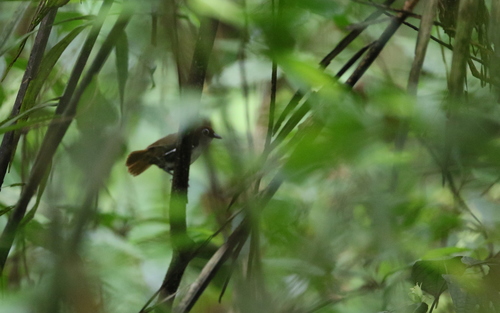 White-cheeked Antbird
 Rufous-throated Antbird
In breve
Il segno di campo più affidabile per separare il White-cheeked Antbird dal Rufous-throated Antbird è il colore della gola e della guancia: il White-cheeked Antbird mostra una guancia e una gola bianche audaci, mentre il Rufous-throated Antbird ha una guancia e una parte superiore della gola ruggine-castagna. Entrambe le specie hanno pelle blu nuda attorno all'occhio e una struttura complessiva simile, ma la loro colorazione delle parti inferiori e del viso è notevolmente diversa negli adulti. I giovanili sono più complicati, poiché il White-cheeked Antbird inizia con parti inferiori marroni prima che emerga il bianco, ma anche in quel caso, la mancanza di toni ruggine aiuta. Entrambi si trovano nel nord del Sud America, ma i loro areali si sovrappongono solo in Brasile. Concentrati sul colore del viso e della gola per la separazione più rapida sul campo.
Consigli di identificazione
- Colore del viso e della gola (tutte le età): Il White-cheeked Antbird mostra sempre una guancia e una gola bianche nitide negli adulti; il Rufous-throated Antbird mostra sempre ruggine-castagna sulla guancia e sulla parte superiore della gola. Questo è il segno più affidabile.
- Parti inferiori giovanili: I White-cheeked Antbird immaturi hanno parti inferiori marroni prima che emerga il bianco, ma non mostrano mai toni ruggine sul viso o sulla gola. Se vedi un giovanile marrone con un accenno di bianco che emerge sulla guancia/gola, favorisci il White-cheeked.
- Colore della corona e della nuca: Il White-cheeked Antbird ha una corona e una nuca marrone-castagna, mentre la corona/nuca del Rufous-throated Antbird è oliva-marrone. Questo è sottile e meglio utilizzato in buona luce.
- Maschera e pattern facciale: Il White-cheeked Antbird ha una maschera nerastro che va dalle lore attraverso l'occhio e giù per il collo; il Rufous-throated Antbird ha una fronte/lore marrone-nera ma manca della forte maschera nera.
- Colore delle parti inferiori: Il White-cheeked Antbird ha un petto bianco e una parte inferiore scura marrone; il Rufous-throated Antbird ha una parte inferiore della gola/castagna superiore e una pancia oliva-marrone.
- Macchia scapolare (femmina): La femmina del White-cheeked Antbird mostra una macchia cannella tra le scapole; la femmina del Rufous-throated Antbird ha una macchia intrascapolare cannella ma è altrimenti più opaca e non mostra mai bianco sul viso.
- Parti superiori: Il White-cheeked Antbird è marrone-castagna sopra con alcune bordature ruggine; il Rufous-throated Antbird è oliva-marrone sopra con ali e coda marrone-giallo scuro. Questo è un segno di supporto.
- Pelle blu nuda attorno all'occhio: Entrambe le specie hanno questo, quindi non aiuta per la separazione.
- Dimensioni e struttura: Il White-cheeked Antbird è leggermente più lungo ma più leggero; il Rufous-throated Antbird è più corto ma può essere più pesante. Questo non è un segno di campo affidabile.
- Areale: Se sei al di fuori del Brasile, controlla il paese: il White-cheeked è a ovest e a sud (Colombia, Ecuador, Perù), il Rufous-throated è a nord-est (Guiana francese, Guyana, Suriname, Venezuela). In Brasile, entrambi si trovano—usa il piumaggio.
- Furti di formiche dell'esercito: Entrambi seguono le formiche e possono trovarsi insieme in stormi in Brasile; non usare solo il comportamento.
- Nessun pattern di volo distintivo: Nessuna delle due specie ha un pattern di volo o un segno di ala superiore unico per la separazione; concentrati sul colore del viso e delle parti inferiori anche in brevi visuali di volo.
- Variazione delle sottospecie: Alcune sottospecie di White-cheeked Antbird sono più scure o hanno copritrici sottocoda più chiare, ma tutte mantengono la guancia/gola bianca. Le sottospecie di Rufous-throated Antbird variano nel tono della gola/pancia ma non mostrano mai bianco sul viso.
- Trappole di piumaggio: Fai attenzione ai White-cheeked Antbird immaturi che non hanno ancora sviluppato completamente la guancia/gola bianca—cerca l'assenza di toni ruggine e l'emergere del bianco.
- Differenze sessuali: Le femmine di entrambe le specie sono più opache e hanno macchie scapolari/intrascapolari cannella, ma solo le femmine del White-cheeked mostrano mai una guancia/gola bianca.
Taglia
Il White-cheeked Antbird è leggermente più grande in lunghezza (13.5–15 cm) e pesa in media circa 25 g, mentre il Rufous-throated Antbird è un po' più corto (11.5–14 cm) ma può essere più pesante (26–32 g). Sul campo, questa differenza di dimensioni è sottile e non è un punto di separazione affidabile. Entrambi sono piccoli, compatti antbirds con proporzioni simili.
Piumaggio
- Giovanili: I giovanili del White-cheeked Antbird hanno parti inferiori marroni prima che emergano le piume bianche della guancia e della gola, mentre i giovanili del Rufous-throated Antbird non sono descritti in dettaglio, ma gli adulti non mostrano alcun bianco sul viso o sulla gola a tutte le età.
- Maschi adulti: I maschi del White-cheeked Antbird hanno una corona/nuca marrone-castagna, guance e gola bianche, una maschera nerastro e parti superiori marrone-castagna. I maschi del Rufous-throated Antbird hanno una fronte/lore marrone-nera, corona/nuca oliva-marrone, guance e parte superiore della gola ruggine-castagna, parte inferiore della gola/petto cannella e parti inferiori oliva-marrone.
- Femmine adulte: Le femmine di entrambe le specie sono simili ai maschi ma più opache. Le femmine del White-cheeked Antbird aggiungono una macchia cannella tra le scapole; le femmine del Rufous-throated Antbird hanno una macchia intrascapolare cannella e sono complessivamente più opache dei maschi. Nessun sesso del Rufous-throated Antbird mostra mai una guancia o una gola bianche.
- Ala superiore in volo: Non è descritto alcun pattern di ala superiore o di volo distintivo specifico per età per entrambe le specie; la separazione si basa sul colore del viso e delle parti inferiori, anche in volo.
Comportamento
Entrambe le specie sono antbirds tipici, foraggiando nel sottobosco e seguendo spesso stormi di formiche dell'esercito. Il loro stile di foraggiamento e il comportamento generale sono molto simili e non utili per la separazione sul campo.
Habitat
Il White-cheeked Antbird si trova in Brasile, Colombia, Ecuador e Perù, mentre il Rufous-throated Antbird si verifica in Brasile, Guiana francese, Guyana, Suriname e Venezuela. I loro areali si sovrappongono solo in Brasile. Entrambi abitano foreste umide di pianura e sono associati a stormi di formiche dell'esercito, quindi l'habitat da solo non è diagnostico tranne che a livello di paese.
White-cheeked Antbird · Rufous-throated Antbird · I miei uccelli difficili